
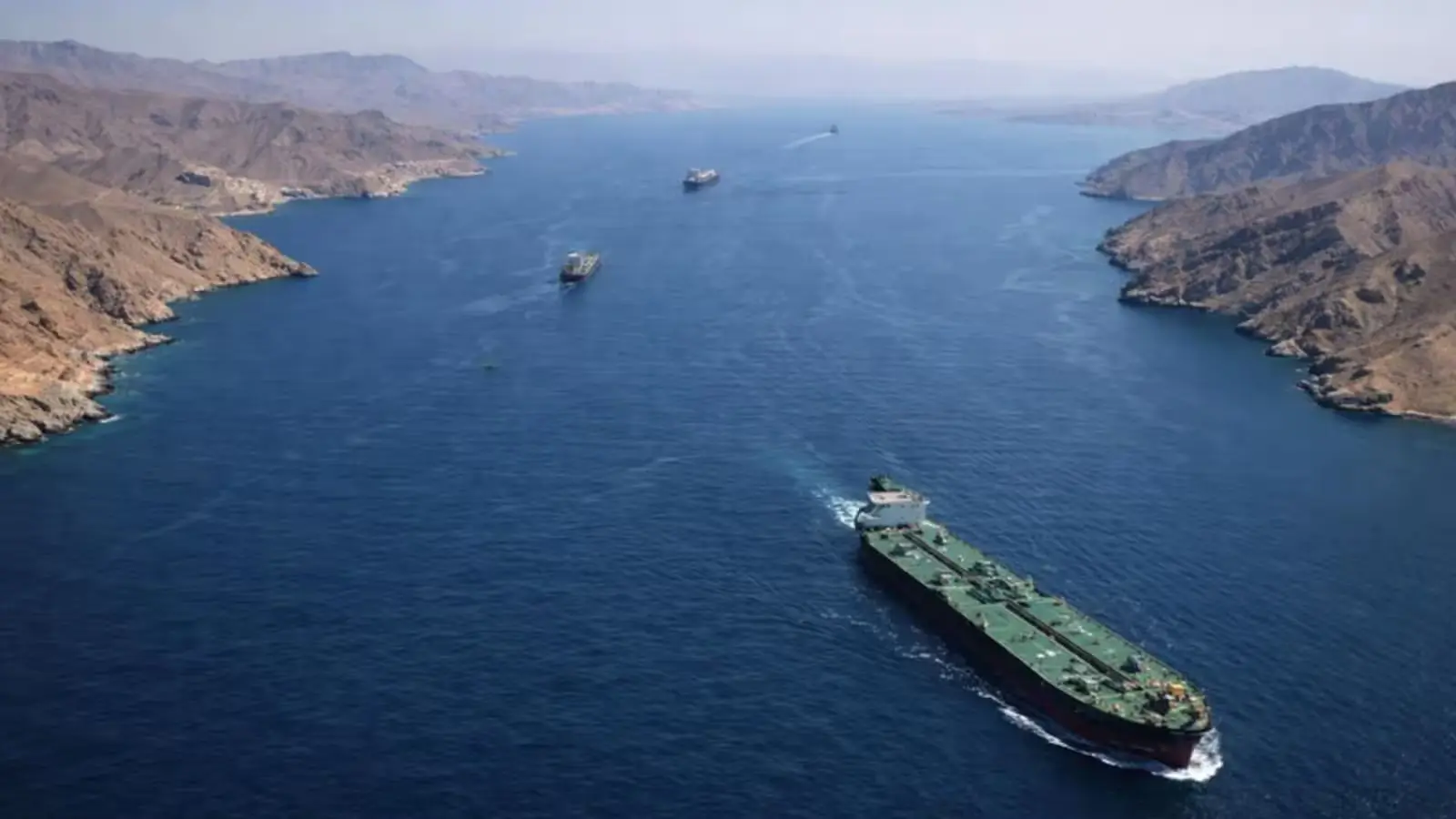


In a move that has stunned global shipping markets, Iran has begun charging select merchant vessels a $2 million “transit fee” to navigate the Strait of Hormuz. Alaeddin Boroujerdi, a member of the Iranian parliament’s National Security and Foreign Policy Committee, confirmed on Sunday that the measure is already in effect, framing it as a “sovereign regime” established to offset the costs of the ongoing war.
The announcement comes as the conflict enters its fourth week, with President Donald Trump issuing a stark 48-hour ultimatum for Iran to fully reopen the waterway or face the destruction of its national power grid.
1. The “Transit Fee” & Sovereign Control
Iranian officials are characterizing the $2 million toll as an exercise of national “authority” over the strategic chokepoint, through which 20% of global oil and LNG flows.
- The Rationale: “War has costs,” Boroujerdi stated, noting that the fee reflects Iran’s “strength” after decades of international presence in the waterway.
- Selective Blockade: Reports suggest the fee is being applied selectively. While tankers from “hostile” nations are blocked, some vessels—including several Indian-flagged LPG carriers and at least one Pakistani tanker—have reportedly been granted passage recently.
- Sanction Complications: Shipping experts warn that paying these fees could place international firms in direct violation of existing global sanctions against the Iranian regime.
2. Trump’s 48-Hour Ultimatum
On Saturday, President Trump used Truth Social to issue his most direct threat of the war thus far, setting a deadline that expires at 23:44 GMT on Monday, March 23, 2026.
- The Threat: “If Iran doesn’t FULLY OPEN… the United States of America will hit and obliterate their various POWER PLANTS, STARTING WITH THE BIGGEST ONE FIRST!”
- Iran’s Response: President Masoud Pezeshkian dismissed the ultimatum as “delirious,” while the Revolutionary Guard (IRGC) warned that any strike on Iranian infrastructure would result in the “irreversible destruction” of energy and water systems across the Middle East, including those in Israel and the UAE.
3. IEA: “Worst Energy Crisis in Decades”
International Energy Agency (IEA) chief Fatih Birol, speaking in Australia on Monday, warned that the world is currently facing an energy shock more severe than the 1970s oil crises.
- Loss of Supply: Birol noted that the world has lost roughly 11 million barrels per day (bpd) due to the conflict—surpassing the 10 million bpd lost during the 1973 and 1979 shocks combined.
- Asset Damage: At least 40 energy assets across nine countries in the region have already been “severely or very severely” damaged.
4. Market Reaction: Oil Prices Hover Near Record Highs
Despite the escalating rhetoric, oil prices showed relative stability on Monday as traders “priced in” the immediate risk of the 48-hour deadline.
Conflict Timeline: Key Events (March 22–23, 2026)
- Sunday, 23:44 GMT: Trump’s 48-hour clock begins.
- Monday Morning: IEA chief warns of “gas crash” and “double oil crisis.”
- Monday, 08:00 IST: India’s PM Modi reportedly holds a second high-level call with President Pezeshkian to ensure safe passage for Indian energy supplies.
- Monday Night (Upcoming): Expiration of the US ultimatum.