
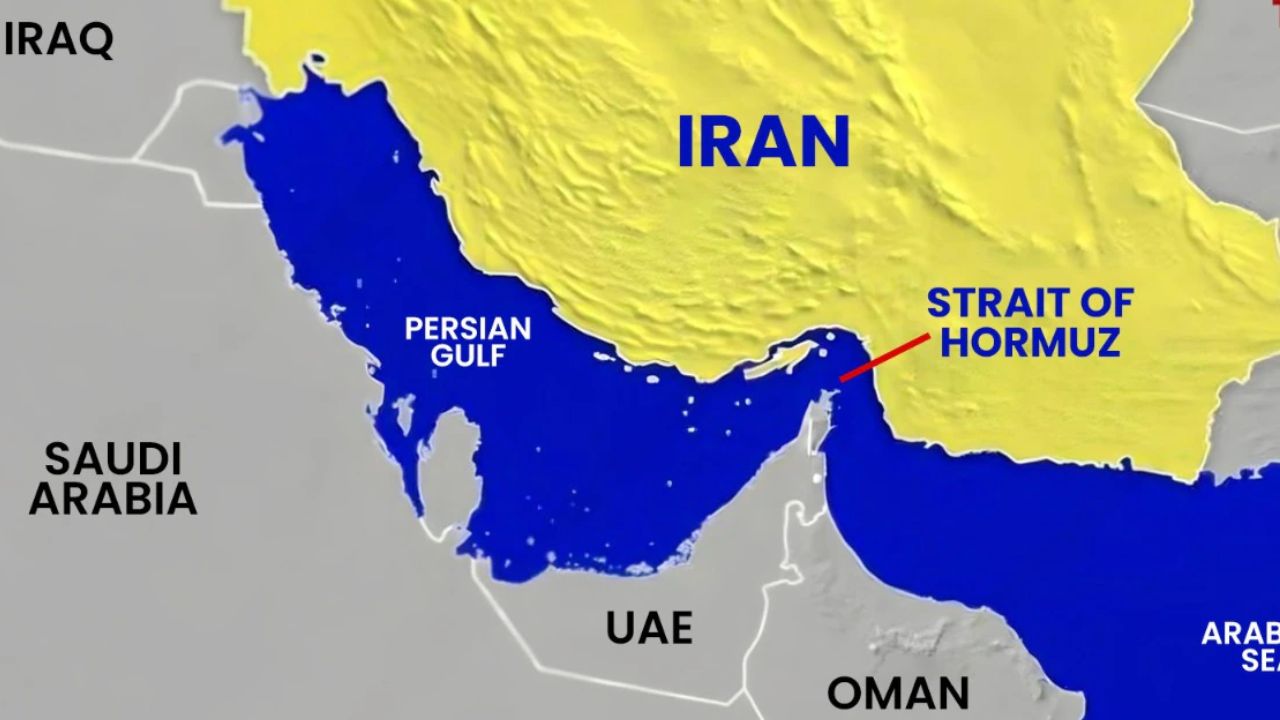


Iran’s move disrupts vital oil route as global crude prices jump to $120
March 14, 2026: The Strait of Hormuz, a narrow sea passage between Iran and Oman, has emerged as a key flashpoint in the ongoing West Asia conflict. The strategic waterway links the Persian Gulf to the Gulf of Oman and is among the world’s most critical energy routes. Nearly 20 million barrels of crude oil pass through the strait every day, with about 84% of the supply heading to Asian countries. Additionally, around 104 billion cubic feet of LNG shipments move through the passage daily, making it vital for global energy security.
Tensions escalated after Iran reportedly blocked or disrupted shipping traffic through the strait in response to military actions by the United States and Israel. The move triggered panic in global energy markets, pushing crude oil prices to $120 per barrel for the first time in nearly four years and raising fears of a potential global energy crisis.
Reacting strongly, US President Donald Trump warned that the United States would continue its military campaign, called Operation Epic Fury, to keep global oil supplies open. Meanwhile, Saudi Aramco chief Amin H. Nasser cautioned that prolonged conflict in the strait could have severe consequences for global energy companies and markets. Reports also indicate that US forces have intensified strikes near Bandar Abbas, though analysts say full control of the Strait of Hormuz would be extremely difficult as Iran continues to demonstrate its naval strength using missiles and drones.