
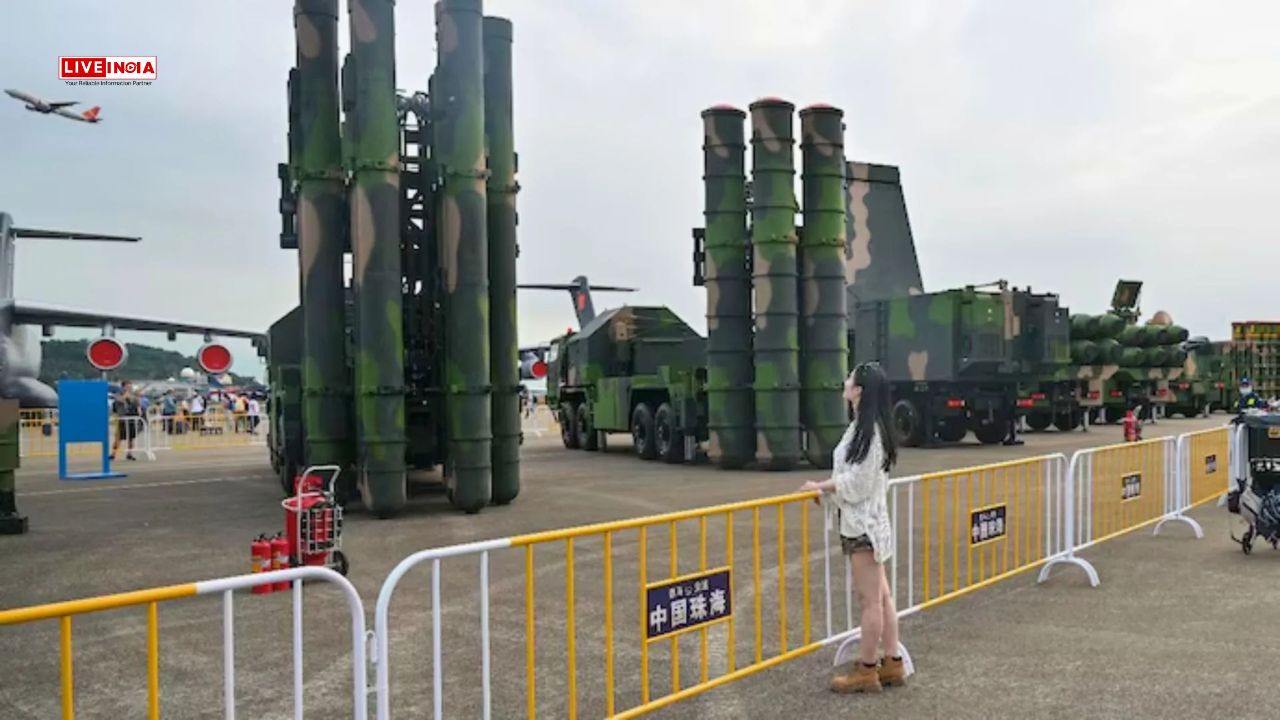


May 10, 2025: In a significant escalation under Operation Sindoor, Indian armed forces have successfully neutralised Chinese-made HQ-9 and HQ-16 air defence systems deployed at key Pakistani military installations in Lahore, Chaklala, and Sialkot. The precision strikes, carried out in response to Pakistan’s recent drone and missile attacks, have drawn international attention—especially from countries that rely on Chinese military hardware.
China “Dumbstruck”, Says Analyst
National security analyst Divya Kumar Soti commented on the development:
“Believe me. Presently, no one is more dumbstruck than China. As India delivers blow after blow to Pakistan, the world is watching how ineffective Chinese weapons truly are.”
Believe me. Presently, no one is more dumb struck than China. As India is delivering blow after blow to Pakistan, the world is getting to know how useless Chinese weapons are. And China doesn't know what to say. pic.twitter.com/XJlYg84mhl
— Divya Kumar Soti (@DivyaSoti) May 10, 2025
Social media echoed the sentiment.
Kiran Kumar S., a defence enthusiast on X, noted:
“India eliminated 500–1,000 Turkish drones and neutralised Chinese air defence in over 50 locations!”
Targets Hit & Equipment Recovered
‘Inferior’?
— K Singh (@KSingh_1469) May 7, 2025
Indian military assets (a mix of Indian,French and Russian)successfully penetrated the 100% Chinese supplied Pakistani AD network on full alert simultaneously with multiple vectors up to and including the CAPITAL CITY of Pakistan
Pakistan’s response was meek at best https://t.co/o7PEMyvP0r
- An HQ-9B system in Lahore was reportedly taken out using an Indian Harop loitering munition.
- An HQ-16 battery in Chakrala was also destroyed.
- A Chinese PL-15 long-range air-to-air missile, launched by a Pakistani aircraft, failed to detonate and was recovered intact in Hoshiarpur, Punjab.
Also Read: India Pak Conflick-LIVE: India Confirms Pakistani Strikes on Airbases, No Major Damage
Global Reactions: Strategic, Economic & Political
Professor Julian Ku of Hofstra University highlighted the strategic vulnerability of Pakistan:
“81% of Pakistan’s military inventory is Chinese-made. India, by contrast, draws from a diverse pool—Russia, France, Israel, and the US.”
Investor and CFO Robert Sterling raised a policy alarm in the US:
“Over 20 years, the US gave $32B to Pakistan, including $15B in military aid. Yet 80% of Pakistan’s equipment is Chinese. Are US taxpayers indirectly funding weapons that could target our allies?”
Broader Context: India’s Wider Campaign
The air defence strikes were part of a larger coordinated response to Pakistan’s recent drone incursions and shelling, which targeted over 26 Indian locations—including Udhampur, Pathankot, Bhuj, and Bathinda.
Other Pakistani facilities struck include:
- Airbases at Rafiqui, Murid, Chaklala, Rahim Yar Khan, Sukkur, and Chunian
- Radar sites in Pasrur and Sialkot aviation base
India’s Stand: Measured Yet Firm
Foreign Secretary Vikram Misri reaffirmed India’s posture:
“It is Pakistan’s actions that have constituted provocation and escalation. India has responded in a calm, responsible, and measured fashion.”