
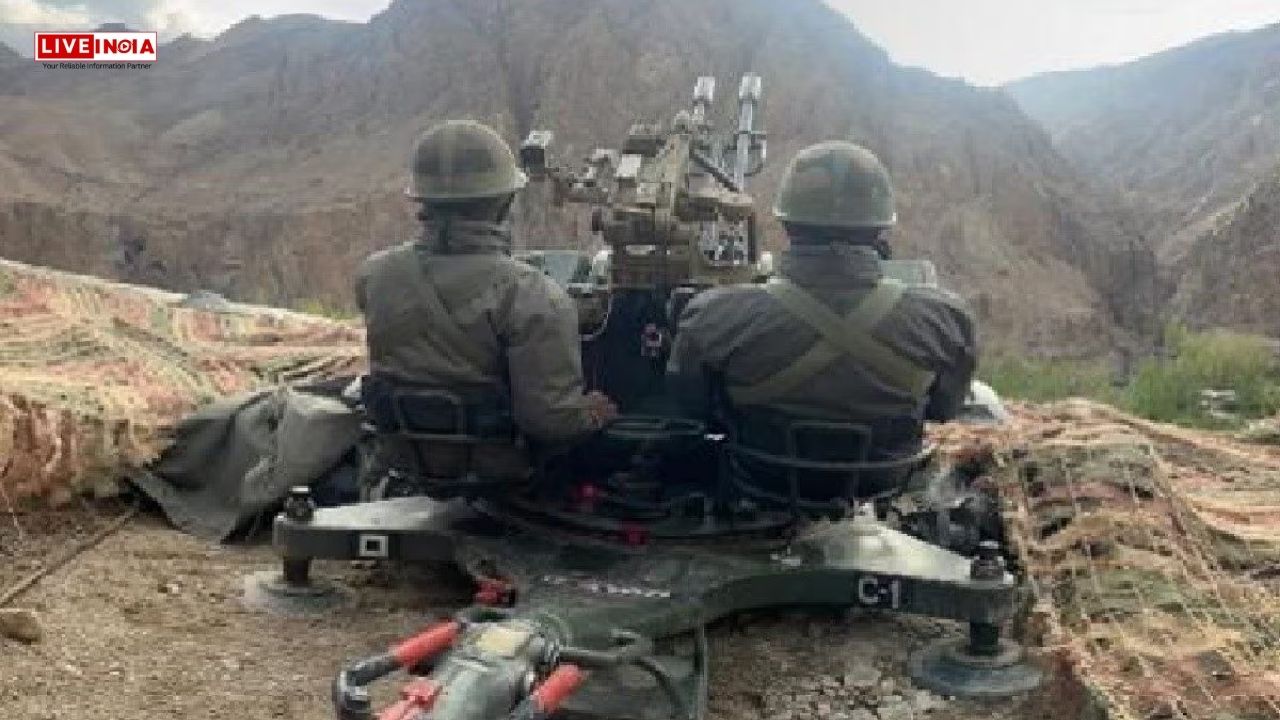


In a landmark strategic victory, India’s indigenous defence technology neutralised advanced Chinese and Turkish weaponry used by Pakistan, showcasing New Delhi’s cutting-edge military edge during Operation Sindoor.
May 15, 2025: New Delhi:
India has revealed new details about Operation Sindoor, stating that the Indian Air Force (IAF) successfully jammed Pakistan’s Chinese-supplied air defence systems before executing a precision air campaign that lasted less than 23 minutes. The government hailed the operation as a defining moment in India’s military evolution, emphasizing technological superiority and defence indigenisation.
The statement outlined how Indian forces disabled key Pakistani radar and missile systems installed along the Line of Control and international border, allowing for seamless drone and missile strikes that inflicted serious damage on Pakistani military infrastructure without any loss to Indian assets.
“The IAF bypassed and jammed China-made air defence systems in Pakistan, completing the mission in just 23 minutes—highlighting India’s technological edge,” the statement read.
Precision, Planning, and Indigenous Power
According to the Indian government, Operation Sindoor specifically targeted air bases in Nur Khan and Rahim Yar Khan, where India deployed loitering munitions—also known as “kamikaze drones”—to destroy high-value assets including enemy radars and missile batteries.
The statement emphasized that no Indian aircraft or drone was lost, thanks to advanced surveillance, planning, and indigenous electronic warfare systems.
Additionally, Indian forces intercepted and neutralized Pakistani-launched projectiles including:
- PL-15 Chinese missiles
- Turkish-made ‘Yiha’ UAVs
- Long-range rockets
- Commercial and quadcopter drones
Fragments of these weapons were recovered and forensically verified, further underlining India’s dominance in air defence.
ISRO’s Critical Support
India’s space agency ISRO played a vital role in coordinating satellite surveillance. Chairman V. Narayanan confirmed at least 10 satellites were operational for strategic surveillance during the operation, enhancing India’s targeting and threat-monitoring capabilities.
Indigenous Systems Shine
The statement praised Indian-made weapons for their standout performance:
- Akash missile system
- Pechora and OSA-AK air defence units
- LLAD (Low-Level Air Defence) guns
It further noted that Operation Sindoor not only reflected tactical brilliance, but marked a milestone in India’s defence self-reliance. All objectives were met without crossing the international border or LoC, reaffirming India’s strategic restraint coupled with decisive action.
A Message to the Region
“This is not just a story of tactical success but a validation of India’s indigenous military capability,” the statement concluded, calling Operation Sindoor a clear assertion of India’s role as a 21st-century high-tech military power.
🧾 Tags:
India Pakistan conflict, Operation Sindoor, Indian Air Force jamming, Chinese air defence systems, ISRO military satellites, loitering munitions India, Akash missile system, India defence indigenisation, electronic warfare India, India strategic strike 2025, OperationSindoor,