
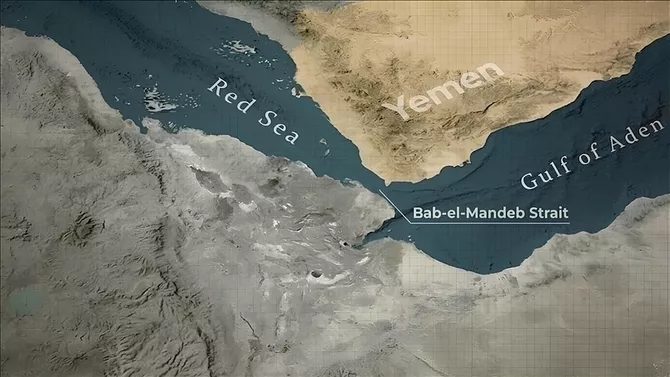


A fresh warning from senior Iranian adviser Ali Akbar Velayati has heightened global concern after he suggested the possible shutdown of the strategically vital Bab al-Mandeb Strait, a move that could severely disrupt global trade and energy supplies.
According to reports cited by Al Jazeera, Velayati indicated that Iran and its regional allies may replicate the type of disruptions previously seen in the Strait of Hormuz, significantly escalating risks to international shipping.
In a post shared on the social media platform X, Velayati stated that the “Resistance front views Bab al-Mandeb as it does Hormuz,” warning that the global flow of energy and trade could be halted “with a single move” if tensions with the United States intensify.
The remarks come amid renewed warnings from Donald Trump, who has threatened military strikes on Iranian infrastructure if Tehran does not fully reopen Hormuz to Western shipping.
A Strategic Maritime Lifeline Under Threat
The Bab al-Mandeb Strait is among the world’s most critical maritime corridors. At just 29 kilometres wide at its narrowest point, it lies between Yemen and the Horn of Africa, making it both highly vulnerable and strategically essential.
Global shipping data shows that approximately 5% of the world’s oil and petroleum products — estimated at around 4.1 billion barrels in 2024 — passed through the strait. In addition, nearly 10% of global trade flows through the route, connecting markets across Asia and Europe.
Its importance has grown further following disruptions in the Strait of Hormuz, which forced Gulf exporters, particularly Saudi Arabia, to reroute shipments through the Red Sea.
Key infrastructure such as the East-West Pipeline to Yanbu has become vital in maintaining oil flows. However, analysts warn that simultaneous disruptions at both chokepoints could potentially block as much as a quarter of the world’s oil and gas supply.
Houthis Seen As Holding Key Strategic Leverage
Much of the risk stems from the role of Iran-aligned Houthi movement forces, which control significant stretches of coastline in Yemen.
These forces have previously demonstrated their capacity to disrupt maritime traffic. During the Gaza conflict, the Houthis targeted vessels linked to the United States and Israel, prompting insurance firms to withdraw coverage and causing a sharp drop in shipping activity through the Red Sea.
Former US diplomat Nabeel Khoury warned that even limited attacks could trigger widespread consequences.
“All they have to do is fire at a couple of ships… and that would lead to the arrest of all commercial shipping through the Red Sea,” Khoury said, adding that such a move would likely provoke swift military retaliation.
Experts Warn Of ‘Nightmare Scenario’ For Global Trade
Security analysts caution that a closure of the Bab al-Mandeb Strait, especially if combined with restrictions in the Strait of Hormuz, would have devastating consequences for international supply chains.
Middle East specialist Elisabeth Kendall described the scenario as a “nightmare,” warning that such disruptions could significantly impact trade flows to Europe and beyond.
However, she also noted that while the chokepoint offers strategic leverage, escalating tensions to the point of full closure would carry major risks.
A blockade of this scale could provoke direct military responses, particularly from regional powers such as Saudi Arabia, potentially widening the conflict.
Rising Geopolitical Risks Keep Markets On Edge
For now, the warning highlights how rising geopolitical tensions across the Middle East continue to threaten global commerce.
Any coordinated disruption across both the Strait of Hormuz and the Bab al-Mandeb Strait would mark one of the most serious risks to global energy security in decades.
With tensions escalating between Iran and the United States, policymakers, shipping companies, and energy markets worldwide remain on high alert.