


Fresh Iran-Israel missile strikes mark a dramatic escalation in the ongoing conflict, with both sides exchanging fire amid U.S. warnings and mounting regional instability.
JERUSALEM/WASHINGTON/DUBAI, June 18 (Reuters) – The Iran-Israel missile strikes intensified early Wednesday as both nations launched fresh salvos, continuing an increasingly destructive air war now entering its sixth consecutive day, despite U.S. President Donald Trump’s call for Iran’s “unconditional surrender.”
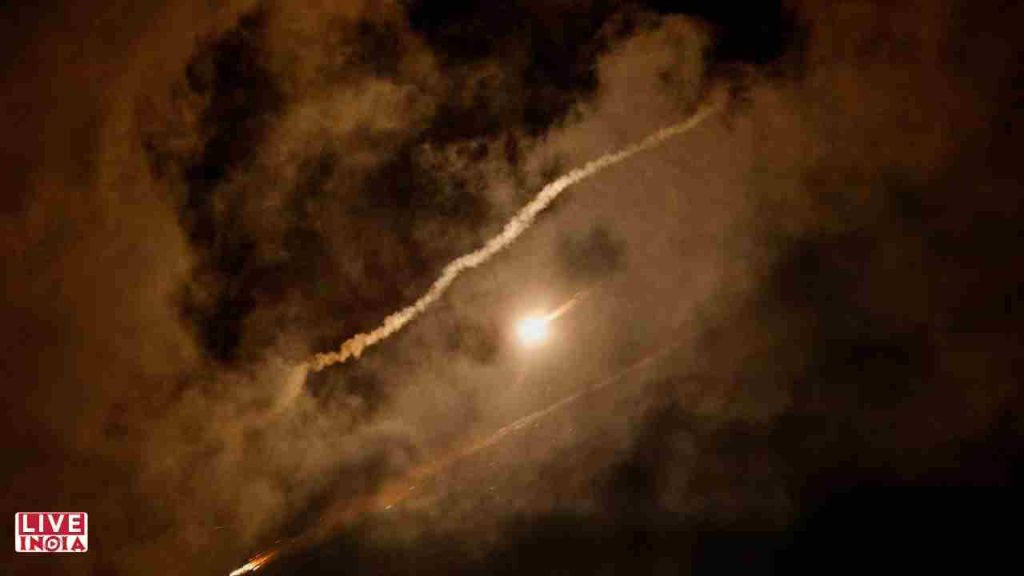
According to the Israeli military, two barrages of Iranian missiles targeted Israel within the first two hours of Wednesday morning. Explosions were reported over Tel Aviv as the nation’s missile defense systems responded. Meanwhile, Israel warned residents in parts of southwestern Tehran to evacuate, indicating imminent strikes on Iranian military installations.
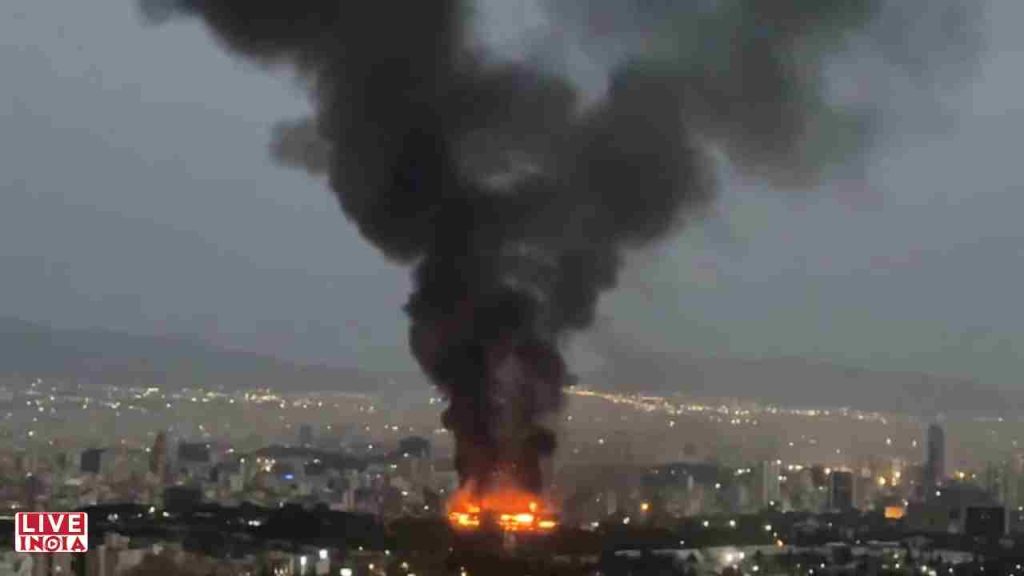
Iranian media reported Israeli airstrikes targeting a university affiliated with the Revolutionary Guards and the Khojir ballistic missile facility, which had previously been bombed in October. The Khojir site is integral to Iran’s missile development program.
The U.S. Office of the Director of National Intelligence has confirmed that Iran possesses the largest arsenal of ballistic missiles in the Middle East, used primarily as a deterrent against the U.S., Israel, and other perceived regional threats.
Adding to the tension, Trump posted a string of ominous updates on Truth Social, warning, “We know exactly where the so-called ‘Supreme Leader’ is hiding… We are not going to take him out (kill!), at least not for now. Our patience is wearing thin.” Minutes later, he posted in all caps, “UNCONDITIONAL SURRENDER!”
Behind the scenes, Trump reportedly met with his National Security Council for 90 minutes to evaluate options. A source told Reuters that Washington is weighing deeper involvement, including joining Israeli strikes on Iranian nuclear sites. The White House confirmed a phone call between Trump and Israeli Prime Minister Benjamin Netanyahu, although details remain undisclosed.
Three U.S. officials said more fighter jets are being deployed to the region, and existing aircraft are having their tours extended. So far, the U.S. has only engaged indirectly by helping intercept missiles fired toward Israel.
Despite this, British Prime Minister Keir Starmer, speaking from the G7 summit in Canada, said he saw no immediate signs of U.S. entry into the conflict.
Iran’s Inner Circle Hit and Cyber War Intensifies
According to intelligence sources, Khamenei’s top military advisers have been killed by Israeli strikes, leaving a critical vacuum in Iran’s command structure. As a result, Iran’s cybersecurity agency has reportedly banned government officials from using mobile devices. Iranian media has also claimed that Israel is waging a full-scale cyber war, targeting critical digital infrastructure.
Khamenei’s regional authority has diminished significantly since the October 7 Hamas attack on Israel, which sparked the Gaza war. Iran’s proxy networks—Hezbollah, Houthis, and Iraqi militias—have suffered repeated Israeli strikes, while Syria’s Bashar al-Assad, once Iran’s staunch ally, has been ousted.
Nuclear Concerns Grow
Israel launched its air campaign on Friday, claiming Iran was close to acquiring nuclear weapons. While Iran denies any intent to develop nuclear arms, insisting its program is for peaceful energy purposes, Israel remains unconvinced. The International Atomic Energy Agency (IAEA) recently accused Iran of violating the Non-Proliferation Treaty (NPT) for the first time in 20 years.
The IAEA also confirmed that Israeli strikes hit enrichment halls at Natanz, a key underground nuclear facility. Despite Israel claiming control over Iranian airspace, analysts say sites like Fordow, buried under mountains, are nearly impossible to neutralize without U.S. support.
Humanitarian and Economic Fallout
Casualties continue to rise, with Iran reporting 224 deaths, mostly civilians, and Israel confirming 24 civilian fatalities. Mass evacuations are underway in both nations.
The escalation has also rattled global oil markets, especially after strikes on South Pars, the world’s largest gas field, jointly operated by Iran and Qatar.