
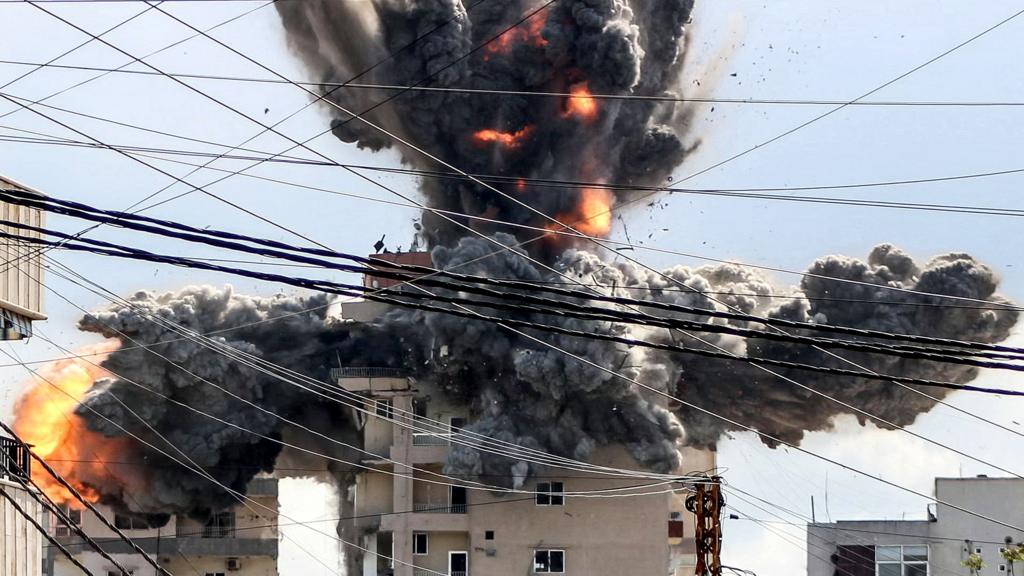


The fragile landscape of the Middle East shifted again this Friday as the Israeli military reported a missile launch by Hezbollah aimed at central Israel. The projectile, which triggered air raid sirens across Tel Aviv and surrounding areas, was successfully intercepted by Israel’s aerial defense systems.
This latest escalation follows a chaotic 48 hours. On Thursday night, Hezbollah claimed to have targeted military infrastructure in the northern city of Haifa. Meanwhile, the Israel Defense Forces (IDF) confirmed they struck approximately 10 Hezbollah launchers that had been firing rockets toward northern Israel earlier that evening.
A Devastating Human Cost
The intensity of the conflict has reached staggering levels. According to Lebanese authorities, Israeli strikes have killed approximately 1,900 people and displaced over 1 million since Israel launched its renewed offensive on March 2.
Wednesday, April 8, was particularly harrowing, being labeled “Black Wednesday” by local media. Despite a newly announced U.S.-Iran ceasefire agreement, Israel conducted its heaviest bombardment of the war, killing over 300 people in a single day.
Diplomatic Crossroads: Ceasefires and Surprises
The military tit-for-tat comes at a critical diplomatic juncture. In a bold move on Thursday, Prime Minister Benjamin Netanyahu instructed Israeli officials to begin direct peace negotiations with the Lebanese government.
Key Objectives for the Proposed Talks:
Disarmament: A primary Israeli demand is the total disarming of Hezbollah.
Security Zones: Establishing clear boundaries to prevent future incursions.
Regional De-escalation: Aligning with the broader U.S.-Iran negotiations currently mediated by Pakistan.
While the U.S. and Iran have agreed to a two-week ceasefire, tension remains high regarding whether this truce officially extends to the Lebanon front. The upcoming high-stakes talks in Pakistan, involving U.S. Vice President J.D. Vance and Iranian representatives, are expected to address these overlapping conflicts.
Wider Context: The Regional Shadow War
The conflict isn’t contained to the border. Recent reports indicate the U.S. has ramped up pressure on Iran’s domestic infrastructure, including a massive strike on an ammunition depot in Isfahan using 2,000-pound bunker-buster bombs.
As diplomats gather in Islamabad this weekend, the central question remains: can a regional peace be brokered before the “forever war” consumes the progress of the tenuous ceasefire?