
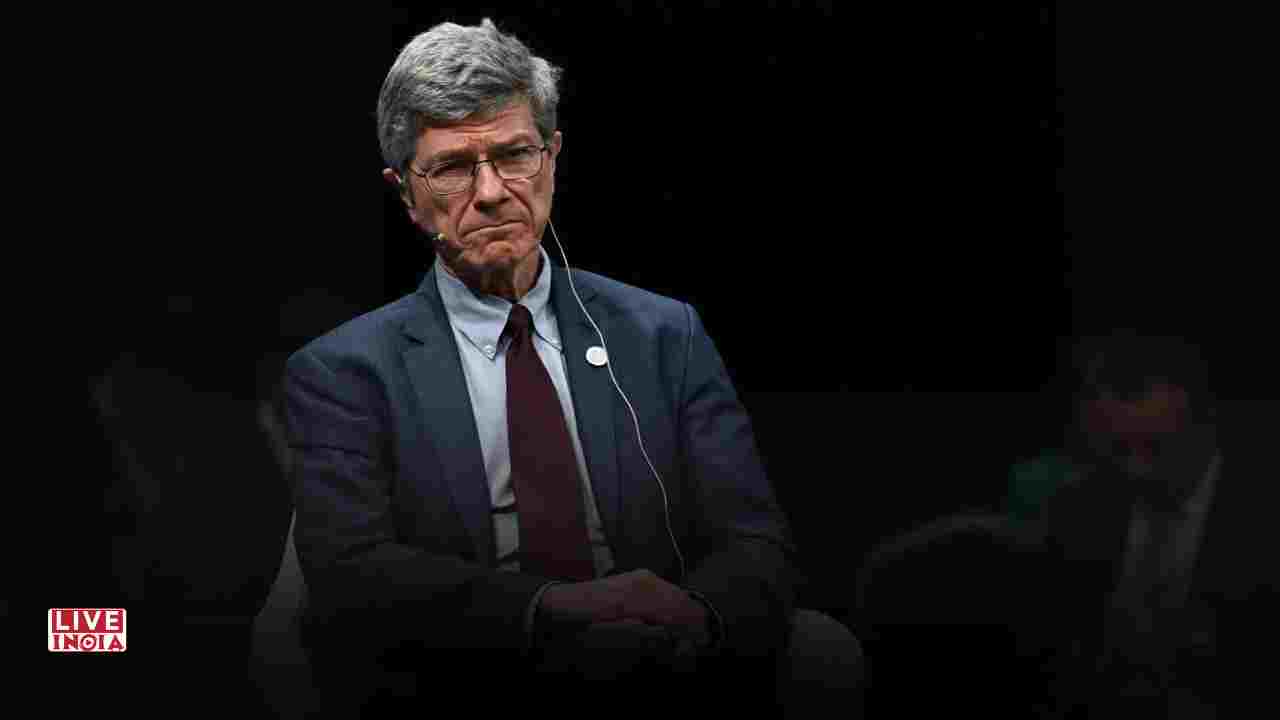


Columbia professor says U.S. policy on Ukraine is a “failed project of military arrogance,” while Trump signals optimism for direct peace deal after Alaska summit.
New Delhi, August 17: Renowned economist and Columbia University Professor Jeffrey Sachs has reignited the debate on the Russia-Ukraine conflict, arguing that a “neutral Ukraine” is the only viable path to peace and stability in Europe. Speaking to ANI, Sachs urged U.S. President Donald Trump to support the idea of Ukraine as a neutral buffer state between Russia and the European Union, warning that the current Western approach is unsustainable.
According to Sachs, Trump is looking for a way to disengage the U.S. from what he described as a deeply flawed policy but is constrained by powerful interests within Washington.
“Ukraine is a project of the U.S. military industrial complex… Going back to the 1990s, the idea was to get Ukraine on our side — Europe’s side, NATO’s side. But Russia would never allow NATO to expand to Ukraine. That was basic imperial arrogance, doomed to fail,” Sachs said.
He claimed that Trump “knows it’s failing” and has little personal interest in Ukraine itself. “He wants to get out of it. But the moment he says that, the military industrial complex says, no, you can’t. That’s appeasement, that’s weakness. And so he’s stuck.”
Europe’s Role Under Fire
Sachs also took aim at European leaders, accusing them of fueling the conflict instead of supporting a compromise.
“A neutral Ukraine is a good buffer between Russia and the European Union. But they don’t want a buffer. They seem to prefer an ongoing war,” he said, describing Europe’s attitude as “intoxicated with the idea that Europe extends where we want Europe to extend.”
He argued that genuine leadership from Trump could change the course of the war. “If he were really a leader, he would have explained to Americans that this was a mistaken policy. NATO doesn’t have to be there. Ukraine would be safer as a neutral country than as a proxy war battleground. If he were Eisenhower or Kennedy, that’s what he would have done. But we haven’t heard that from him yet.”
Trump After Alaska Summit: ‘Peace, Not Ceasefire’
Trump, however, struck an optimistic tone after his high-profile Alaska summit with Russian President Vladimir Putin. At a press conference, he described the talks as “very productive,” and later expanded on Truth Social, writing:
“A great and very successful day in Alaska! The meeting with President Vladimir Putin of Russia went very well, as did a late night phone call with President Zelenskyy of Ukraine and various European Leaders, including the highly respected Secretary General of NATO. It was determined by all that the best way to end the horrific war between Russia and Ukraine is to go directly to a Peace Agreement — not just a ceasefire that often collapses.”
Trump confirmed that Ukrainian President Volodymyr Zelenskyy would visit Washington, D.C., on Monday, and suggested a potential three-way meeting with Putin could follow. “If all works out, we will then schedule a meeting with President Putin. Potentially, millions of lives will be saved,” Trump posted.
Russia Welcomes Talks
From Moscow’s perspective, the Alaska summit was seen as a breakthrough in tone, if not in substance. Russia’s top economic envoy, Kirill Dmitriev, told CNN that the U.S. treated Russia “very well” during the meetings and stressed that both sides made progress.
“The US-Russia summit in Alaska has definitely been productive. There were many issues discussed and many we agreed on,” Dmitriev said. “We will continue building U.S.-Russia relations going forward despite resistance.”
The Road Ahead
Sachs’s sharp critique of U.S. policy and Trump’s hints of a possible peace framework suggest that the Ukraine war may be entering a pivotal phase. Whether Washington and its allies are prepared to accept a “neutral Ukraine” — or remain committed to Kyiv’s NATO aspirations — could determine the trajectory of the conflict in the months to come.
For now, the world waits to see whether the optimism of Alaska translates into real diplomacy, or whether entrenched interests will prolong one of the most dangerous wars in Europe since World War II.