


Chief Jim McDonnell says the deployment of federal troops in Los Angeles remains “unclear” and “unprecedented” as protests enter sixth day
Los Angeles, June 12 – As immigration protests stretch into their sixth consecutive day, Los Angeles Police Department Chief Jim McDonnell on Wednesday voiced concern and confusion about the undefined role of U.S. Marines and National Guard forces now deployed in the city.
Speaking to CNN’s Kaitlan Collins, McDonnell said the LAPD has yet to receive clear guidance on the scope of responsibilities or legal authority of the military personnel stationed in the Los Angeles area. The federal troops were sent following President Donald Trump’s directive to protect Immigration and Customs Enforcement (ICE) agents and federal facilities.
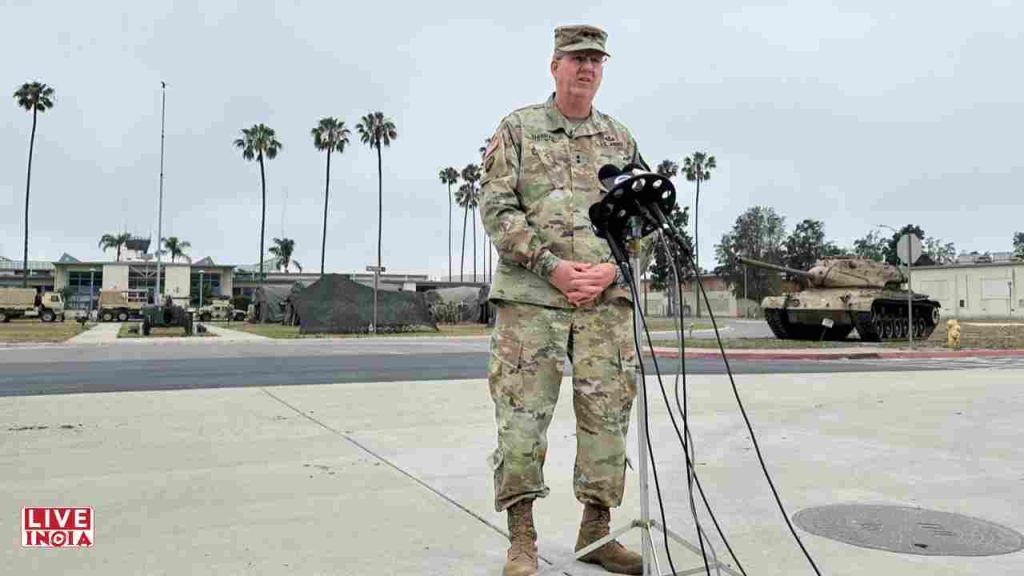
“The role is still not clear to us, the Marines, or the National Guard, other than they’re a support entity to protect federal employees and facilities,” McDonnell said. “This is unprecedented.”
He added that while ICE agents have the right to arrest lawbreakers, the involvement of active-duty military in a municipal setting remains unfamiliar territory. “As far as the scope of their responsibilities or their abilities relative to arrest or dealing in a municipal environment, that’s not something that they do every day certainly,” he said.
Concerns Over Military’s Preparedness and Training
Chief McDonnell questioned whether the troops have adequate training in crowd management and urban protest control, particularly amid volatile nighttime demonstrations. He emphasized the importance of clarity and said he plans to meet with Maj. Gen. Scott Sherman, commander of Task Force 51, which is overseeing the deployment.
“What their training is, we’re not sure of that – either on the Army or the Marines as it relates to crowd management,” McDonnell noted.
Asked about Trump’s decision to deploy the National Guard on Saturday, McDonnell said he believes the situation hasn’t reached the threshold that typically warrants military intervention.
“The protests are nowhere near a level of unrest requiring the National Guard,” he said, pointing out that local law enforcement protocols prioritize using internal LAPD resources and regional law enforcement cooperation before requesting federal assistance.
A Complex Protest Landscape
The LAPD has had to contend with a diverse array of protestors, including “black bloc” anarchist groups who are known for coordinated tactics, encrypted communications, and confrontational behavior.
“They’re very sophisticated. They do have radio communications. They do move around. They monitor police channels,” McDonnell explained. “They’ll create distractions to draw us away from the scene we’re about to make arrests.”
Despite these challenges, McDonnell reaffirmed the department’s commitment to preserving public order while safeguarding the constitutional right to protest.
“Our role is very clear to us – to keep the peace and allow people who are protesting peacefully to do so,” he concluded.
As federal forces remain present in Los Angeles, questions about jurisdiction, legal limits, and the appropriate use of military force on U.S. soil continue to dominate public discourse.