
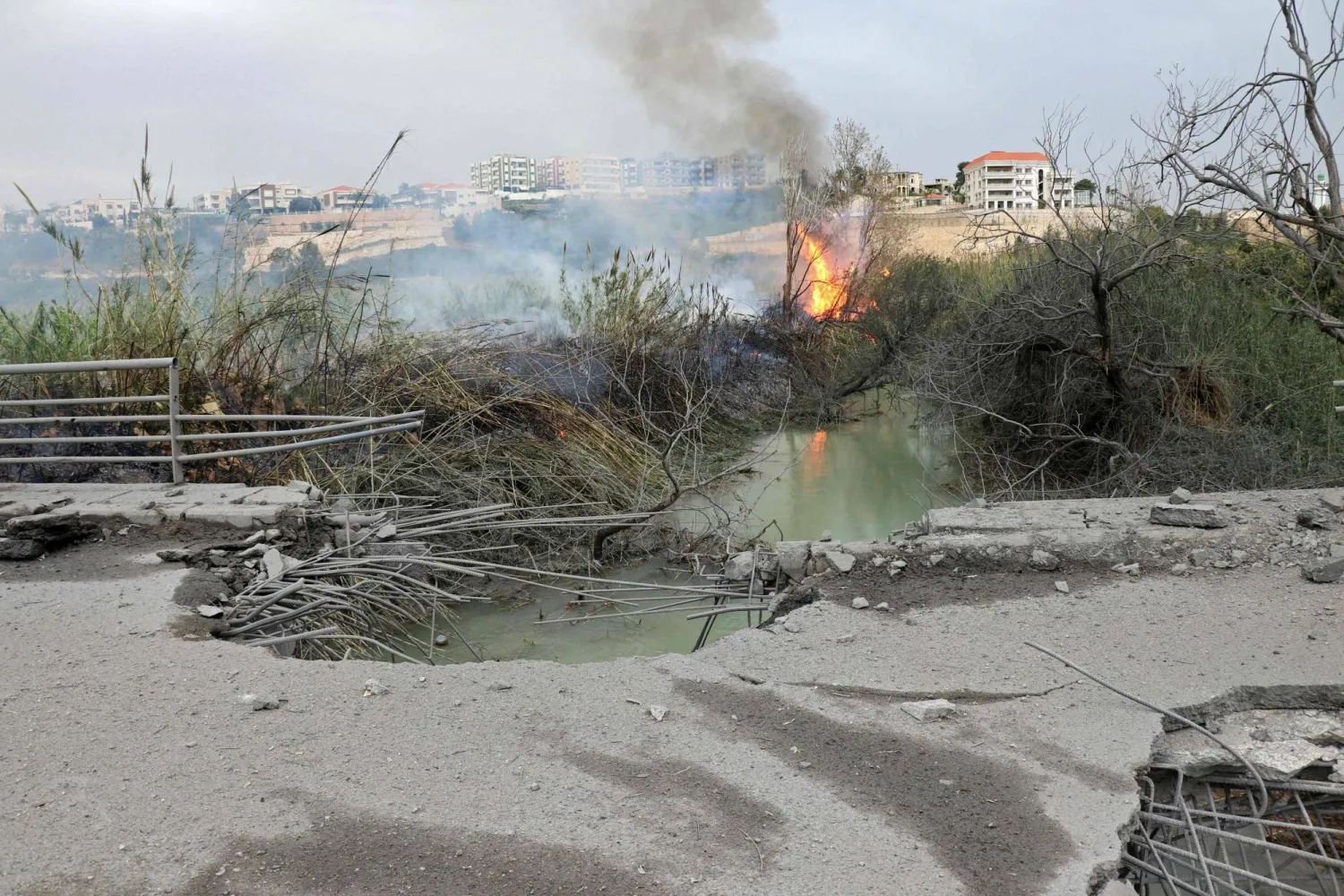


In a major tactical escalation on Sunday, March 22, 2026, the Israeli Defence Forces (IDF) launched a series of precise airstrikes that destroyed the Qasmiya Bridge, a vital artery over the Litani River. The strike effectively severs the primary highway linking the Tyre district and southern villages to the rest of Lebanon, marking a significant shift in Israel’s military strategy against Hezbollah.
The destruction of the bridge follows an explicit directive from Prime Minister Benjamin Netanyahu and Defense Minister Israel Katz to neutralize all river crossings allegedly being used by Hezbollah for the transport of militants and weapons.
1. The Strike: Four Blasts Render Bridge “Unusable”
According to Lebanon’s state-run National News Agency (NNA), the IDF issued a warning hours before the attack, followed by four successive missile strikes.
- Extensive Damage: The strikes caused the complete collapse of the bridge structure, cutting off the main coastal highway.
- Collateral Impact: Reports indicate severe damage to local electricity networks, nearby shops, orchards, and public parks adjacent to the riverbanks.
- Hezbollah Rationale: The IDF maintains the bridge was a critical logistical hub for Hezbollah’s southern operations, facilitating the movement of rockets and personnel toward the Israeli border.
2. Lebanon’s Warning: “A Prelude to Invasion”
Lebanese President Joseph Aoun condemned the strikes as a “flagrant violation of sovereignty,” suggesting the move is a precursor to a wider Israeli land campaign.
- Geographical Severance: Aoun stated that targeting the Litani bridges is a deliberate attempt to isolate southern Lebanon from the central government and the capital, Beirut.
- Sovereignty Breach: The Lebanese government has called for an emergency UN Security Council session, labeling the systematic destruction of civilian infrastructure as a “dangerous escalation.”
3. Israel Expands “Prolonged” Ground Operation
The bridge strikes coincide with an official announcement from the Israeli military regarding the expansion of its ground campaign, which began earlier this month.
- Phase Two: Lieutenant General Eyal Zamir confirmed that the operation against Hezbollah has “only begun” and will be a “prolonged” effort to dismantle the group’s infrastructure south of the Litani.
- Timeline: Military spokesman Brigadier General Effie Defrin indicated that the expanded ground maneuvers are scheduled to commence within the coming week.
- The Trigger: Tensions erupted on March 2, 2026, when Hezbollah launched a massive rocket barrage following the joint Israeli-US strike that killed Iran’s Supreme Leader, Ayatollah Ali Khamenei.
4. Strategic Context: The Litani Buffer
By destroying the bridges, Israel aims to create a “kill zone” or buffer south of the Litani River, preventing Hezbollah from reinforcing its frontline positions. Defense Minister Katz has also ordered the IDF to step up the demolition of houses in southern Lebanese villages that are suspected of housing Hezbollah tunnel shafts or weapon caches.
Conflict Status: Southern Lebanon (March 23, 2026)
| Key Infrastructure | Status | Strategic Impact |
| Qasmiya Bridge | Destroyed | Severs Tyre-Beirut coastal highway. |
| Litani River Crossings | Under Attack | IDF ordered to destroy all bridges. |
| Ground Campaign | Expanding | Transitioning to “Phase Two” next week. |
| Civilian Areas | Evacuation Warnings | Heightened demolition of border-adjacent structures. |