


Youth-led demonstrations against corruption and censorship erupt into tragedy; UN and global community demand accountability
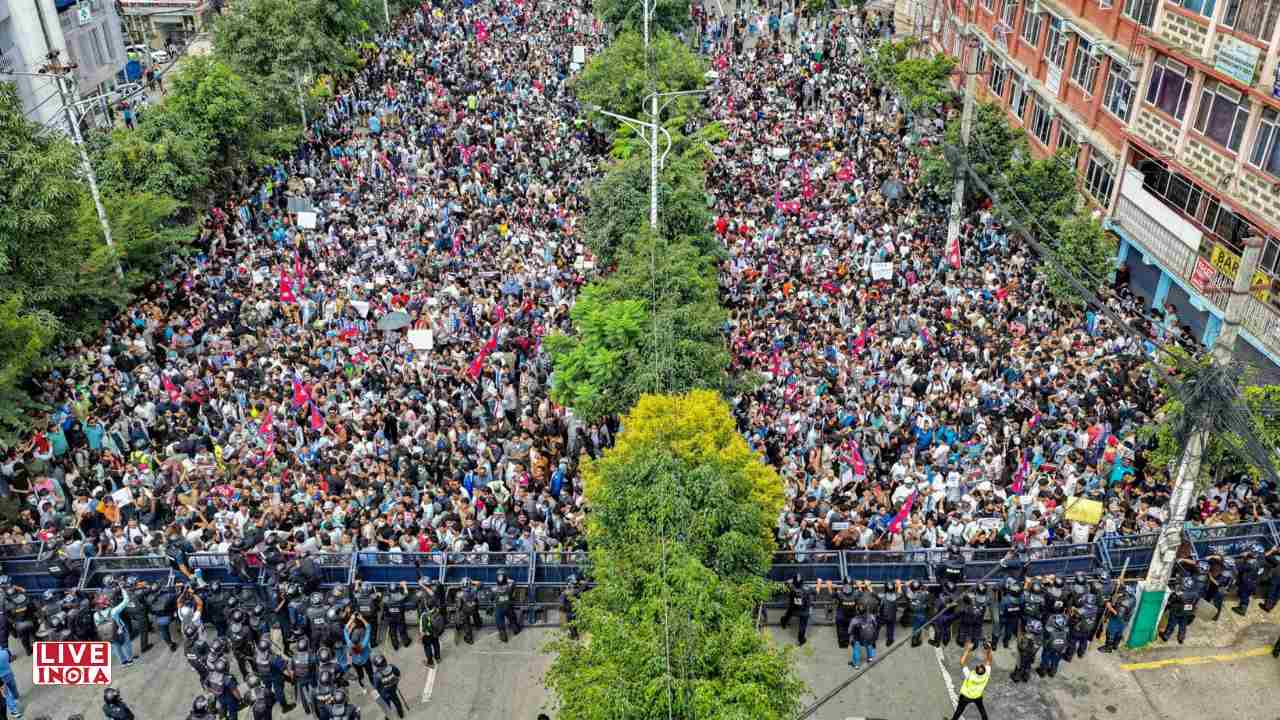
Kathmandu, September 9: Nepal has lifted its controversial ban on social media platforms just hours after violent protests shook the nation, leaving 19 people dead and dozens injured. The protests, driven largely by young demonstrators under the banner of Gen-Z Nepal, were a direct outcry against corruption, shrinking opportunities, and the government’s restrictions on digital freedom.
The Oli-led government had imposed the ban on September 4, citing non-compliance of global tech companies with Nepal’s registration requirements. But as frustration spilled onto the streets, Monday saw an eruption of anger and tragedy. Security forces opened fire on protestors in Kathmandu and Itahari, leading to the bloodiest day of unrest in recent years.
Violence in the Capital
According to officials, at least 17 people were killed in Kathmandu alone, while two more died in Itahari. Eyewitnesses described scenes of chaos near the parliament building as protestors attempted to break through barricades. Police responded with live ammunition, tear gas, and batons. “The firing was indiscriminate. People were running, shouting, falling—there was no escape,” said one student protestor, still shaken by the night’s events.
Despite the mounting death toll, Prime Minister KP Sharma Oli refused to step down. Government spokesperson and Minister for Communication, Information and Technology, Prithivi Subba Gurung, confirmed, “The Prime Minister will not resign now.” Oli instead blamed “infiltrating groups” for the violence, rather than acknowledging responsibility.
By midnight, however, the government announced the lifting of the ban. Social media platforms including Facebook, YouTube, and X (formerly Twitter) were restored, underscoring how public outrage had forced the administration into retreat.
Global Condemnation
The bloodshed quickly drew sharp criticism from the international community. In a joint statement, the embassies of Australia, Finland, France, Japan, South Korea, the UK, and the US expressed “deep sorrow” over the killings. They extended condolences to the families of the victims and called on all parties to exercise restraint.
“We are deeply saddened by the violence seen in Kathmandu and elsewhere in Nepal, including the tragic loss of life during demonstrations. Fundamental rights to peaceful assembly and freedom of expression must be protected,” the statement read.
The United Nations Human Rights Office also weighed in, calling for a “prompt and transparent investigation” into what it described as “deeply worrying allegations of unnecessary or disproportionate use of force.” Ravina Shamdasani, spokesperson for the UN Human Rights Office, said: “All security forces must comply with the basic principles on the use of force and firearms by law enforcement officials.”
A Youth Uprising Against Corruption
While the spark was the government’s social media ban, the protests reflected deeper discontent among Nepal’s youth. Students and young professionals voiced anger at rampant corruption, lack of job opportunities, and what they saw as an increasingly authoritarian approach to dissent.
“Social media was our only voice. They tried to silence us, but instead, they provoked us,” said a 21-year-old protestor outside Tribhuvan University.
Observers note that this movement has echoes of Nepal’s democratic uprisings of the past, but this time, it is fueled by a digitally connected generation unwilling to accept censorship or corruption as the norm.
The Road Ahead
As Nepal reels from the violence, questions remain about accountability for the killings and whether the Oli government can restore trust among its disillusioned youth. Rights groups have urged Kathmandu to ensure that any future regulations on social media respect international human rights obligations.
For now, the lifting of the ban marks a symbolic victory for protestors—but the scars of Monday’s violence may deepen the divide between the state and its people.