
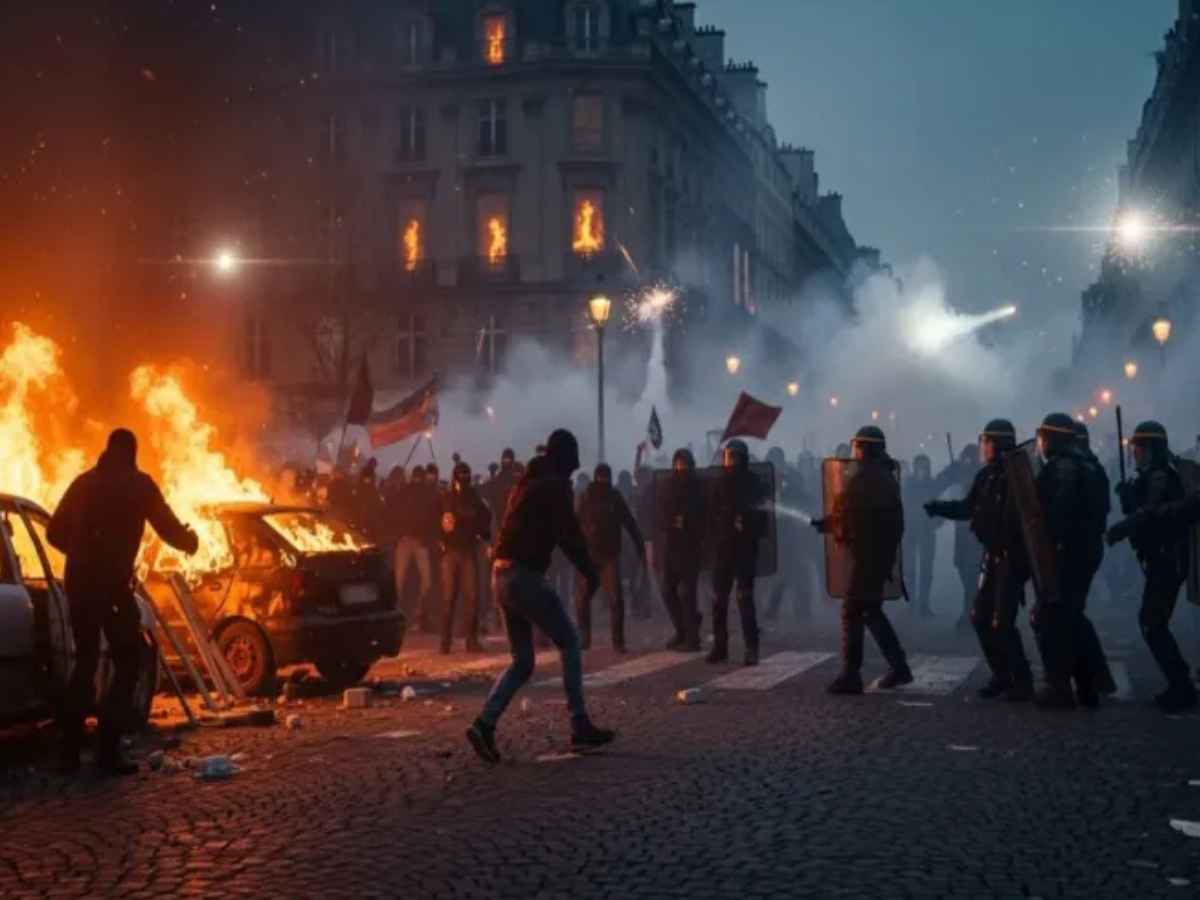


France is in a state of turmoil as a deeply divided political landscape and a proposed budget with wage cuts have sparked a wave of widespread, and often violent, protests. The unrest is challenging President Emmanuel Macron’s authority and plunging the country into uncertainty.
September 10, 2025: France is in the middle of its biggest political crisis in a long time. President Emmanuel Macron chose Sébastien Lecornu as his seventh Prime Minister in a last-ditch bid to pacify a political scene that is severely split. The move comes in the middle of enormous, often violent protests led by a grassroots movement that has shut down vital services and led to more than 200 arrests around the country.
The anticipated government budget, which would cut spending by 44 billion euros ($52 billion) to pay off the national debt, is what has triggered the uproar. People who are against the cuts, like the leaderless organization “Bloquons Tout,” claim that they will largely damage social welfare and public services, which will hurt the working class.
A Government That Is Split
There is political instability since the parliament is divided into three main groups: the far-right National Rally (the biggest party), a very active left-wing alliance, and President Macron’s centrist party, La République En Marche (LREM). Macron has to keep looking for support on a case-by-case basis because he doesn’t have a clear majority. The fifth appointment of Lecornu in two years is a planned move to win a vote on the budget.
Lecornu, who is 39 years old and used to be a member of the center-right Republicans, is known for getting along with persons on the far right. His public support for higher military spending and supporting Ukraine is in line with some of the National Rally’s goals, which could make it easier to establish a common ground. The far-left France Unbowed (LFI) party has already stated it will submit a no-confidence resolution against the incoming government. This illustrates how hard it will be for him to accomplish his job.
Protests and police action
The administration doesn’t put up with the protests that are still going on, and they have sent some 80,000 police officers to cities all over the country. Rallies in big cities like Paris and Lyon have become violent, with individuals building barricades and lighting fires, even though there are a lot of police officers present. A police chief told reporters that he felt the “radical left” was behind the rallies, which are also being planned a lot on the internet.