
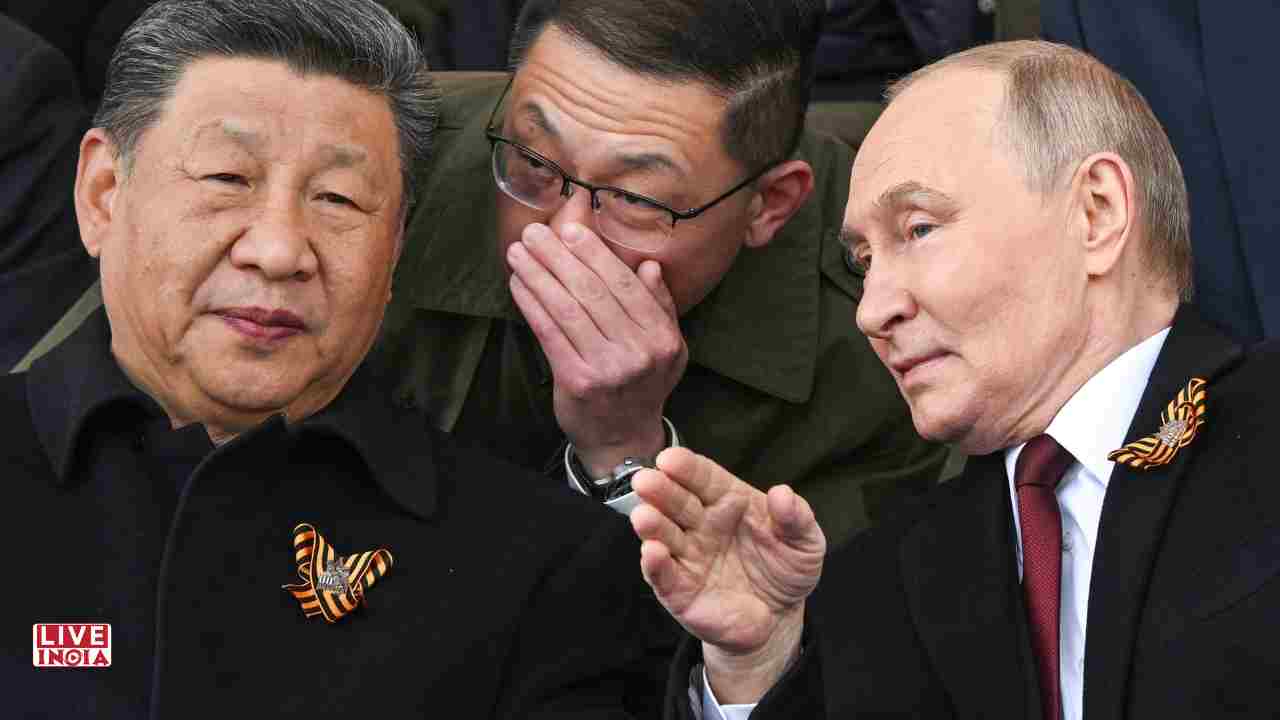


Ahead of the 25th SCO Summit in Tianjin, Russian President Vladimir Putin stresses closer ties with China, calls for reforms in global financial institutions, and positions BRICS as a voice for the “Global Majority.”
Russian President Vladimir Putin has underlined Moscow and Beijing’s growing alignment on global issues, declaring that both nations are “united in strengthening BRICS” as a counterbalance to what he described as discriminatory sanctions and financial “neo-colonialism.”
In a wide-ranging interview with Xinhua News Agency, ahead of the 25th Shanghai Cooperation Organisation (SCO) Summit being hosted in Tianjin, China (August 31–September 1), Putin emphasized that Russia and China see BRICS not just as an economic partnership, but as a “key pillar of global architecture.”
The Russian leader argued that sanctions—imposed by Western nations—are crippling the socioeconomic development of not only BRICS members but also the wider international community.
“We stand united in strengthening BRICS’ ability to address pressing global challenges, share similar views on regional and international security, and take a common stand against discriminatory sanctions that hinder development worldwide,” Putin asserted.
Strengthening BRICS and Reforming the Financial Order
Putin described BRICS as central to building a new, fairer global order. He highlighted joint initiatives between Russia and China aimed at creating common economic platforms in strategic sectors and expanding opportunities for member states.
At the heart of his message was a strong call for reforming the International Monetary Fund (IMF) and the World Bank, two institutions long dominated by Western powers.
“A new financial system must be based on openness and true equity, providing equal access for all countries and reflecting their real standing in the global economy,” he said. “It is essential to end the use of finance as an instrument of neo-colonialism. BRICS seeks inclusive progress that benefits the Global Majority.”
Putin’s words reflect the group’s shared frustration with existing financial structures and its push to create alternatives that amplify the voices of emerging economies.
China’s Role and the “Global Majority”
The Russian President also praised China’s leadership within the G20, crediting Beijing with helping shift the group’s focus toward issues that matter to the Global South.
Putin welcomed the African Union’s inclusion in the G20, describing it as a historic step that brings the priorities of developing nations closer to the center of global governance.
“Together with BRICS members and other like-minded nations, we have redirected the G20 agenda to focus on the needs of the Global Majority, while deepening synergies between BRICS and the G20,” he said.
Strategic Diplomacy in Tianjin
Putin’s remarks come as he arrives in Tianjin for the SCO Heads of State Council summit, where leaders from across Eurasia will discuss regional security, trade, and development. On the sidelines, Putin is expected to hold bilateral talks with Indian Prime Minister Narendra Modi, a meeting closely watched for signals on future BRICS-India cooperation and evolving Russia-India ties.
The SCO gathering, alongside Putin’s reaffirmed support for BRICS, underscores how Moscow and Beijing are presenting themselves as champions of a multipolar world—where no single bloc dominates international decision-making.
With tensions over sanctions, economic inequality, and global governance rising, Putin’s message is clear: Russia and China intend to position BRICS as a unifying platform for the developing world—a counterweight to Western financial and political influence.
Whether BRICS can fulfill that ambitious role remains to be seen, but the vision Putin and Beijing are putting forward is one of transformation: an international system rooted in “equity,” “inclusivity,” and the aspirations of what they call the Global Majority.