
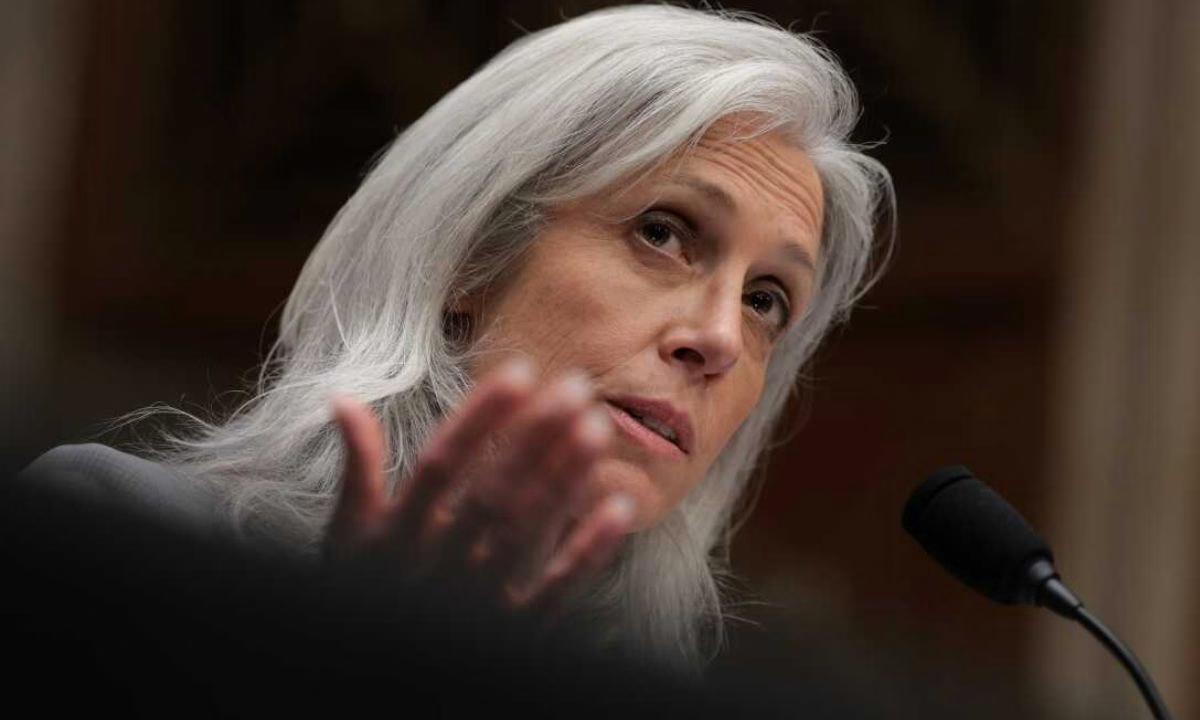

.)
July 30, 2025: the U.S. Senate voted 51 to 47 along party lines to make Susan Monarez the new head of the Centers for Disease Control and Prevention (CDC). In March, President Trump chose her for the job, calling her “an incredible mother and dedicated public servant” who “understands how important it is to protect our children, our communities, and our future.”
Monarez has been the acting head of the CDC since January. Before that, he was in charge of the Advanced Research Projects Agency for Health (ARPA-H). It was a bit surprising that she was chosen to be the CDC director because she has a Ph.D. but is not a medical doctor, unlike other recent CDC directors. The CDC said that Monarez “brings decades of distinguished experience in health innovation, disaster preparedness, global health, and biosecurity” to the agency and will help it “Make America Healthy Again.”
Also Read: Day 1 of the first Test between Zimbabwe and New Zealand
At her confirmation hearing on July 9 before the Senate’s Health, Education, Labor, and Pension (HELP) committee, Republican Chairman Sen. Bill Cassidy, a doctor, praised Monarez for her promise to restore public trust after the COVID-19 outbreak. Democratic senators on the committee, on the other hand, were worried about possible cuts to federal financing for health services and medical research. They also questioned the CDC’s position under Health and Human Services Secretary Robert F. Kennedy Jr.
Monarez was asked a lot of questions about vaccine recommendations, especially since Secretary Kennedy has long been against vaccines and has pushed a false belief that childhood doses cause autism. During her testimony, Monarez disagreed with this position, saying that she has “not seen a causal link between vaccines and autism.” Kennedy has recognized the effectiveness of the measles vaccine while still supporting people’s right to choose. In a March interview with CBS News, he even urged people to get the vaccine.
Monarez said at her hearing, “If I’m confirmed as CDC director, I look forward to helping the secretary with science and evidence and making sure I’m giving him the best information possible.” “Measles is a serious health threat, and we need to do everything we can to stop it and lessen its effects.” She also promised to make sure vaccines are available first, even if the CDC’s vaccine advisory council makes revisions to its recommendations with new RFK Jr. appointees.
Kennedy also talked about fluoride, another topic he was passionate about. This year, Utah and Florida were the first states to make it illegal to put fluoride in drinking water. Monarez said, “Fluoride is an important part of oral health, and there are many ways to use fluoride to improve oral health. A direct application can be very helpful.” When Democratic Senator Angela Alsobrooks from Maryland asked Monarez if the fluoridated water in Potomac, Maryland, is safe, he said, “I believe the water in Potomac, Maryland is safe.”
Senators kept asking Monarez how she would work with Secretary Kennedy, stressing that the CDC director needs to be politically independent. “The CDC director can’t do this important job if they are tied to a political party. Democratic Senator Maggie Hassan of New Hampshire remarked, “That means you have to be willing to disagree with political leaders based on scientific evidence.” Monarez said, “I am an independent thinker and a scientist. I would be happy to share my scientific and evidence-based opinions with him as he makes some of these very tough choices.”
Hassan asked Monarez more questions after she avoided answering a question about disagreeing with Kennedy. He specifically asked her about Kennedy’s remark that “it’s very difficult for measles to kill a healthy person.” Sadly, this year’s measles outbreak, which was mostly in West Texas, has led to the deaths of two children who physicians said had no other health problems. This shows how serious the disease is.