


Tensions Rise as White House Official Blasts India’s Ties with Russia and China
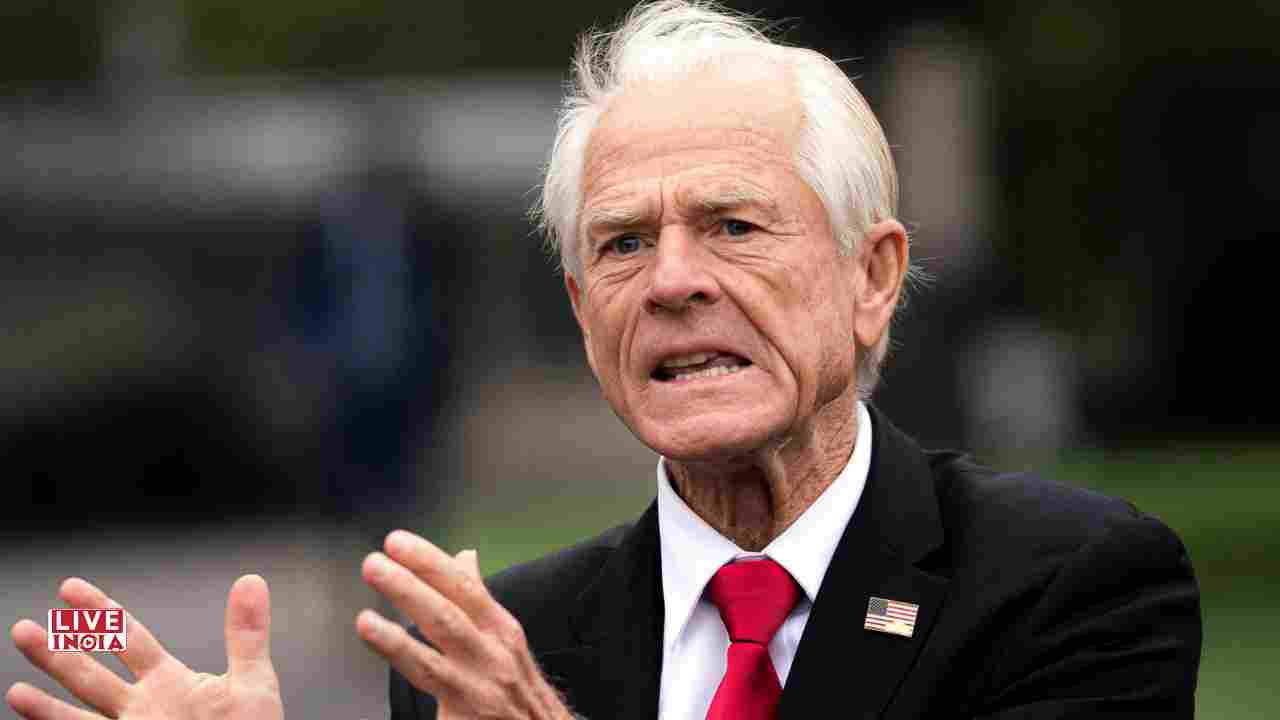
Washington, DC [US], August 22 – A tempest is brewing in the middle of Washington that might destroy the hard-won progress in U.S.-India relations. White House Trade Adviser Peter Navarro made a shocking and impassioned address in which he didn’t hold back. He said that India was serving as a “laundromat for the Kremlin” and a partner in Russia’s war on Ukraine to make money. His statements were full of respect for Indian Prime Minister Narendra Modi, but the message was clear: the United States thinks that India’s pursuit of its own economic interests is making global strife worse.
Many people were shocked by Navarro’s comments because he also praised India as an important participant in world peace. He said, “The road to peace goes through New Delhi,” even if he harshly criticized the country’s trade practices. The main point of his argument is that India’s purchases of Russian oil have gone up a lot since the February 2022 invasion of Ukraine. India got less than 1% of its oil from Russia before the war. Navarro calls the measure “nonsense” and a “laundromat for the Kremlin,” and that number has gone up to 35–40% today.
Navarro says that India buys cheap Russian crude oil, refines it, and then sells the finished products for more money on the world market. He says that this plan gives Russia’s war machine a crucial financial boost, which goes against U.S. and partner efforts to hurt the Russian economy. He said, “What you’re doing right now is not making peace; it’s keeping the war going.”
This angry exchange comes after President Donald Trump put high taxes on Indian imports. In July, a 25% tariff was imposed, then a few days later, another 25% was added, bringing the total to an unbelievable 50%. Navarro defended these duties by calling India’s trade obstacles “Maharaja tariffs” and saying that they make the U.S. trade imbalance “massive,” which hurts American workers and businesses. He also said that India uses the money it makes from this commerce to buy Russian oil, which indirectly pays for the conflict that U.S. taxpayers are helping to fight in Ukraine.
But the mood in Washington is not at all uniform. Nikki Haley, who used to be the U.S. ambassador to the United Nations, has said that hurting the 25-year-old cooperation with India would be a “strategic disaster.” In an editorial article for Newsweek, she advised President Trump to “reverse the downward spiral” and engage directly with Prime Minister Modi. Haley thinks that India is the only country that can really balance out China’s expanding power in Asia. To do this, India needs to have a strong and trusting relationship with the U.S.
Jeffrey Sachs, a well-known economist, has also called the U.S. government’s tariffs “bizarre” and “very self-destructive.” Sachs told that the tariffs were “sabotage” and “the dumbest tactical move in U.S. foreign policy.” He also pointed out that they have paradoxically brought the BRICS countries together like never before.
India’s External Affairs Minister S. Jaishankar didn’t hold back when he responded to the criticism from American authorities. He said that the U.S. position was hypocritical because China buys more Russian oil than any other country, and the European Union buys more Russian LNG than any other country. Jaishankar also said that the U.S. had asked India to buy Russian oil to assist stabilize global energy markets in the past.
Jaishankar stated, “Honestly, we are very perplexed at the logic of the argument.” This showed that India is serious about preserving its own interests and making sure that its 1.4 billion people have enough energy. The Ministry of External Affairs has said this again, calling the U.S. levies “extremely unfortunate” and saying again that India’s judgments about what to import are based on market conditions and national security.
As the geopolitical chessboard changes, the conflict between these two big countries generates more problems than it answers. Is this a smart move by the Trump administration to get India to act, or is it a stupid mistake that could bring a key ally closer to its enemies? Russian officials, including Roman Babushkin, call the U.S. actions “unjustified and unilateral.” Even Russian President Vladimir Putin says that trade between the U.S. and Russia has grown by 20% since Trump took office. However, the focus is still on New Delhi. The future of U.S.-India relations is rather uncertain right now. They are stuck between the needs of global politics and the straightforward pursuit of their own interests.