
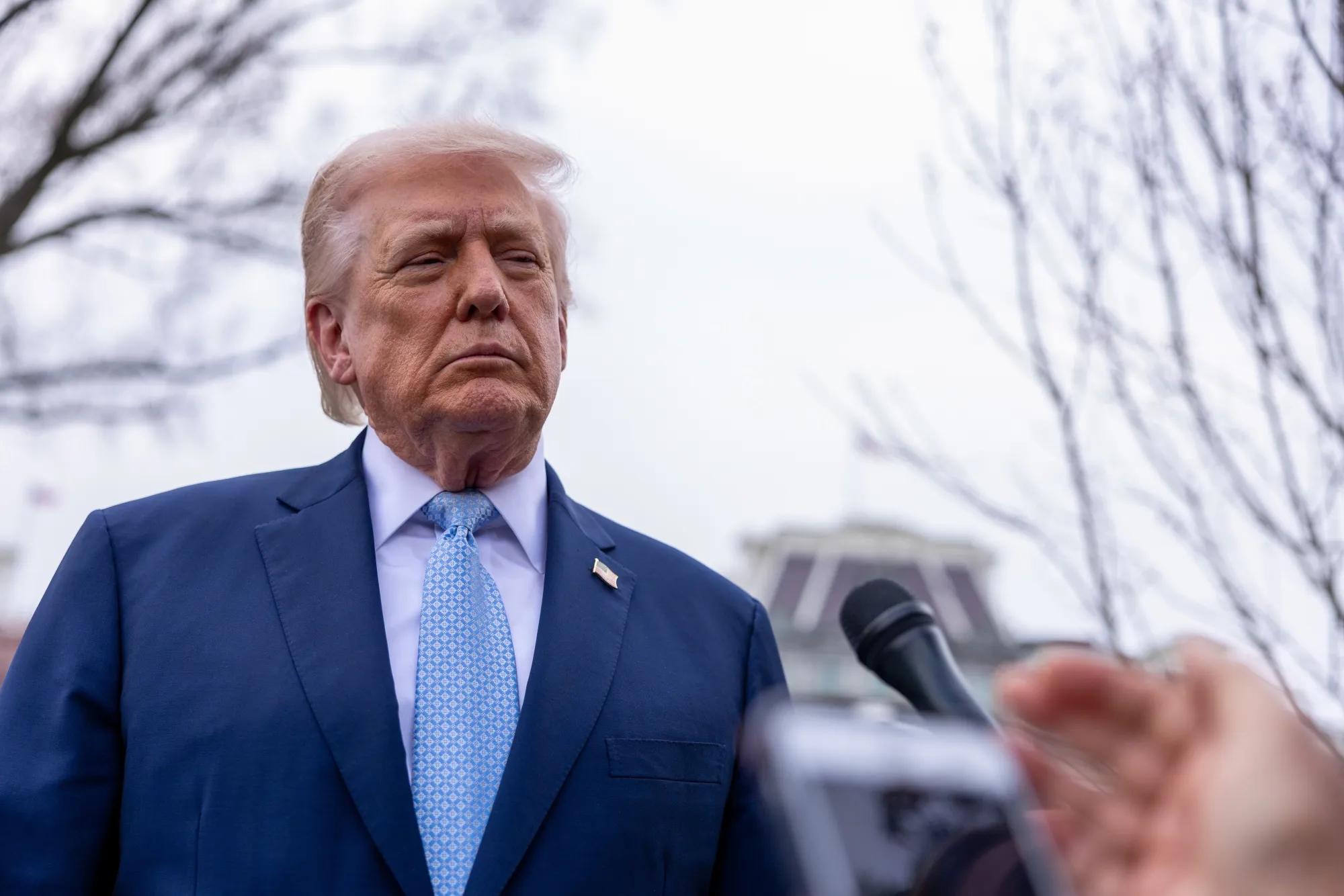


US President Donald Trump openly suggested that he would seize Iran’s oil wealth for the United States if given the choice, even as tensions escalated over Tehran’s refusal to reopen the vital Strait of Hormuz.
Speaking during the annual Easter Egg Roll event at the White House, Trump said he would like to take control of Iran’s oil resources, arguing that it could generate profits while benefiting Iranian citizens.
“If it were up to me, I take the oil, I keep the oil, I would make plenty of money, and I’d also take care of the people of Iran much better than they’ve been taken care of,” Trump told reporters.
His remarks immediately drew attention from legal experts, who noted that under international law — particularly the United Nations doctrine of permanent sovereignty over natural resources — a nation’s oil and mineral wealth legally belongs to that country. Any attempt to seize such resources could be viewed as unlawful appropriation.
Deadline Issued To Reopen Strait Of Hormuz
Trump’s comments came alongside a firm deadline issued to Iran to reopen the Strait of Hormuz — a crucial global shipping lane through which roughly one-fifth of the world’s oil and liquefied natural gas flows.
The US president warned that failure to reopen the strait by Tuesday evening could trigger severe military retaliation targeting Iran’s infrastructure.
According to recent reports, Trump has threatened large-scale strikes if Tehran does not comply, stating that Iran could be left with “no bridges, no power plants, no anything.”
The deadline has intensified global concern, as the closure of the Strait of Hormuz has already disrupted global energy markets and driven oil prices sharply higher.
Trump Acknowledges Public Opposition
Despite expressing interest in seizing Iran’s oil, Trump acknowledged that domestic opinion in the United States might not support such an action.
“If I had my choice, what would I like to do? Take the oil, because it’s there for the taking. There’s not a thing they can do about it,” he said, before adding that many Americans prefer bringing US troops home.
He emphasised that the war is fundamentally about preventing Iran from acquiring nuclear weapons, dismissing critics of the conflict as “foolish.”
Trump has repeatedly argued that forcing Iran to abandon its nuclear ambitions remains the central objective of the ongoing conflict.
Reference To Venezuela Raises Eyebrows
In his remarks, Trump cited Nicolás Maduro as an example of how US involvement in oil-rich countries could work.
He claimed that after US forces captured Maduro earlier this year, Venezuelan oil reserves were being refined in Houston, suggesting a similar strategy could be applied to Iran — though he acknowledged it would require more time and public backing.
The comparison has raised concerns among analysts who view such remarks as potentially escalating geopolitical tensions.
Iran Shows No Signs Of Backing Down
Meanwhile, Iranian officials have maintained a firm stance, showing little willingness to comply with US ultimatums.
Tehran has prepared responses to ceasefire proposals and has stressed that negotiations cannot take place under threats or pressure.
Diplomatic channels remain active, with intermediaries reportedly working to reduce tensions, but the situation remains volatile as the deadline approaches.
Oil Markets React With Caution
Global oil markets reacted cautiously to Trump’s statements and ongoing uncertainty surrounding the Strait of Hormuz.
US crude prices dipped slightly — around 1% — to approximately $110 per barrel, though they remain significantly higher than pre-war levels.
Market analysts continue to warn that prolonged disruption in the region could trigger further energy price shocks and widen the conflict’s economic fallout.