
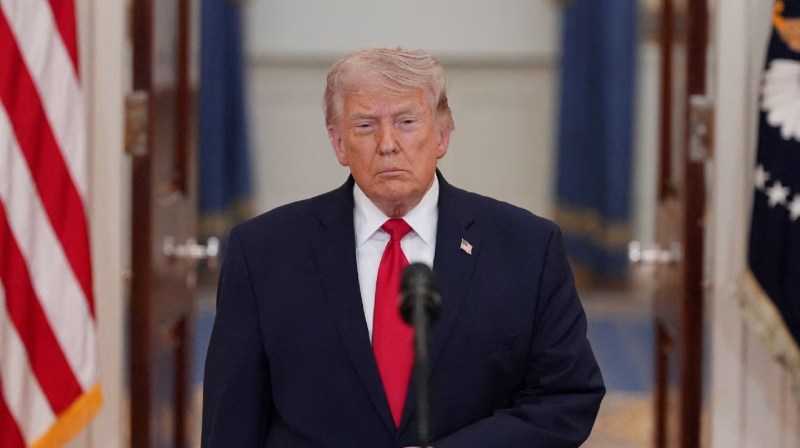


WASHINGTON / TEHRAN — The 2026 West Asia War has reached a terrifying precipice. On Monday, April 6, 2026, President Donald Trump issued a final ultimatum to the Islamic Republic: reopen the Strait of Hormuz by 8:00 PM ET Tuesday or face a “barrage” that could take out the entire country in a single night.
As the clock ticks toward the deadline, the conflict has widened into a systematic dismantling of Iran’s energy and military leadership.
- The “Stone Age” Ultimatum: Trump’s Final Warning
Speaking from the White House, President Trump shifted his rhetoric from surgical strikes to total national devastation.
The Threat: “The entire country can be taken out in one night, and that night might be tomorrow night,” Trump warned. He reaffirmed his intent to target civilian infrastructure, including power plants and bridges, if the Strait of Hormuz remains closed to U.S. and Israeli vessels.
The Goal: Trump’s “Power Plant Day” is designed to force Iran to relinquish its grip on the world’s most vital oil transit point.
The “Oil” Factor: Earlier in the day, Trump suggested a desire to “take the oil,” though he acknowledged the American public’s fatigue with long-term foreign entanglements.
- Iran Rejects “Temporary” Peace
Despite a mediated proposal from Egypt, Pakistan, and Turkey for a 45-day ceasefire, Tehran has stood its ground.
The Stance: Iranian officials stated they will only accept a permanent end to the war with ironclad guarantees against future U.S. aggression.
The Trust Gap: “Negotiations are entirely incompatible with ultimatums,” said Foreign Ministry spokesman Esmail Baghaei, citing two previous U.S. bombings that occurred during active talks.
10-Point Response: Through Pakistani mediators, Iran offered a counter-proposal focused on reconstruction and the lifting of sanctions, but the U.S. has yet to acknowledge it as a viable path forward.
- Israel Strikes the “Heart” of Iran’s Economy
While Trump issues verbal threats, Israel has moved to paralyze Iran’s domestic energy supply.
South Pars Gas Field: Israeli jets struck a key petrochemical plant in the South Pars field—the world’s largest natural gas reserve. This field provides the vast majority of electricity for Iran’s 93 million citizens.
The Assassinations: In a major blow to the regime, Israeli strikes killed Maj. Gen. Majid Khademi, the head of IRGC Intelligence, and Asghar Bakeri, a leader in the elite Quds Force.
Air Superiority: Overnight strikes also targeted three Tehran airports (Bahram, Mehrabad, and Azmayesh), reportedly destroying dozens of Iranian Air Force helicopters and planes on the ground.
- Human and Economic Toll (As of April 6, 2026)
The conflict, which began on February 28, has rapidly spiraled into a humanitarian disaster across multiple borders.
| Metric | Details |
| Death Toll (Iran) | Over 1,900 killed (Government hasn’t updated in days). |
| Death Toll (Lebanon) | Over 1,400 killed; 1 million+ displaced. |
| Global Oil Prices | Brent Crude surged to $109/barrel (up 50% since start of war). |
| Air Defence | Saudi Arabia, UAE, and Kuwait active in intercepting Iranian drones. |
| Domestic Impact | Reports of residents in Tehran taking sleeping pills to cope with nightly bombings. |
Strategic Outlook: What Happens at 8 PM Tuesday?
If the deadline passes without an Iranian concession, Defense Secretary Pete Hegseth warned that the volume of strikes will exceed anything seen since the war began. Former Iranian officials have warned that striking power plants will send the entire Middle East into “darkness,” potentially triggering a scorched-earth response from Iranian proxies across the region.