
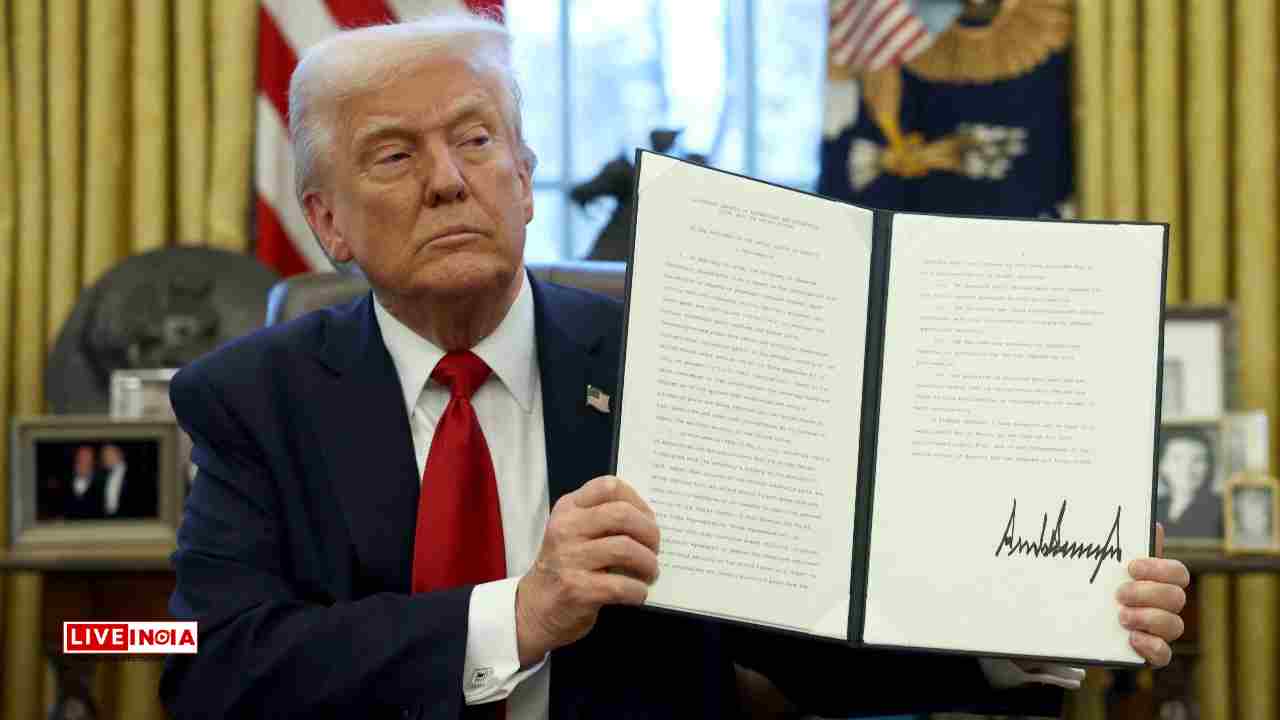


Move expected to raise car prices, disrupt global trade, and strain ties with key auto-exporting nations; Trump defends it as a “win for American jobs”
Washington, DC [US], March 27: In a bold new move aimed at bolstering domestic manufacturing, President Donald Trump has announced a sweeping 25% tariff on all imported vehicles, a policy set to take effect on April 2. Describing the decision as “very exciting” for American industry, Trump said the measure would encourage carmakers to shift production to U.S. soil.
The tariffs are expected to affect nearly half of all vehicles sold in the United States, including many models from American companies that are assembled overseas.
“This is a win for anyone building cars in the United States,” Trump said during his Oval Office announcement. “We’re bringing jobs back, and we’re taking a stand for fair trade.”
Industry and Global Concerns Mount
However, the announcement has set off alarm bells across the global auto industry. Autos Drive America, a group representing international carmakers with U.S. operations, warned of dire consequences.
“These tariffs will significantly raise vehicle production costs, limit consumer choices, and may result in job losses,” the group stated.
Economists predict that vehicle prices could rise by several thousand dollars, deepening the financial strain on American consumers already dealing with elevated inflation.
Global Trade Tensions Escalate
The move is also likely to inflame trade tensions with key automotive exporting nations, including Germany, Japan, South Korea, and India. These countries export a significant volume of cars to the U.S., and some are expected to retaliate or seek WTO arbitration.
Trump, undeterred, previously criticized India’s steep auto import duties, calling them “over 100%”, and announced that a reciprocal tax would take effect on April 2 as part of a broader effort to correct what he called “decades of unfair trade.”
“We’ve been ripped off for years,” Trump said. “That ends now.”
Global Supply Chains in Flux
The tariffs are expected to reshape global manufacturing strategies, as automakers evaluate the feasibility of expanding or relocating production lines within the United States to avoid steep costs. Experts suggest this could trigger long-term restructuring across the global automotive supply chain.
With India, Japan, Germany, and South Korea all closely watching Washington’s next moves, the coming weeks could define the future of international automotive trade. Meanwhile, U.S. car buyers and auto dealers brace for what could be the most significant price shock in decades.