
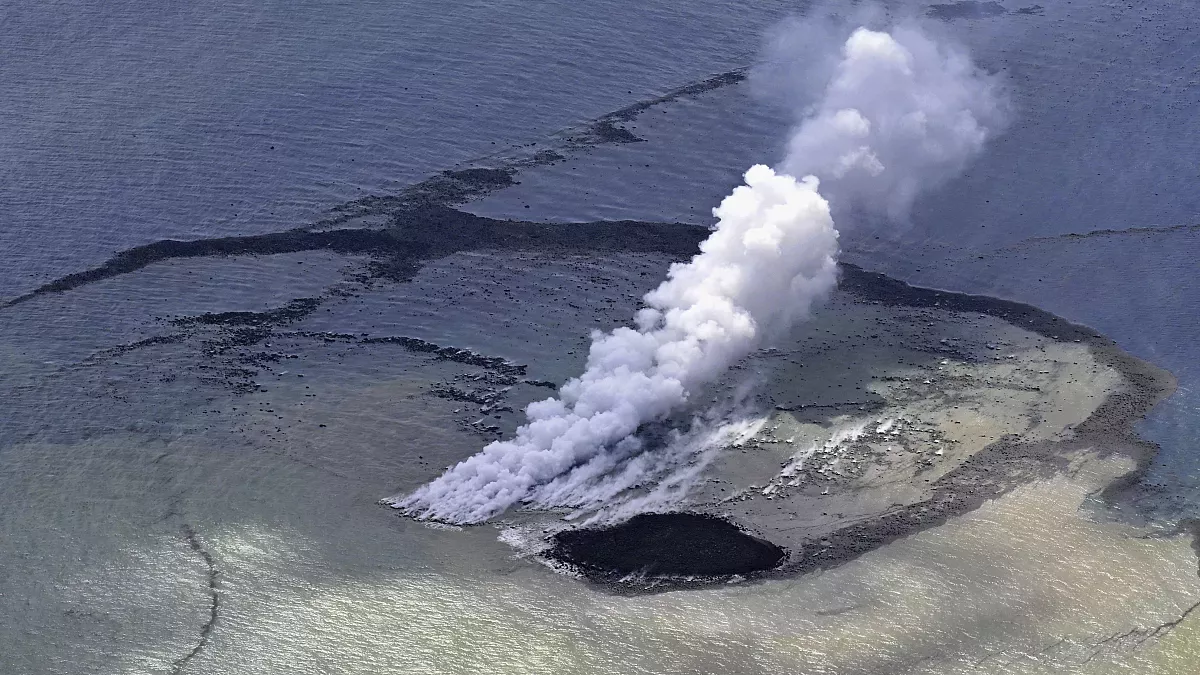


A powerful underwater volcano near Kyushu is gradually refilling with magma, according to a new scientific study that has raised fresh concerns about future volcanic risks.
The focus of the research is the Kikai Caldera, which triggered the massive Akahoya eruption about 7,300 years ago. That event remains the largest known eruption of the Holocene period.
Scientists estimate the eruption released around 160 cubic kilometres of volcanic material, making it far more powerful than major historic eruptions such as the Novarupta eruption and the Mount Pinatubo eruption.
Scientists Discover Newly Injected Magma Chamber
Researchers from Kobe University and the Japan Agency for Marine-Earth Science and Technology carried out detailed seismic surveys beneath the caldera to better understand its current condition.
Their findings confirmed the presence of a large magma chamber beneath the caldera, believed to be linked to the ancient Akahoya eruption.
However, scientists noted a crucial difference:
the magma currently present appears to be newly injected, rather than remnants left behind from previous eruptions.
The team also confirmed the gradual formation of a lava dome over the past 3,900 years, further indicating that volcanic activity in the region has remained ongoing, even if at a relatively slow pace.
Why The Findings Matter For Global Volcano Monitoring
Experts say the new discovery could significantly improve scientific understanding of eruption cycles in large volcanic systems worldwide.
The study’s findings may help researchers monitor and predict activity at other massive calderas, including:
- Yellowstone Caldera
- Lake Toba
Understanding how magma builds up over time is essential for improving early warning systems that can detect signs of major eruptions before they occur.
Potential Risks Despite Recent Minor Activity
Although the volcano has produced only minor eruptions in recent decades, its historical record shows it is capable of extremely destructive activity.
With densely populated regions located near southern Japan, scientists warn that even a moderate eruption could have serious consequences for local communities, infrastructure, and regional economies.
The study, published in the journal Communications Earth and Environment, highlights the importance of continuous monitoring to detect changes in magma build-up and reduce risks from future eruptions.