
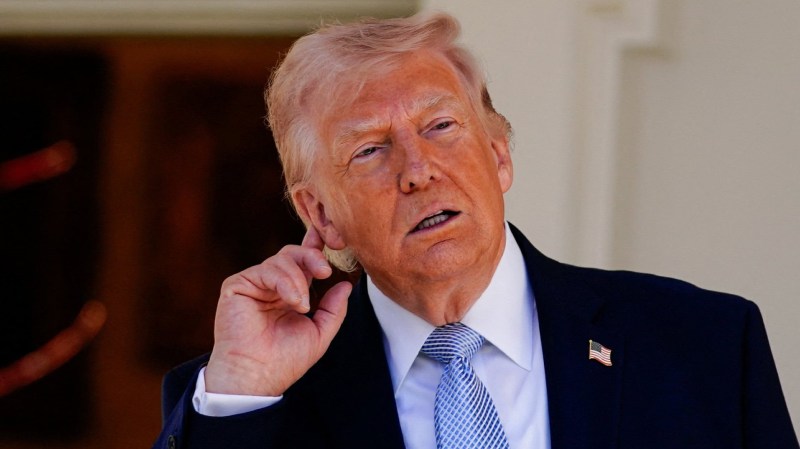


President Donald Trump has issued a stern warning to Tehran, labeling the imposition of a $2 million transit fee on commercial vessels in the Strait of Hormuz as a violation of international maritime law. The tension comes just as a two-week ceasefire, mediated by Pakistan, went into effect on April 8, 2026, following a 40-day conflict.
Despite the truce, the Strait remains highly restricted. Iran has established a de facto “shipping corridor” controlled by the Islamic Revolutionary Guard Corps (IRGC), effectively turning one of the world’s most vital energy arteries into what analysts call “Tehran’s Tollbooth.”
The Legal Standoff: UNCLOS vs. Customary Law
The dispute centers on conflicting interpretations of the United Nations Convention on the Law of the Sea (UNCLOS).
The Global Position (Articles 38 & 44): These articles grant “Transit Passage” to all vessels, ensuring that navigation through international straits remains continuous, expeditious, and unimpeded. Charges are only permitted for specific services rendered (like pilotage), not for the right of passage itself.
The Iranian Stance: Iran signed UNCLOS in 1982 but never ratified it. Tehran argues it is only bound by the older 1958 Geneva Convention, which recognizes “innocent passage.” Under this framework, a coastal state can unilaterally suspend passage if it deems a vessel a threat to national security.
Customary Law: Experts argue that even without UNCLOS ratification, the “freedom of navigation” in international straits is a part of customary international law, making Iran’s $2 million levy illegal.
Current Status of the Strait (As of April 11, 2026)
The ceasefire has not yet restored normal trade. Before the war, roughly 100+ vessels transited the Strait daily; currently, throughput has plummeted to less than 10%.
| Metric | Pre-War Average | Current Status (Ceasefire) |
| Daily Vessel Transits | ~60–100 ships | 5–9 ships |
| Oil Flow Throughput | ~20M barrels/day | ~1.1M barrels/day |
| War Risk Insurance | ~0.15% | ~1.0% (6.7x increase) |
| Brent Crude Price | ~$80/barrel | ~$114–$127/barrel |
The “Islamabad Peace Talks”
Negotiations for a permanent peace deal are scheduled to begin today, April 11, in Islamabad. The US-backed framework requires:
Immediate Reopening: Restoring the Strait to standard international shipping lanes.
End of Tolls: Ceasing the $2 million “transit dollars” and IRGC-controlled corridors.
Sanctions Relief: The US has signaled a willingness to unfreeze Iranian assets and ease sanctions in exchange for maritime and nuclear concessions.
The Outlook: While the ceasefire provides a “humanitarian window” (April 11–14) to evacuate nearly 20,000 stranded seafarers, major shipping lines like Maersk and Hapag-Lloyd continue to reroute via the Cape of Good Hope, adding 21 days to voyages until a permanent security guarantee is established.