
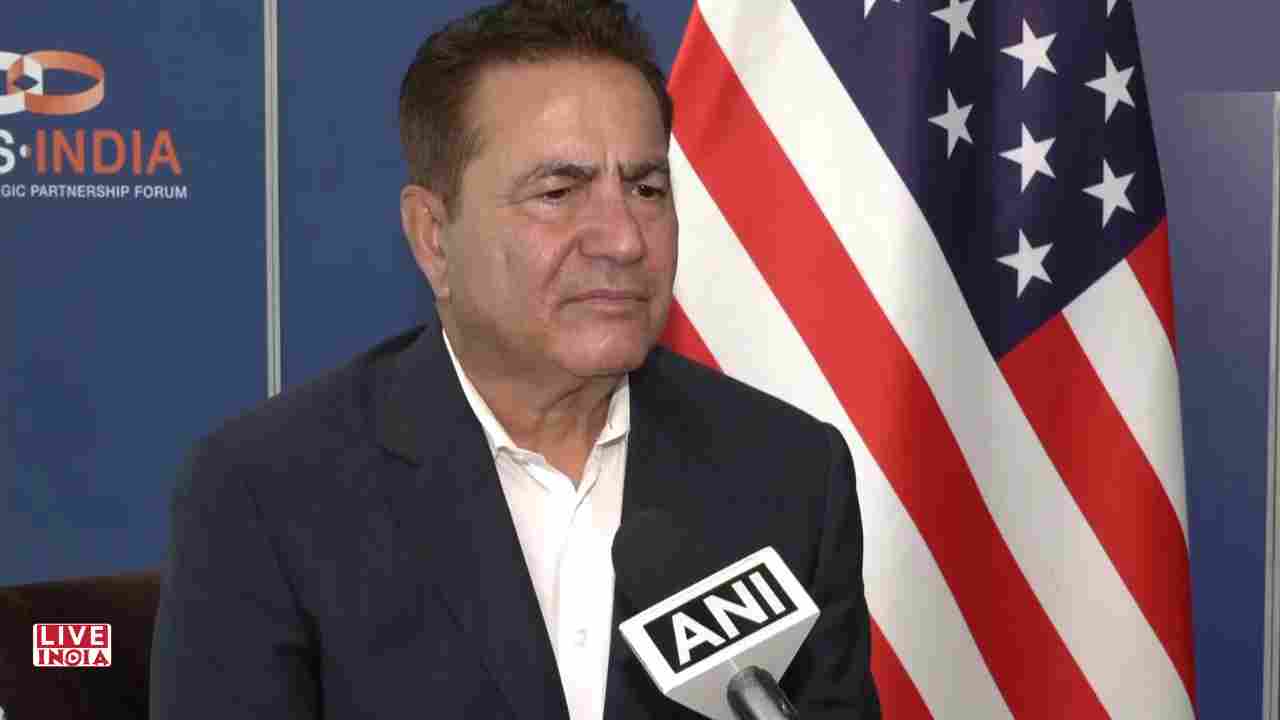


Mukesh Aghi warns strained ties could derail 25 years of progress; urges maturity and commitment from both nations
New Delhi, September 2 — At a time when Washington and New Delhi have spent decades nurturing one of the world’s most strategic partnerships, a sudden flare-up in trade tensions has sent shockwaves across diplomatic circles. Mukesh Aghi, President and CEO of the US-India Strategic Partnership Forum (USISPF), has strongly criticized the United States’ decision to impose secondary tariffs on Indian goods, calling the move “uncalled for” and a serious setback to bilateral relations.
Aghi expressed concern that “the relationship built over the last 25 years is going down the drain in 25 hours.” He emphasized that India and the US must stay committed to each other, warning that protectionist measures risk damaging hard-earned trust and cooperation.
India’s Mature Response to Trump’s Remarks
Aghi also highlighted that India has chosen restraint, despite a string of sharp posts from US President Donald Trump on Truth Social. “India has not reacted in any negative manner… It is important to understand that when a tweet or post comes out, some may have substance and some may not. The people of India are mature — they will do what’s best for the country,” he remarked.
Trump, in his posts, had accused India of imposing “the highest tariffs of any country” on US businesses and described the trade relationship as a “one-sided disaster.” While claiming that India has now offered to reduce tariffs “to nothing,” Trump warned it may be “too late.”
American Business Confidence in India Still Strong
Despite the escalating rhetoric, Aghi insisted that the outlook of American CEOs towards India remains overwhelmingly positive. “Both sides are suffering due to this unreasonable secondary tariff… but confidence, trust, and faith in India continues. US companies are not slowing down their investments,” he said.
Tariffs, Oil, and Geopolitics
The backdrop of this trade spat is complex. In July, President Trump announced a 25% tariff on Indian goods, followed by a 25% secondary tariff on imports of Russian oil into India, which later increased to 50% from August 27. Trump has also criticized India for buying “most of its oil and military products from Russia” while sourcing “very little” from the US.
In his latest post, the US President declared:
“What few people understand is that we do very little business with India, but they do a tremendous amount with us… Until now, a totally one-sided relationship, and it has been for decades. It has been a disaster! They should have cut their tariffs years ago.”
Call for Commitment, Not Confrontation
Aghi, however, urged both nations to look beyond immediate disagreements. “The secondary tariffs are uncalled for. What’s important is that both India and the US need each other. We cannot let 25 years of trust collapse overnight,” he said.
With Washington and New Delhi trying to negotiate a Bilateral Trade Agreement (BTA), the stakes remain high. For now, the tension underscores just how fragile even the strongest partnerships can be when tested by geopolitics, trade, and social media rhetoric.