
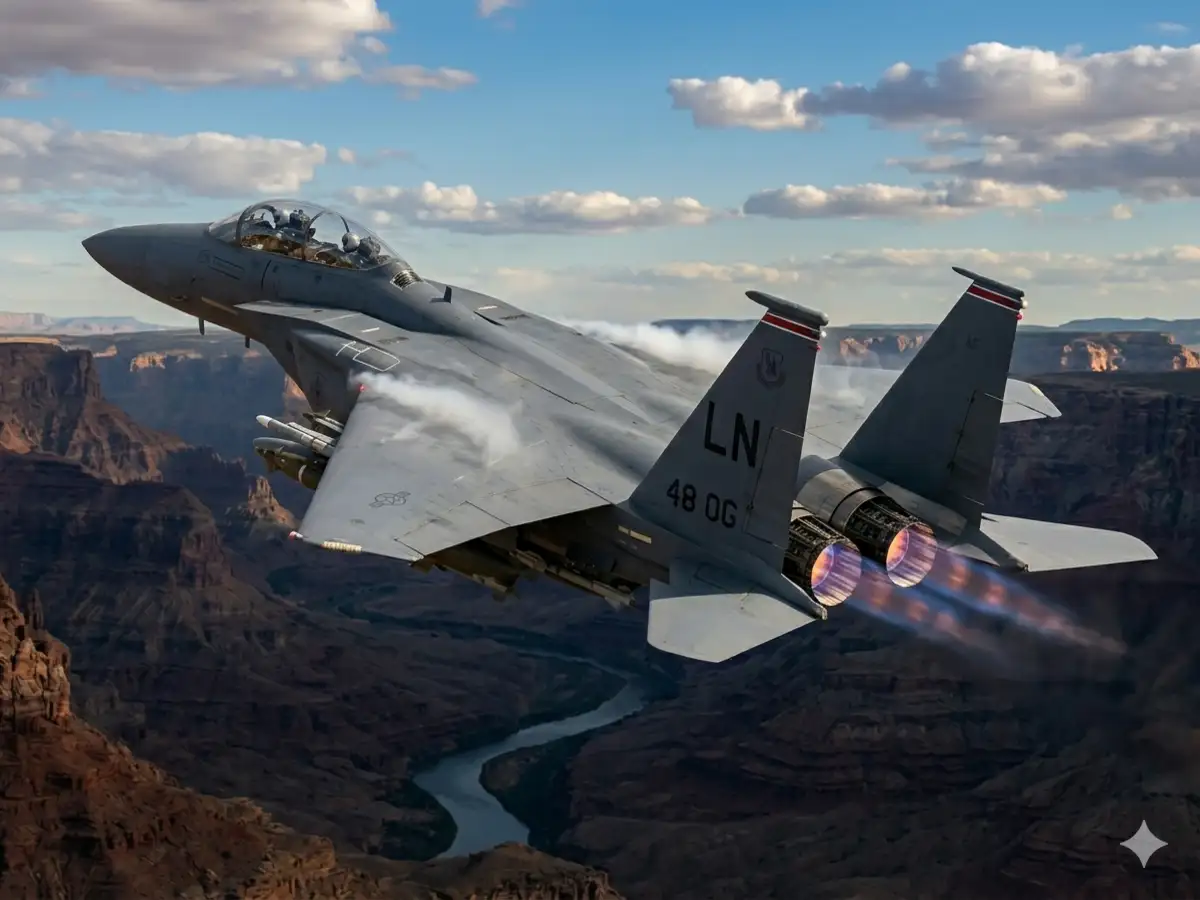


From pilot recovery to securing classified technology, the US military executes rapid, multi-layered operations to prevent capture and intelligence leaks.
How the US Responds When an Aircraft Goes Down
When a US military aircraft is shot down or crashes in hostile territory, a highly coordinated rescue operation is triggered almost instantly. These missions are not improvised—they follow a strict blueprint designed to achieve two critical objectives: rescue the pilot and protect sensitive military technology.
The framework for such operations is outlined in the Personnel Recovery Joint Publication, which prioritises safeguarding personnel while preventing adversaries from exploiting captured crew members for intelligence or propaganda.
Race Against Time: First Priority Is the Pilot
The moment an aircraft goes down, recovery teams—often pre-positioned—are mobilised. These missions involve multiple layers, including surveillance systems, special operations forces, and air support.
If the pilot successfully ejects, survival becomes the immediate goal. Trained under the principles of Survival, Evasion, Resistance and Escape (SERE), pilots are equipped to evade enemy detection, establish controlled communication, and navigate hostile terrain while awaiting rescue.
The time window is critical. Military experts say these operations are often measured in minutes, as delays increase the risk of capture.
Elite Forces and Advanced Surveillance Step In
Rescue missions typically involve elite units such as:
- US Air Force Pararescue teams
- Navy SEALs
- Army Special Operations forces
These teams are supported by armed helicopters and fighter jets providing aerial cover. Meanwhile, drones, satellites, and reconnaissance aircraft track the pilot’s location in near real time, guiding rescuers through hostile territory.
Why Securing the Crash Site Is Crucial
Beyond rescuing the pilot, securing or destroying the wreckage is equally important. Downed aircraft often contain classified systems—radar technology, communication equipment, and weapons systems—that could offer valuable intelligence to adversaries.
If recovery is not possible, the US may carry out airstrikes to destroy the wreckage and prevent it from falling into enemy hands.
The Risk of Capture and Intelligence Exploitation
Captured pilots pose a serious security risk. Historically, adversaries have used detained personnel for intelligence gathering, propaganda, or political leverage.
This is why US military doctrine emphasises avoiding capture at all costs. Pilots are trained to resist interrogation and survive extreme conditions until rescue arrives.
Real-World Example and Current Context
In past operations, such as a 2012 helicopter crash in Afghanistan, coalition forces successfully recovered pilots despite hostile presence in the area.
In the ongoing conflict involving Iran, similar challenges are unfolding. Reports indicate that an F-15E Strike Eagle was shot down, with one crew member rescued while efforts continue to locate another. Iranian media has also claimed that an A-10 Thunderbolt II was hit.
Military experts note that nighttime conditions may work in favour of US forces, which possess superior night-vision and infrared capabilities—giving downed pilots a better chance of evading detection.
Conclusion
When a US aircraft goes down in enemy territory, the response is swift, calculated, and relentless. Every second counts in a mission where the stakes include not just human life, but also national security and technological advantage.
From survival training to elite rescue operations, the system is designed to ensure one outcome above all: bring the pilot home and leave nothing behind.