
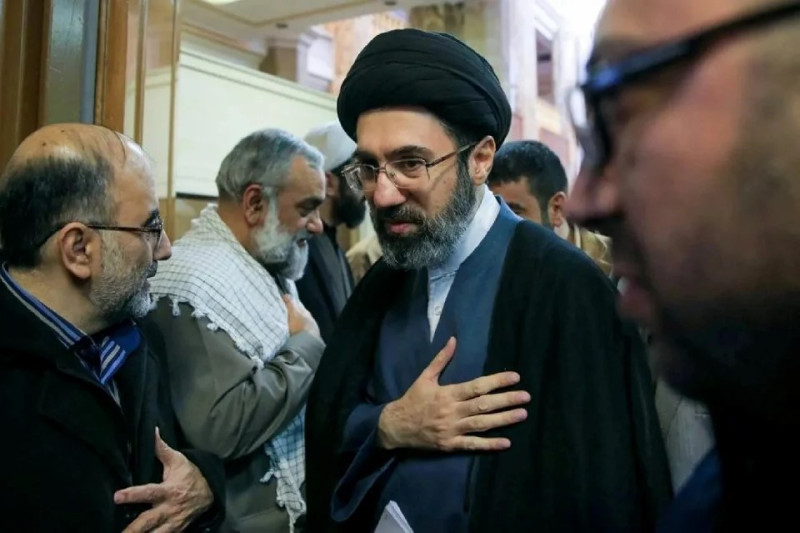


Questions are mounting over the health and whereabouts of Iran’s supreme leader Mojtaba Khamenei, following reports that he was seriously injured in a February airstrike. According to a Reuters report citing sources close to his inner circle, Khamenei is still recovering from wounds sustained in the strike that reportedly killed his father, Ali Khamenei.
Sources indicate that Khamenei suffered severe facial injuries and possible damage to one or both legs when the attack hit the supreme leader’s compound in central Tehran. His face was reportedly disfigured, although he is said to remain mentally alert and continues to be involved in key decision-making processes.
No Public Appearance Since February
Khamenei has not made any public appearance since the February 28 attack. No images, videos, or audio messages have been released since he assumed office on March 8. His absence has raised concerns both داخل Iran and internationally, especially at a time of heightened geopolitical tensions.
While there has been no official confirmation from Iranian authorities regarding the extent of his injuries, a state television anchor recently referred to him as a “janbaz,” a term used for individuals seriously wounded in war. Reports also suggest he is attending high-level meetings via audio conferencing.
Conflicting Reports and Intelligence Inputs
Comments from Pete Hegseth in March suggested that Khamenei was “wounded and likely disfigured.” Some intelligence-linked sources have even indicated the possibility of a leg amputation, although these claims remain unverified. Agencies such as the CIA have declined to comment, and there has been no response from Israeli officials.
Leadership Uncertainty Amid Crisis
Khamenei’s health has become a critical concern as Iran navigates a challenging phase, including ongoing conflict and high-stakes negotiations with the United States in Islamabad. Analysts believe that even if he recovers physically, consolidating power may take time.
Experts suggest that while he represents continuity, he may not yet wield the same authority as his father. In Iran’s political structure, the supreme leader holds ultimate control over the government and key institutions such as the Revolutionary Guards, making his ability to lead effectively crucial during this period.