
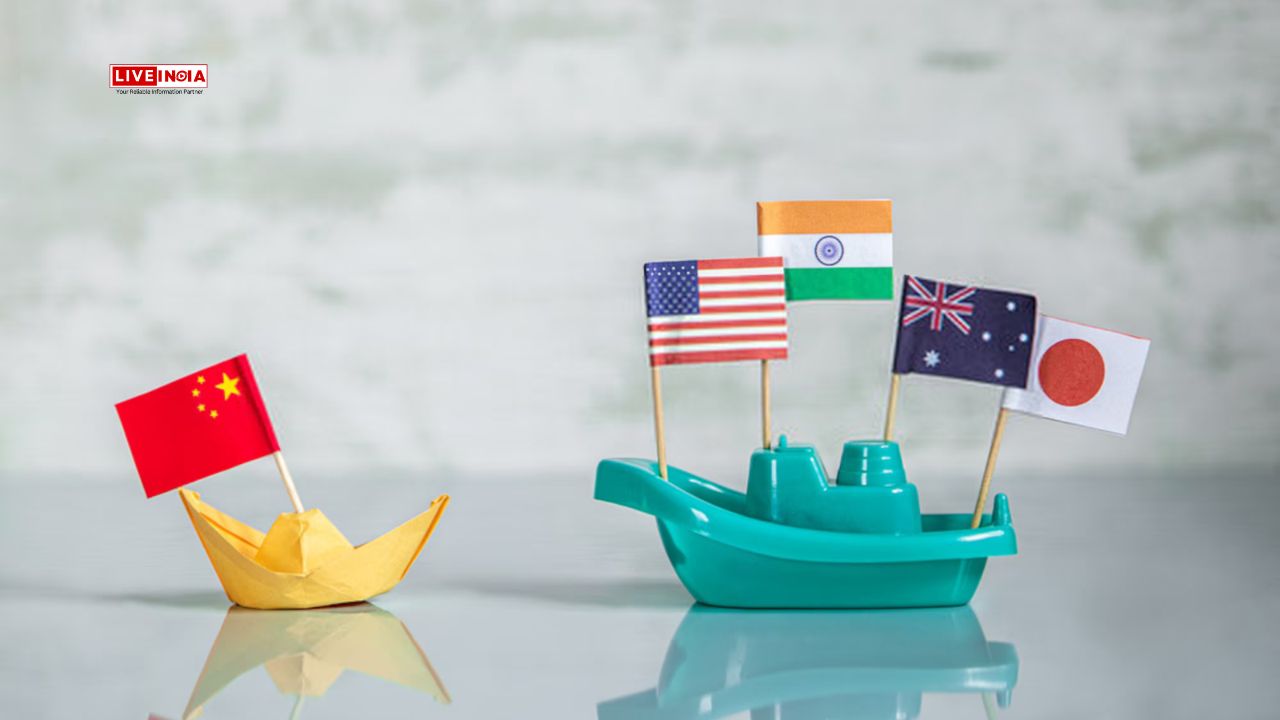


As the US-China trade war escalates, Australia declines Beijing’s call for a joint front against Washington’s tariffs, opting instead for diversified trade partnerships and diplomatic negotiations.
Canberra, April 10 – Australia has rejected a proposal from China to form a united front against escalating US trade tariffs, signaling a strong commitment to strategic independence and diversified global trade.
Also Read: Asian Markets Reel Under US-China Tariff Heat; Japan’s Nikkei Crashes Over 5%
The offer came as tensions between Washington and Beijing intensified, with US President Donald Trump imposing a 125% tariff on Chinese imports and an additional 10% tax on Australian goods. In response, China’s ambassador to Australia, Xiao Qian, urged Canberra to join in opposing what he called “hegemonic and bullying behavior” from the United States.
Also Read: Trump’s China Tariffs Now Total 145%, White House Confirms Amid Rising Trade Tensions
“The international community… should firmly say no to unilateralism and protectionism,” Qian stated.
However, Australian Prime Minister Anthony Albanese made it clear that Australia would not be aligning with China on the issue.
Also Read: Wall Street Bleeds as Trump’s Tariff Spree Sends Nasdaq Crashing Over 4%
“We will speak for ourselves. Our position is shaped by our national interest,” he asserted.
Strategic Clarity from Canberra
Defence Minister Richard Marles reinforced the stance, stating bluntly:
“We’re not about to make common cause with China. That’s not what’s going to happen here… We don’t want a trade war between America and China, but we’re focused on diversifying trade.”
Australia, while expressing frustration over the US tariffs, has chosen diplomacy over retaliation, seeking negotiations with Washington rather than confrontational tactics.
Shifting Global Trade Priorities
Australia is now actively pursuing new trade partnerships to reduce reliance on both the US and China. Albanese emphasized the broader opportunity:
“Eighty percent of global trade doesn’t involve the United States. There are opportunities for Australia, and we intend to seize them.”
To this end, Trade Minister Don Farrell has initiated dialogues with key partners including India, Indonesia, the UK, UAE, Japan, South Korea, and Singapore.
Meanwhile, Xiao Qian warned that the US’s actions were “weaponizing trade”, potentially undermining the global economic order and dragging the world into economic chaos. He urged Australia to consider bilateral cooperation to protect the free trade system — a suggestion that was firmly declined.
Tags:
Australia China relations, Trump tariffs, US-China trade war, Anthony Albanese, Richard Marles, Xiao Qian, global trade diversification, Australia-US relations, international trade tensions, Don Farrell