
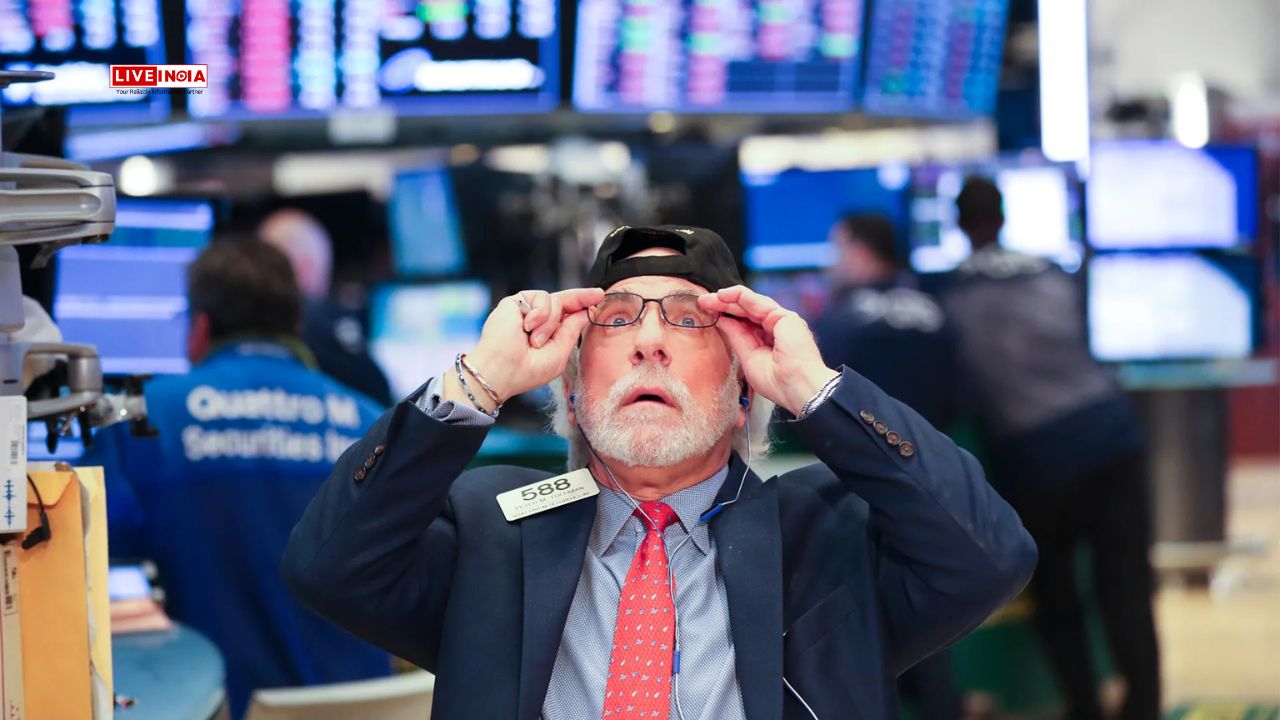


The term Black Monday sends shivers down the spine of Wall Street veterans—and with good reason. On October 19, 1987, global stock markets experienced a catastrophic collapse.
April 7, 2025: On the first ever Black Monday, the Dow Jones Industrial Average (DJIA) plunged 22.6% in a single day, marking the largest one-day percentage drop in its history.
Today, nearly four decades later, financial experts are drawing parallels between that fateful day and the current market turmoil. The reason? Donald Trump’s sweeping tariff regime, which has sent shockwaves through global markets.
Also Read: High Income, Rejected Loan: Why Your Big Salary Might Not Secure a Home Loan
What Happened on Black Monday, 1987?
On October 19, 1987:
- The DJIA fell 508 points, or 22.6%.
- The S&P 500 nosedived by nearly 30%.
- Panic spread globally, with cascading crashes in markets across Asia, Europe, and the Americas.
- By early November, most global indexes had lost over 20% of their value.
Why Did It Happen?
The crash wasn’t caused by a single event, but a combination of market forces:
1. Overvalued Markets
Stocks had tripled in value from 1982–1987. A correction was overdue, and the bull market was ripe for a reversal.
2. Computerised Trading
Algorithmic and program trading was in its infancy, yet powerful enough to amplify sell-offs. Automated systems triggered massive sell orders once key levels were breached, accelerating the collapse.
3. Triple Witching Effect
Just three days before Black Monday, stock options, futures, and index options expired simultaneously—known as triple witching. The result was extreme volatility that rolled into Monday.
Why Are Experts Comparing 2025 to 1987?
On April 6, 2025, market expert Jim Cramer warned of a looming Black Monday 2.0 following President Trump’s punitive tariffs on dozens of countries. Cramer urged Trump to open dialogue with nations not retaliating, warning that another 1987-style collapse could be imminent.
- Dow Jones futures fell 1,405 points (–3.7%).
- S&P 500 futures lost 4.3%.
- Nasdaq-100 futures plunged 5.4%.
- Over $5 trillion in global market capitalization was wiped out just last week.
Why Trump’s Tariffs Could Be the Trigger
Unlike 1987, where technology played a key role, the 2025 risk lies in policy shocks—specifically, Trump’s 10–46% tariffs on imports from over 30 countries. China retaliated with 34% tariffs, and other nations are either negotiating or preparing countermeasures.
Markets across Asia have plunged:
- Japan’s Nikkei 225 dropped 6.5% early Monday.
- Taiwan fell nearly 10%.
- Singapore slumped 8.5%.
Even Saudi Arabia’s exchange lost nearly 7%—its worst day since the COVID-19 crisis.
Could It Happen Again?
Experts are divided. Trump’s advisers say the “market overreacted” and that 50+ countries have already sought trade talks. However, economists warn the combination of:
- Escalating trade tensions
- Tumbling stock valuations
- High inflation and policy uncertainty
…may be enough to tip the global economy into recession, or worse, trigger a full-blown market crash.
Former US economic chief Larry Summers said the 1987 analogy is apt:
“There is a very good chance we’re heading into turbulence like we saw then—especially if this trade war escalates further.”
With Monday’s trading underway, the world will soon know if history is about to repeat itself.