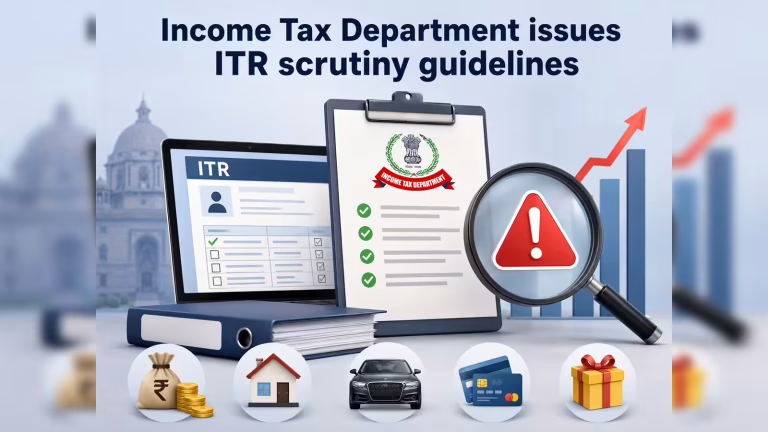
As the Income Tax Return (ITR) filing season for Assessment Year 2026-27 gets underway, the Central Board of Direct Taxes (CBDT) has issued fresh guidelines outlining which taxpayers could be selected for compulsory scrutiny.
The new framework identifies specific categories of taxpayers whose returns may undergo detailed examination by the Income Tax Department based on risk assessment and compliance parameters.
Who Can Be Selected for Mandatory Scrutiny?
According to the CBDT’s latest instructions, the following categories of taxpayers may be automatically picked for detailed scrutiny during FY 2026-27:
1. Taxpayers Subjected to a Tax Survey
Individuals, professionals, or businesses that have been surveyed by the Income Tax Department under Section 133A on or after April 1, 2024, may be selected for compulsory scrutiny.
2. Search and Raid Cases
Taxpayers against whom search, seizure, or requisition actions have been carried out on or after April 1, 2024, can face mandatory scrutiny of their returns.
3. Reassessment Cases
Returns may be selected if the department has issued notices under Section 148 for income believed to have escaped assessment.
Such cases are generally considered high-risk and may require detailed verification.
4. Charitable Trusts Claiming Exemptions After Cancellation
Charitable institutions or trusts whose registrations, approvals, or tax-exempt status have been withdrawn, cancelled, or denied but continue claiming tax benefits may be picked for scrutiny.
5. Taxpayers With Large Additions in Earlier Assessments
The department may scrutinize returns where substantial additions were made in previous assessments on recurring issues and those additions have attained finality.
The threshold limits are:
- More than ₹50 lakh in metro cities, including Delhi, Mumbai, Bengaluru, Chennai, Hyderabad, Kolkata, Pune, and Ahmedabad.
- More than ₹20 lakh in non-metro locations.
6. Cases Involving Suspected Tax Evasion
Taxpayers may also be selected if specific information regarding possible tax evasion is received from:
- Investigation agencies
- Intelligence units
- Law enforcement bodies
- Regulatory authorities
- Income Tax Department’s risk assessment systems
Who Is Less Likely to Face Compulsory Scrutiny?
The CBDT has clarified that routine notices arising from data mismatches in:
- AIS (Annual Information Statement)
- TDS records
- SFT reports
- Other information systems
will not automatically lead to compulsory scrutiny unless the taxpayer falls under one of the designated high-risk categories.
What This Means for Taxpayers
The revised guidelines indicate that the tax department is focusing its scrutiny efforts on cases involving significant compliance risks rather than ordinary filing discrepancies.
Tax experts advise taxpayers to maintain proper documentation, accurately report income, and promptly respond to departmental notices to avoid complications during assessments.
Key Takeaway
For most salaried individuals and regular taxpayers, routine filing errors or minor mismatches are unlikely to trigger mandatory scrutiny. However, taxpayers falling into identified risk categories should ensure their filings are accurate, complete, and supported by relevant records.
As the filing season progresses, understanding these scrutiny triggers can help taxpayers remain compliant and avoid unnecessary tax disputes.