
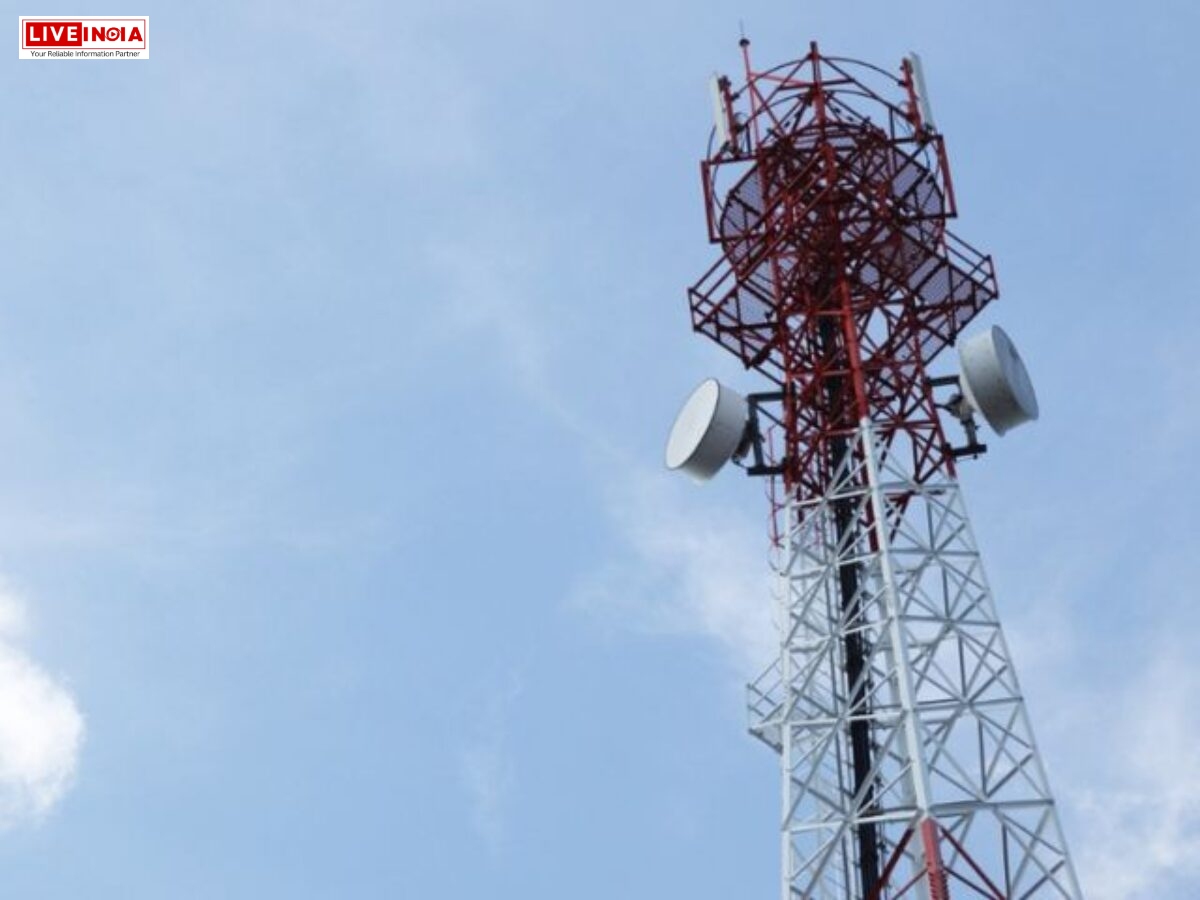


July 6, 2025: In a big relief for mobile users affected by the recent natural disaster in Himachal Pradesh, the government has allowed people using Jio, Airtel, Vi, or BSNL to access each other’s mobile networks in the Thunag Tehsil of Mandi district. This step has been taken after heavy cloudbursts and flash floods hit the region on June 30 and July 1, 2025, damaging local infrastructure and disrupting connectivity.
The Department of Telecommunications (DoT) has officially directed all telecom operators to enable Intra-Circle Roaming (ICR) in the affected area immediately. This special network-sharing facility will stay active till 11:59 PM on July 11, 2025, or until the situation improves and the government issues further orders.
This means if you’re in Thunag and your mobile signal drops, your phone can automatically connect to another nearby network — whether it’s Jio, Airtel, Vi, or BSNL — even if you’re not a customer of that provider. It’s like all telecom operators coming together to make sure nobody is left without a signal in a crisis.
What Exactly is Intra-Circle Roaming (ICR)?
Let’s make it simple. ICR allows you to use another operator’s network if your own network isn’t working or has weak coverage. For example, if you are a Jio user but can’t get any signal, your phone can automatically switch to an Airtel or BSNL tower nearby. The government supports this system during emergencies to ensure that people stay connected when it matters most.
This move follows clause 29.6 of the Unified Licence agreement, and the Standard Operating Procedure (SOP-2020) meant to handle disasters and emergencies.
ICR Facility Now Available for Government-Funded 4G Towers Too
In another major step, the government has also activated ICR for Digital Bharat Nidhi (DBN) 4G mobile towers. These towers, which are funded under the Digital India initiative, can now be shared by multiple telecom operators. This means one single tower funded by DBN can serve customers of all major networks — Jio, Airtel, Vi, and BSNL — with high-speed 4G services.
This new setup helps in several ways:
- Reduces the need to build separate towers for every network.
- Saves infrastructure costs and space.
- Makes faster and wider 4G coverage possible in rural and remote areas.
This is a win-win — for telecom companies and most importantly, for the common people who depend on mobile networks for everything from emergency calls to digital payments.
Bottom line: Whether you’re a Jio or Vi user, if you’re in Thunag, Mandi, and facing signal issues, your phone will now automatically connect to the strongest available network — keeping you safe, connected, and informed.