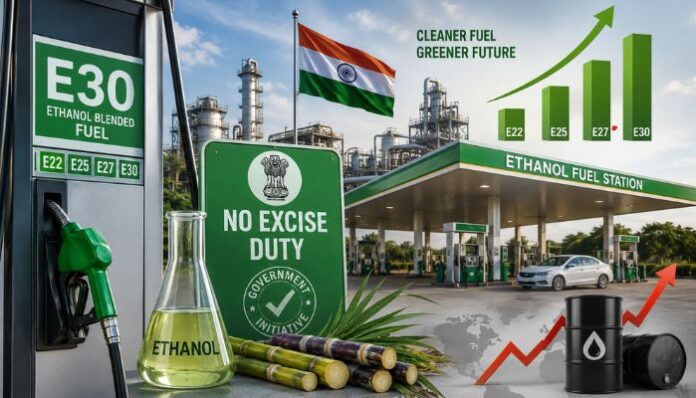
In a significant move aimed at promoting cleaner fuels and reducing dependence on imported crude oil, the Indian government has exempted higher ethanol-blended petrol variants from central excise duty. The decision is expected to support the country’s ethanol blending programme while encouraging the use of environmentally friendly fuels.
According to a recent notification issued by the Ministry of Finance, petrol blends containing 22%, 25%, 27%, and 30% ethanol—commonly known as E22, E25, E27, and E30—will now attract zero central excise duty.
What Has Been Exempted?
The government has removed several taxes and levies on these higher ethanol blends, including:
- Basic Central Excise Duty
- Special Additional Excise Duty
- Road and Infrastructure Cess
- Agriculture Infrastructure and Development Cess (AIDC)
As a result, all four fuel categories will now be subject to a nil excise duty rate.
Higher Ethanol Blend Categories
E22: 78% petrol + 22% ethanol
E25: 75% petrol + 25% ethanol
E27: 73% petrol + 27% ethanol
E30: 70% petrol + 30% ethanol
These blends contain significantly more ethanol than conventional petrol and are part of India’s broader strategy to increase renewable fuel usage.
Supporting India’s Ethanol Mission
The latest announcement comes shortly after the launch of E85 fuel for flex-fuel vehicles. E85 typically contains 80–85% ethanol and is designed for specially engineered vehicles capable of running on various ethanol concentrations.
India has been aggressively promoting ethanol blending as part of its energy security and sustainability goals. Increasing ethanol usage helps reduce crude oil imports, lowers foreign exchange outflows, supports domestic sugarcane farmers, and contributes to reducing vehicle emissions.
Why This Move Matters
With global crude oil prices remaining volatile, higher ethanol blending offers India an opportunity to reduce its dependence on imported fossil fuels. The excise duty exemption is expected to make higher ethanol blends more commercially attractive for fuel suppliers and consumers alike.
Experts believe the policy could accelerate investment in ethanol production infrastructure, encourage the adoption of flex-fuel vehicles, and strengthen India’s transition towards cleaner transportation fuels.
As the government continues to expand its ethanol blending programme, the latest tax relief signals a strong commitment toward achieving long-term energy security, environmental sustainability, and reduced carbon emissions.