
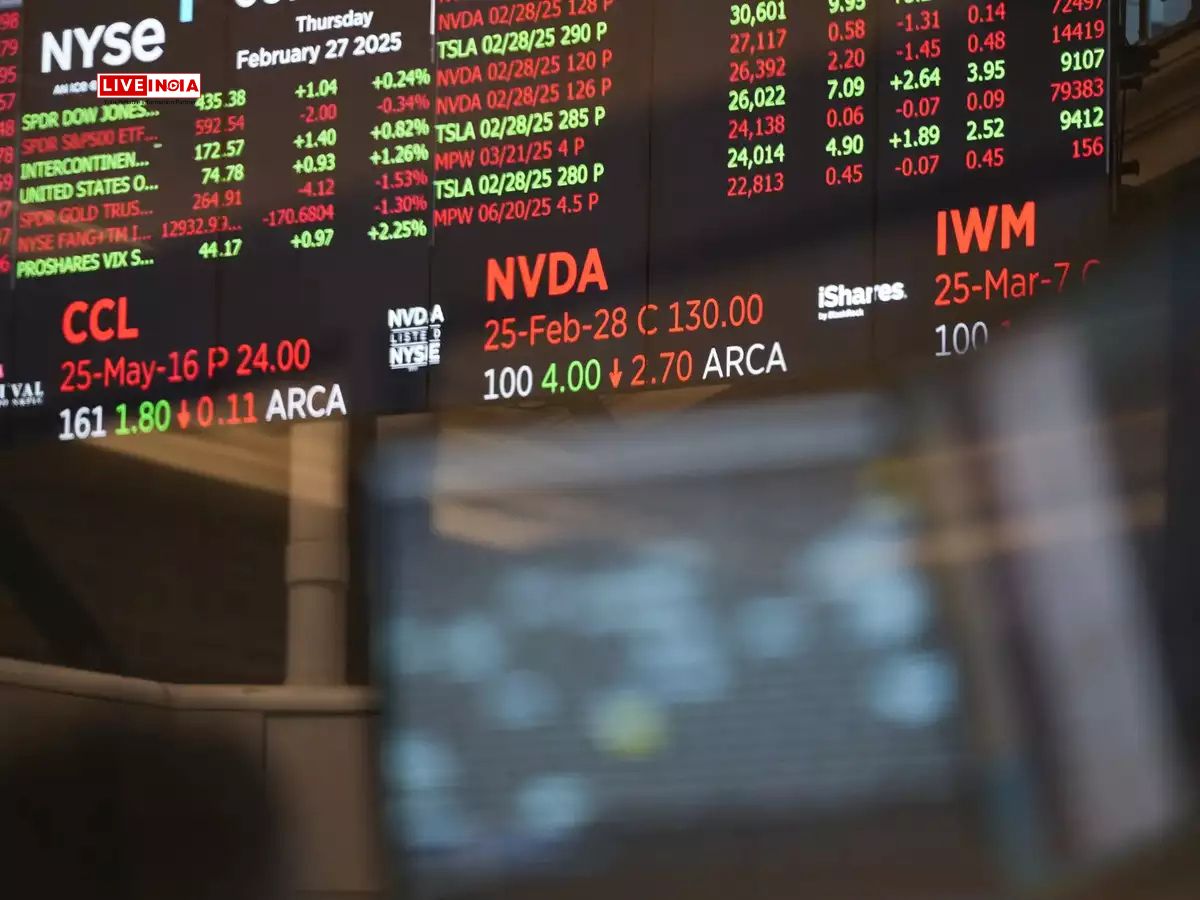


Is a Bigger Market Correction on the Horizon?
March 14, 2025: Global stock markets were rattled on March 13, 2025, as major US indices S&P 500 and Nasdaq fell sharply, raising concerns about a potential deeper correction. The S&P 500 lost 1.39%, closing at 5,521.52, while the Nasdaq dropped 1.96%, settling at 17,303.01.
Also Read: Trump Threatens 200% Tariff on European Wines and Champagne Amid Trade War
What’s Driving the Market Sell-Off?
Several factors are contributing to the ongoing market volatility, including fears of a trade war, stretched valuations, and Federal Reserve policy uncertainties.
Also Read: Stock Market Closing: Sensex Falls 200 Points, Nifty Below 22,400 Amid Volatility
1. Trump’s Aggressive Tariff Policies 📉
- President Donald Trump’s latest threat to impose a 200% tariff on European wines and spirits has escalated fears of a full-scale trade war.
- In response, China, Canada, and the European Union have announced retaliatory tariffs, which could slow global economic growth and drive up inflation.
- Investors worry that prolonged trade disputes could dent corporate earnings and disrupt supply chains, leading to further market declines.
2. High Valuations and Market Fragility 💰
- The S&P 500’s price-to-earnings (P/E) ratio is at 28, significantly higher than historical averages, making stocks more vulnerable to corrections.
- The Buffett Indicator (Market Cap to GDP) is at 200%, signaling that the US stock market is overvalued.
- Overvalued markets tend to be highly sensitive to negative news, making the recent downturn more severe.
3. Federal Reserve’s Interest Rate Dilemma 📊
- The Federal Reserve was initially expected to cut interest rates 2-3 times in 2025. However, rising inflation concerns may delay those cuts.
- Higher interest rates increase borrowing costs, which hurts corporate profits and slows economic growth.
- If the Fed keeps rates elevated for longer, market sentiment may remain bearish.
4. Inflation and Recession Fears ⚠️
- While the US Consumer Price Index (CPI) showed a slight cooling, persistent inflation in food, housing, and energy remains a concern.
- If inflation doesn’t decline quickly, the Fed will be forced to maintain high rates, adding more pressure to the economy.
- Experts fear a mild recession could materialize if global trade slows and corporate earnings shrink.
5. Sector-Specific Weakness and Tech Stock Decline 🔻
- The Nasdaq has lost over 14% from its all-time high, signaling a pullback in growth and tech stocks.
- Mega-cap tech companies like Apple, Microsoft, Nvidia, and Tesla have witnessed major corrections amid valuation concerns.
What’s Next? Is a Bigger Market Correction Coming?
✅ Bearish Case (Deeper Correction Possible)
- If the trade war intensifies, corporate earnings may decline sharply, leading to a 10-15% market correction.
- If inflation remains high, the Fed may delay rate cuts, keeping bond yields elevated and putting further pressure on stocks.
- Geopolitical tensions (Russia-Ukraine, China-Taiwan) could further destabilize markets.
❌ Bullish Case (Short-Term Rebound Possible)
- If Trump negotiates tariff rollbacks, market sentiment could quickly improve.
- Stronger-than-expected job reports and corporate earnings could support a rebound.
- The AI and technology boom could provide long-term resilience to select sectors.
What Should Investors Do?
🔹 Short-Term Traders: Expect high volatility in the coming months. 📉📈
🔹 Long-Term Investors: Market downturns may offer buying opportunities as stocks approach fair valuations.
🔹 Key Indicators to Watch:
- Federal Reserve rate decisions
- Inflation data (CPI, PCE)
- Corporate earnings reports
Final Thoughts
The US stock market is at a crossroads, with economic and policy uncertainties driving volatility. Investors should stay informed, diversify their portfolios, and be cautious with high-risk stocks. As global markets navigate this uncertain period, patience and strategic investment decisions will be key.
Tags:
#StockMarketCrash, #SP500, #Nasdaq, #WallStreet, #USMarket, #TradeWar, #TrumpTariffs, #Inflation, #RecessionFears, #InvestmentTips,