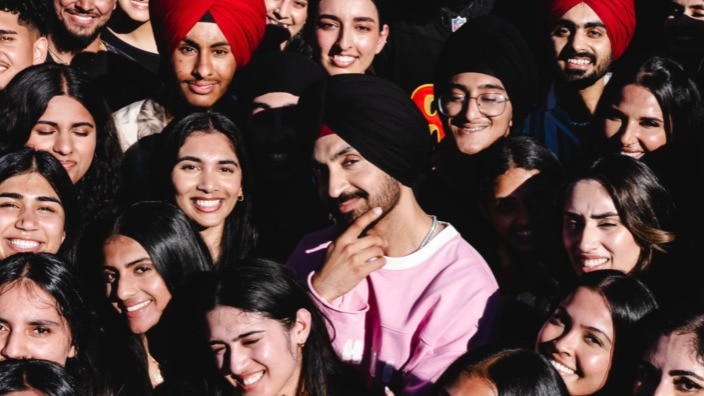
Singer-actor Diljit Dosanjh has found himself at the centre of a social media controversy after a lyric from his 2026 song Aroma drew criticism from members of the LGBTQ+ community and several online creators during Pride Month.
Although Aroma was released on April 23, the debate around one of its verses gained traction on June 1, coinciding with the beginning of Pride Month. The discussion intensified after content creators began examining and translating the song’s lyrics, with some alleging that a particular line portrays queer identities in a negative light while celebrating traditional notions of masculinity.
Among the voices raising concerns was content creator Faith Michael, who shared an Instagram reel expressing disappointment over the lyrics. Faith said the song had been a regular part of their playlist and that they initially did not understand the meaning behind the controversial verse until discussions emerged online.
According to Faith, a closer translation of the lyrics suggested that the song glorified conventional masculinity while using references to the queer community in a derogatory manner.
“The queer community did not expect this from you,” Faith said in the video, addressing Diljit Dosanjh directly.
They further added that the entertainment industry has historically been shaped and supported by numerous queer individuals and questioned whether anyone involved in the song’s production had considered the implications of the lyrics before its release.
“I seriously did not expect this from Diljit Dosanjh. He’s working in the entertainment industry which is built, shaped and sustained by countless queer people. Did nobody question the lyrics before it was released? Did no one stop to think about the message it sends? Hope there’s an explanation because being a chakka or hijra is not the same as being weak,” Faith said.
The criticism quickly spread across social media platforms, with several other creators sharing similar views. Some questioned why the issue had not received broader attention, while others argued that public figures should be held accountable for language that could perpetuate harmful stereotypes.
One creator remarked that fans expected more sensitivity from Diljit Dosanjh, especially considering the diversity of his audience. Another pointed out that the singer enjoys significant support from members of the LGBTQ+ community, many of whom have admired his work and public persona for years.
diljit dosanjh just belittled queer people in his apparently new song. As a punjabi, it only took my 7 or 8 year old self to realize how blantly misogynistic punjabi songs are..how every vulnerable community is portrayed in a bad way just to fuel masculinity which btw just proves
— 𝑰𝐬𝒉୨୧ 𖦹 ׂ( my day ig) (@evilbottomrry) June 1, 2026
The conversation soon expanded to X (formerly Twitter), where users debated the interpretation of the lyrics and discussed the broader impact of language used in popular music. While some agreed with the criticism, others argued that the lyrics should be understood within their cultural and linguistic context before drawing conclusions.
Happy Pride 🏳️🌈 Month to all the homophobes, so called “man” and specially to @diljitdosanjh hope you are enjoying the success of your new song Aroma by putting lyrics with hateful words towards the lgbtq community and also promoting gun violence! That’s real weak masculinity iyk!
— Dhruval (@itsDhruval) June 1, 2026
As the debate continues to gain momentum online, Diljit Dosanjh has not issued any public statement addressing the controversy or responding to the concerns raised by members of the queer community.
The incident has once again highlighted the growing scrutiny artists face over song lyrics and the increasing role social media plays in shaping conversations around representation, inclusivity and cultural sensitivity in entertainment.