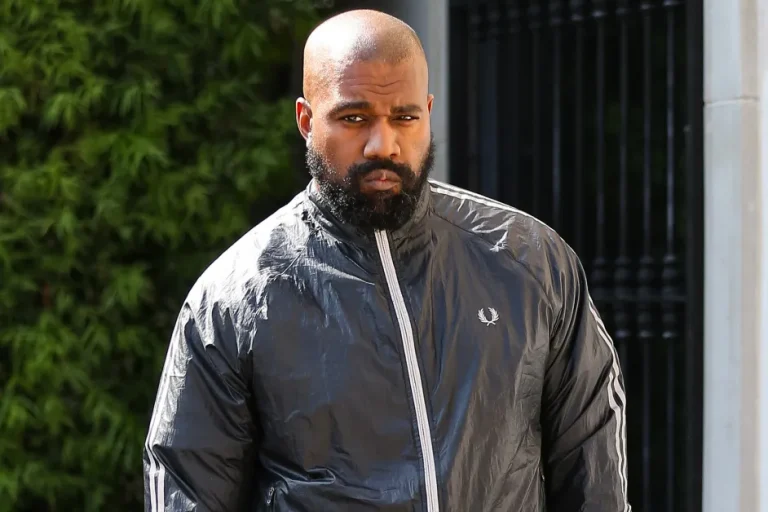
More than a decade after the alleged incident took place, actor and model Jennifer An has once again spoken publicly about her serious accusations against rapper Kanye West. The former America’s Next Top Model contestant recently detailed her harrowing experience from a 2010 music video shoot, revisiting the foundational claims that form the basis of a federal sexual assault lawsuit she filed against the musician in New York. While the legal battle continues to wind through the court system, the model’s public testimony has renewed scrutiny over the boundaries of artistic expression and safety on entertainment sets.

The incident in question occurred during the filming of the music video for a remix of La Roux’s hit song, In for the Kill, at the Chelsea Hotel in Manhattan. Speaking on the BBC’s Fame Under Fire podcast, An recalled the moment she was directed to sit in a chair positioned directly in front of the rolling cameras. According to her testimony, she was given absolutely no direction or script instructions by the production crew regarding what was scheduled to transpire next, leaving her entirely unprepared for the encounter that followed.
Harrowing On-Set Details Revealed
According to court documents and her recent podcast appearance, the atmosphere on set shifted dramatically when Kanye West unexpectedly arrived and took control of the production line. An alleged that West singled her out, demanding, “Give me the Asian girl,” before positioning her for the scene.
“All of a sudden he just reaches a hand out and starts choking me… then he pulled his other hand out and starts choking me with both hands and then starts smearing my makeup all over my face and sticking his hands inside of my mouth, which simulated oral sex.” — Jennifer An
An expressed that the sudden, aggressive escalation left her feeling completely powerless, suffocated, and deeply frightened. At 24 years old and relatively new to the high-stakes entertainment industry, she remained frozen in the chair, expecting someone from the surrounding production crew to intervene and halt the camera. Instead, the cameras kept rolling uninterrupted. An further alleged that after completing the aggressive sequence, West appeared highly pleased with the raw footage, loudly proclaiming to the stunned set, “This is art! I’m Picasso.”
La Roux Frontwoman Responds as Legal Defenses Prepare for Trial
Following the traumatic encounter, An recalled having a private, anxious conversation with La Roux frontwoman Elly Jackson regarding the explicit nature of the footage. Terrified that the unscripted interaction might be broadcast globally or seen by her family, An pleaded with the singer to ensure the clips would never see the light of day.
Jackson reportedly reassured the model at the time, promising that she would never allow the footage to air. Recent legal filings have attached communications where Jackson acknowledged remembering the horrific day, noting that the footage was discarded and that she had felt uncomfortable speaking out sooner due to West’s immense industry power and influence.
| Case Element | Details & Specifications |
| Plaintiff | Jennifer An (America’s Next Top Model Finalist) |
| Defendant | Kanye West (Legal Name: Ye) & Universal Music Group (UMG) |
| Incident Context | 2010 Music Video Shoot for La Roux’s In for the Kill |
| Jurisdiction | US District Court for the Southern District of New York |
| Legal Status | Active litigation; Defense motion for dismissal filed |
As the case edges closer to a formal trial, Kanye West’s legal defense team has actively sought a total dismissal of the lawsuit. While court documents show that the defense does not deny the physical interaction occurred on camera, his lawyers argue that the sequence should be legally protected under the umbrella of artistic freedom.
The defense contends that the scene was entirely contextualized as an “intense and provocative theatrical performance,” explicitly designed to recreate a stylized, dramatic moment inspired by the 2000 psychological thriller film American Psycho. As of now, the structural allegations remain unproven in a court of law as both parties prepare for their next phase of litigation.