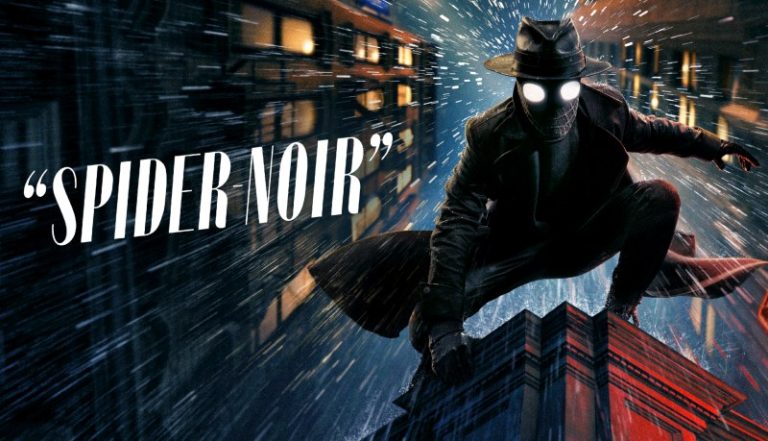
The expansion of superhero intellectual property often feels less like an artistic endeavor and more like a corporate money grab. However, Prime Video’s live-action series Spider-Noir successfully steps out of the exhausting shadow of recent Marvel multiverse fatigue. Handled by showrunners Oren Uziel and Steve Lightfoot, this highly atmospheric detective story feels less like a traditional comic book adaptation and more like a genuine love letter to the hard-boiled fiction and grit of 1930s Hollywood.
Setting Aside the Multiverse Lore
To fully appreciate Spider-Noir, audiences must navigate a bit of character re-education. While Nicolas Cage famously voiced a monochromatic web-slinger in 2018’s animated masterpiece Spider-Man: Into the Spider-Verse, he is not playing that exact iteration here. The traditional Peter Parker name has been discarded. Instead, Cage steps into the shoes of Ben Reilly—a world-weary, cash-strapped private investigator operating out of a rain-slicked Manhattan during the height of the Great Depression.
The Detective's Profile:
• Name: Ben Reilly
• Alias: Formerly known as "The Spider"
• Era: 1930s New York (The Great Depression)
• Current Status: World-weary, down-on-his-luck PI
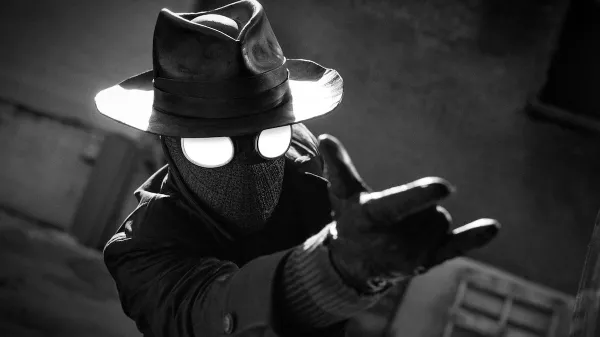
Five years prior to the events of the series, Reilly operated as the city’s lone superhero, keeping the streets safe beneath a thick, woolly mask—an era-appropriate design choice given that Lycra had not yet been invented. However, after failing to rescue the love of his life from a tragic death, he permanently abandoned his heroic persona, choosing to drown his past traumas in cigarette smoke and low-stakes gumshoe work.
A Technically Dazzling Split-Format Presentation
In an exceptionally aesthetic move, the creators of Spider-Noir designed the series to be experienced in two entirely different formats:
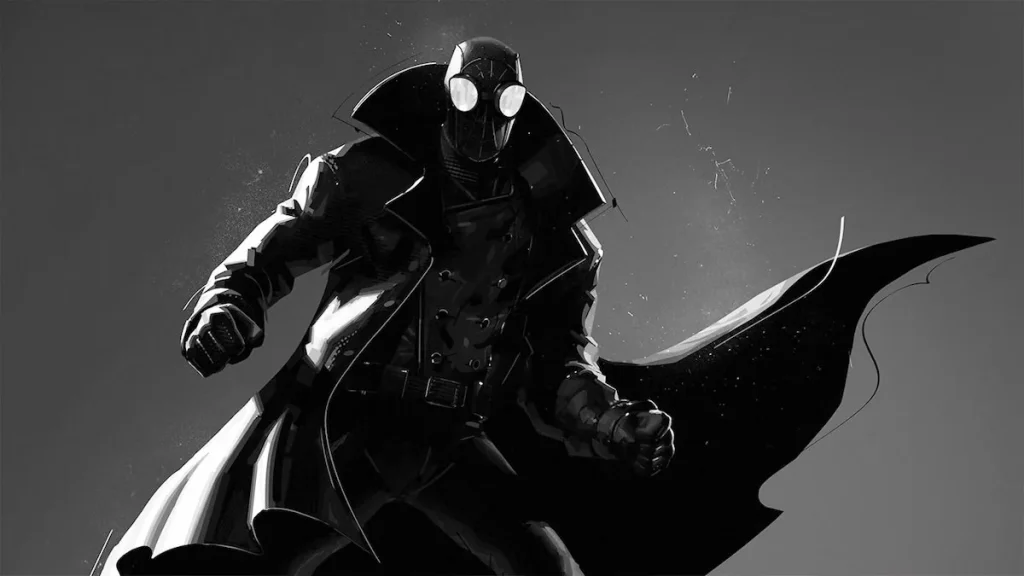
- Authentic Black and White: Filmed natively and polished to elevate dramatic, high-contrast shadows, stark ink-black streets, and classic 1940s Hollywood Dutch angles.
- True Hue Full Color: A digitally colorized version steeped in a heavily saturated, lushly retro palette reminiscent of classic Edward Hopper paintings and iconic neo-noir films like Chinatown.
While purists may argue that choosing the colorized version compromises the gritty soul of a true noir homage, both editions highlight the exquisite, tactile production design and the meticulous camera work handled by director Harry Bradbeer and cinematographer Darran Tiernan.
A Web of Deep-Cut Villains and Shady Characters
The core narrative kicks off when Ben Reilly hired by an anonymous client to locate a low-level target named Addison. Things spin rapidly out of control when Addison reveals himself to be a rogue pyrokinetic—capable of conjuring devastating streams of raw fire with his bare hands—only to be promptly gunned down by a rival investigator.
This unexpected encounter sets off Reilly’s “Spidey-sense” (which, in classic noir fashion, acts more like an agonizing stress migraine that triggers just a second too late to avoid a physical brawl).
The investigation drags Reilly deep into a complex web of corruption and supernatural phenomena, forcing him into the path of several classic Marvel rogues who are brilliantly reimagining for the 1930s setting:
| Character Name | Played By | Noir Reimagining & Role |
| Silvermane | Brendan Gleeson | The terrifying, iron-fisted mob boss controlling New York’s political machine. |
| Flint Marko | Jack Huston | Silvermane’s lethal muscle who physically mutates into sand when riled. |
| Cat Hardy | Li Jun Li | An enigmatic, dangerous lounge singer fulfilling the classic femme fatale archetype. |
The Inspired Insanity of Nicolas Cage
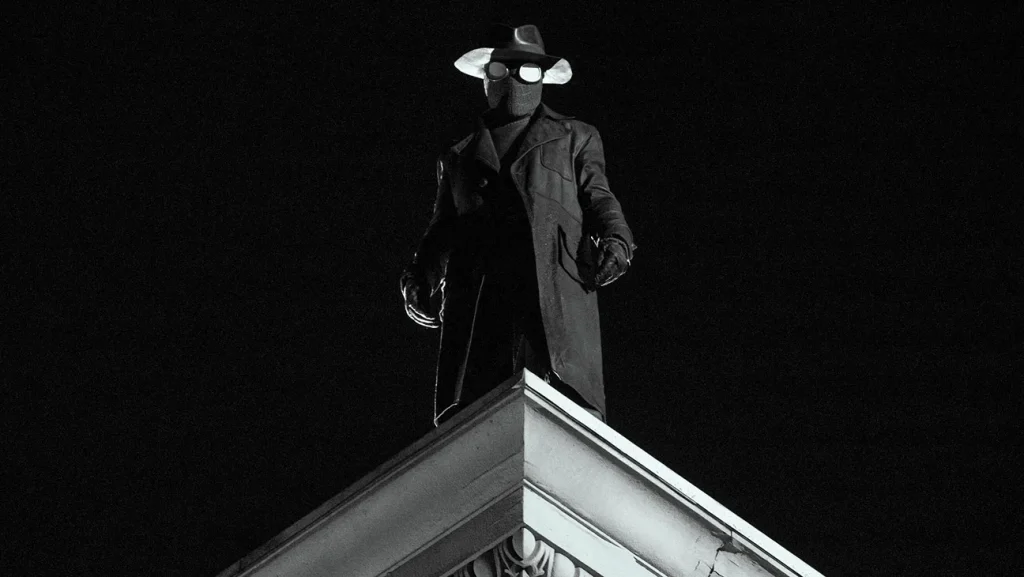
For an actor whose polarizing, unpredictable performances are frequently weaponized into internet memes, Spider-Noir provides the ultimate playground. Cage channels a performance that he famously described as “70 percent Humphrey Bogart and 30 percent Bugs Bunny.” He switches comedic and dramatic gears constantly—employing distinct Golden Age accents, leaning into physical eccentricity, and delivering cynical, hard-boiled monologues with absolute conviction.
“Someone once asked me what universe this was…” — Ben Reilly (Nicolas Cage)
Crucially, the show’s highly stylized, hyper-mannered universe provides the perfect structural framework for Cage’s unique eccentricities. Instead of his performance playing like an over-the-top affectation, it translates as a credible defense mechanism for a deeply traumatized, world-weary hero.
He anchored by an excellent supporting cast that keeps the human elements grounded. Karen Rodriguez turns in a scene-stealing performance as Janet, Reilly’s sharp-tongued, fiercely loyal secretary who constantly demands her overdue paychecks. Meanwhile, Lamorne Morris shines bright as Robbie Robertson, a tenacious, muckraking journalist who serves as Reilly’s primary link to the shifting underworld of Manhattan.
Ultimately, Spider-Noir avoids the visual bloat of modern, CGI-heavy superhero projects by focusing heavily on atmospheric tension, sharp dialogue, and old-school filmmaking craft.
Backed by a vintage, brass-heavy jazz score from composers Kris and Michael, this distinctive genre crossover delivers a thrilling story.