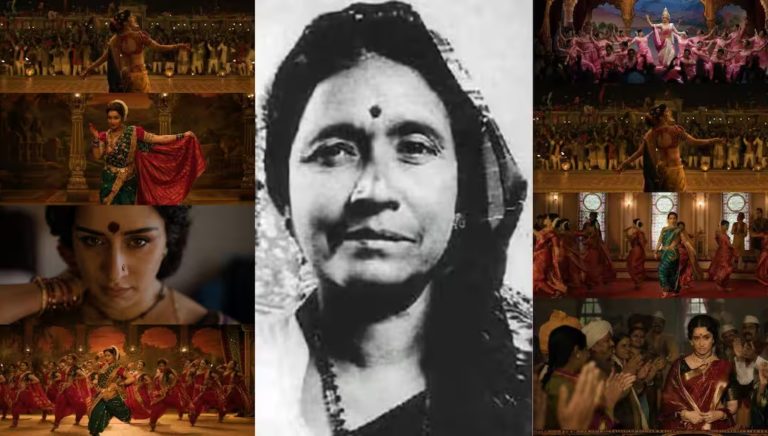
Imagine performing in front of a packed audience when labour pains suddenly begin. Most people would immediately leave for a hospital. However, Vithabai Bhau Mang Narayangaonkar made a decision that has become part of Maharashtra’s cultural history.
According to popular accounts, she quietly went backstage, gave birth to her child, cut the umbilical cord with a stone and prepared to return to the stage. The audience, shocked by her dedication, refused to let her continue performing and insisted that she rest.
Today, this remarkable story is reaching a new generation through Eetha, where Shraddha Kapoor portrays the legendary Lavani and Tamasha artist. Yet, Vithabai’s real life was even more inspiring than any film script.
Born Into a Family of Tamasha Performers
Vithabai Narayangaonkar was born on July 1, 1935, in Pandharpur in Maharashtra’s Solapur district. Performing was not simply a profession in her family. Instead, it was a tradition passed down through generations.
Her grandfather, Narayan Khude, established a travelling Tamasha troupe. Later, her father, Bhau Bapu Narayangaonkar, continued the family’s legacy.
As a child, Vithabai grew up surrounded by colourful costumes, music and travelling performances. Therefore, she naturally learned Lavani, Gavlan and several other folk art forms from an early age.
Unlike many performers, she never attended an acting school. Instead, every village she visited and every stage she performed on became her classroom.
The Performance That Changed Her Life
Vithabai’s life took a major turn when celebrated Marathi playwright Mama Varerkar watched one of her performances.
He was deeply impressed by her confidence, expressions and stage presence. As a result, he invited her to join his theatre troupe.
This opportunity allowed Vithabai to learn theatrical techniques while continuing her journey as a Tamasha performer. Consequently, she became one of the most respected folk artists in Maharashtra.
The Birth During a Live Performance That Became Legendary
Among the many stories about Vithabai, one incident continues to define her legacy.
According to accounts of her life, she was nine months pregnant when she went into labour during a Tamasha performance.
Instead of cancelling the show, she reportedly went backstage, delivered her baby, cut the umbilical cord with a stone and prepared to return to the stage.
However, the audience soon learned what had happened. They immediately stopped her from performing and insisted that she take proper rest.
Although the story sounds unbelievable, it has become one of the most celebrated moments in Maharashtra’s folk theatre history.
Why Vithabai Rejected Film Offers
As Vithabai’s popularity increased, several filmmakers wanted to bring her to the big screen.
One of them was reportedly legendary filmmaker Raj Kapoor. Many artists would have accepted such an opportunity without hesitation.
However, Vithabai made a very different choice.
According to theatre director Shantanu Ghule’s Marathi play Vitha, she believed that leaving Tamasha for films would affect the livelihoods of dozens of artists who travelled and performed with her troupe.
Therefore, she chose loyalty over fame and remained dedicated to preserving Maharashtra’s traditional folk art.
Personal Life Filled With Struggles
While Vithabai enjoyed immense respect on stage, her personal life was filled with hardship.
According to reports published by The Indian Express and accounts portrayed in Shantanu Ghule’s play, her marriage to Maruti Sawant was deeply troubled.
It is alleged that he controlled her earnings and subjected her to abuse. Despite achieving great success as a performer, she continued to face emotional and financial difficulties throughout much of her life.
Awards and Contributions to Indian Folk Culture
Vithabai’s contribution to Tamasha and Lavani earned national recognition.
She received honours from the President of India in 1957 and again in 1990 for her outstanding contribution to folk arts.
Meanwhile, her performances introduced audiences across India to Maharashtra’s rich cultural traditions. She played a major role in keeping Tamasha alive at a time when many traditional performing arts were struggling to survive.
Her Final Years
Despite entertaining audiences for decades, Vithabai faced severe financial problems during the final years of her life.
After suffering a paralytic attack, she passed away on January 15, 2002.
Reports revealed that her family struggled to pay hospital expenses and even arrange transportation for her final journey. Eventually, admirers, cultural organisations and well-wishers came forward to help.
Her story remains a reminder that many legendary artists continue to face financial hardship after their careers end.
A Legacy That Lives On
Although Vithabai is no longer with us, her contribution to Maharashtra’s folk culture continues to inspire generations.
In 2006, the Maharashtra government instituted the Vithabai Narayangaonkar Lifetime Achievement Award to honour senior Tamasha artists who dedicate their lives to preserving the traditional art form.
Now, with Shraddha Kapoor bringing her story to the screen in Eetha, a new generation will discover the courage, dedication and passion of one of India’s greatest folk performers.