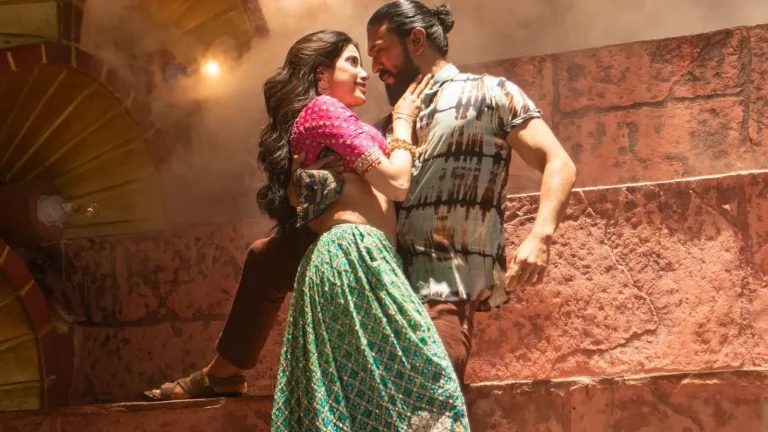
Director Buchi Babu Sana’s highly anticipated sports drama Peddi has officially hit the silver screens, sparking an intense, polarizing debate across social media networks. While theater audiences have largely showered praise on global star Ram Charan for his powerhouse physical performance, a massive wave of disappointment has simultaneously erupted online over the writing, framing, and presentation of the film’s leading lady, Janhvi Kapoor, who essays the role of Achiyamma.
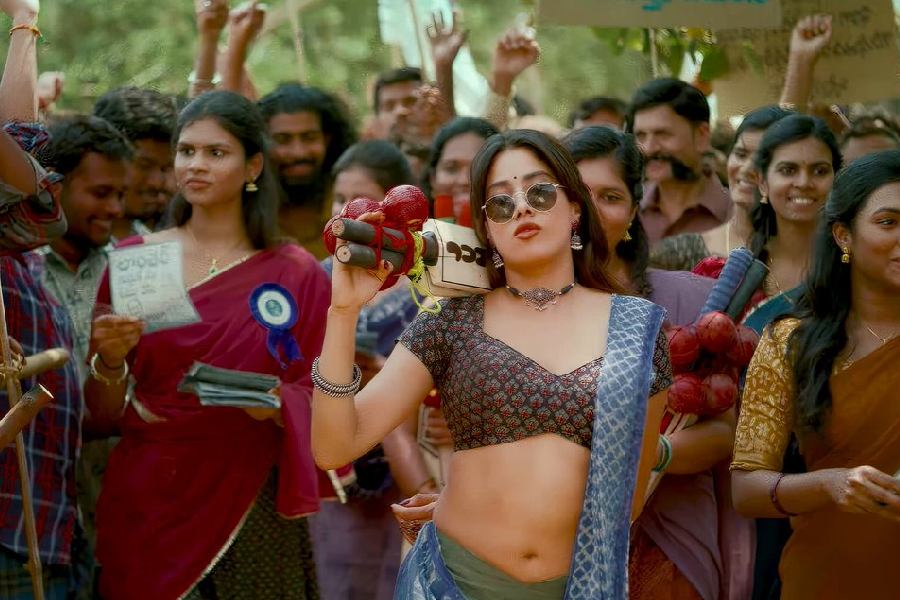
Within mere hours of the first morning shows, platforms like X (formerly Twitter) and Instagram were flooded with sharp criticism. Devastated fans and film critics alike are accusing the creative team of drastically reducing a highly talented female performer to an overly sexualized, hollow stereotype designed purely for the mass gaze, completely undermining her creative potential.
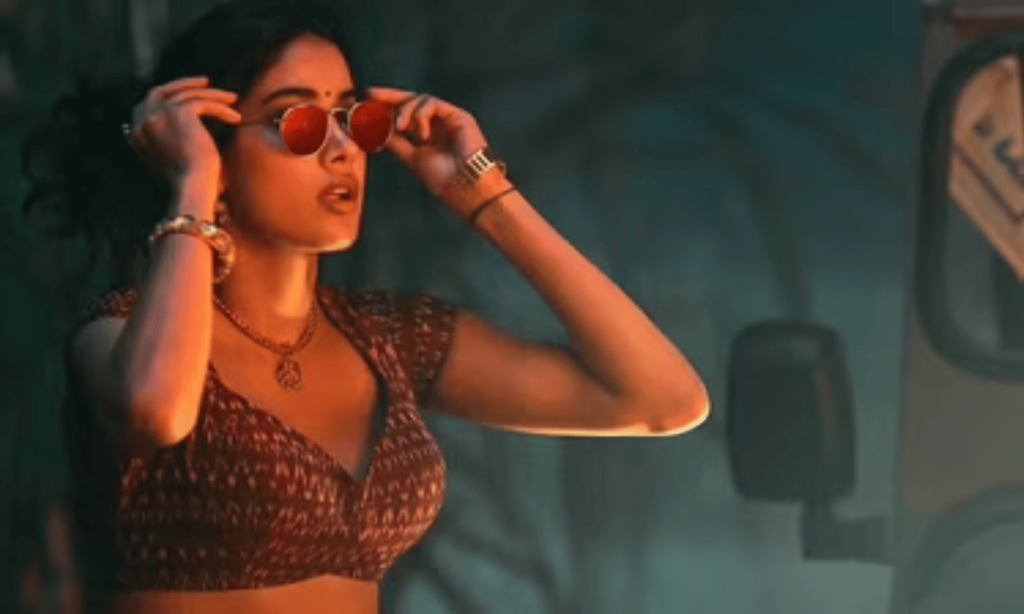
Highly Problematic Introduction and Sequence Details
The primary catalyst behind the escalating public outrage stems from Janhvi’s introduction sequence, which multiple reviewers have labeled as deeply regressive. In the scene, Ram Charan’s character, Peddi, describes her physical appearance to supporting characters using highly objectifying vocabulary.
The Dialogue Under Fire: When a side character asks Peddi how he intends to identify Janhvi’s character in a crowd, he responds: “Chehra dekh kar nahi, kamariya se phechan lenge (I won’t recognize her by her face, I’ll know her by her waist),” further double-downing with the line, “Uss chikri ka hume sab kuch pata hai bas chehra chod ke (I remember every single thing about that lady except for her face).”
The narrative friction worsens in a subsequent night sequence, where the male protagonist forcibly enters her home and subjects her to a non-consensual kiss. Despite Achiyamma explicitly and repeatedly verbalizing her objection, the script validates the behavior, framing the assault as an acceptable, passionate expression of true love—a creative choice that has drawn massive red flags regarding consent in cinema.
Netizens and Critics Slam the Over-Sexualization
Movie enthusiasts have drawn comparisons to controversial directorial styles of the past to articulate their discomfort with Peddi. Many noted that the camera lens continuously alienates Janhvi’s acting performance by isolating specific parts of her anatomy.
- Forced Gazing: One viral user comment noted: “Sandeep Reddy Vanga once said that close-ups on a woman’s body parts are a director’s way of forcing the audience to stare and feel something. Now look at #Peddi. It’s exactly that. Janhvi Kapoor is reduced to nothing but a body show for the masses with no substance.”
- Narrative Irrelevance: Trade analyst Kartik Dayanand chimed in on X, stating: “Janhvi Kapoor is a brilliant actress and it’s a pity that she’s not being used properly by any film industry. #Peddi is such a farce when it comes to her character. Cut her entire role and the movie could still progress seamlessly without her.”
Did Janhvi Kapoor Silently Signal Her Disapproval?
Adding intense fuel to the raging fire is a viral screenshot circulating across digital forums, suggesting that Janhvi Kapoor herself might be deeply unhappy with the final theatrical cut.
| Social Media / Behind-The-Scenes Activity | Reported Operational Timeline Details | Signaled Stance & Context |
| The Viral Instagram ‘Like’ | Occurred post-release on June 4, 2026 | Janhvi reportedly liked a post calling her role the “most expensive disrespect” to an actress. |
| Post-Production Boundaries | Leaked internal editing reports | Reports indicate Janhvi explicitly questioned and objected to excessive body close-ups during post-production. |
| Public Stance Alignment | Ongoing 2025–2026 press tours | Matches her recent vocal media statements actively calling out the industry’s habit of oversexualizing women. |
As Peddi continues to drive massive box office numbers across South India and international circuits, the heavy conversation surrounding its treatment of female consent and cinematic objectification highlights a growing ideological divide between old-school mass tropes and modern audience sensibilities.