
In the volatile landscape of modern Indian cinema, a single film is being asked to carry the commercial pressure of an entire industry and the emotional sentiment of a nation.

Director Nitesh Tiwari’s upcoming mythological magnum opus, Ramayana, has easily consolidated its position as the most scrutinized and discussed cinematic event of the decade. Scheduled to launch its two-part cinematic universe beginning late October 2026, the film is no longer viewed merely as a star-studded cinematic offering. Instead, it has morphed into a high-stakes litmus test for leading man Ranbir Kapoor’s legacy, a trial by fire for the visual arts capabilities of Indian cinema, and Bollywood’s ultimate shot at cultural redemption.
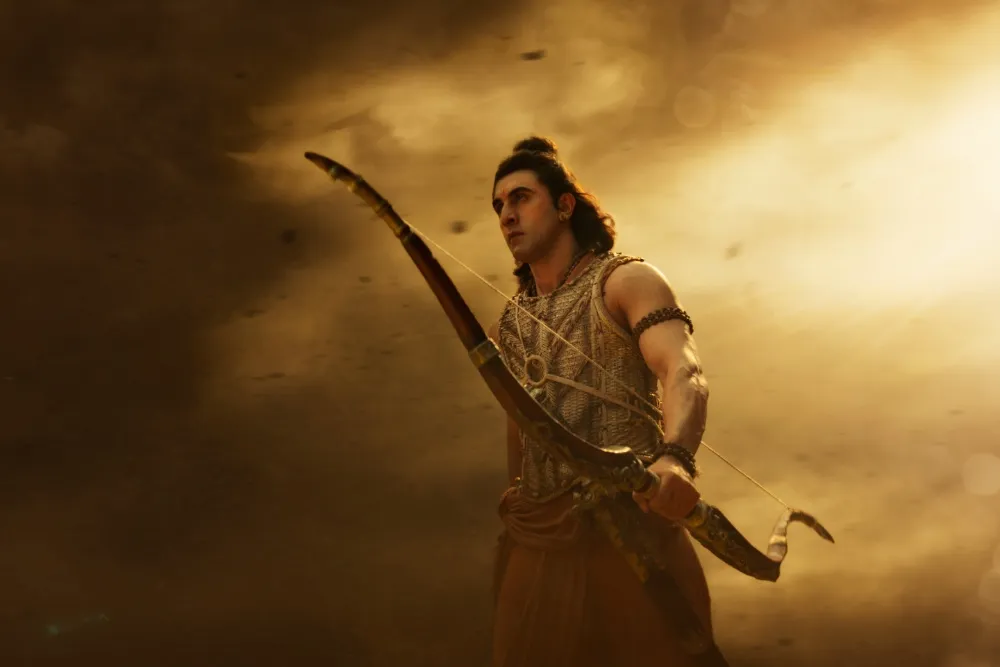
The Actor’s Metamorphosis: “Filming Ramayana has completely altered my internal value system,” Ranbir Kapoor revealed in an intimate conversation with Top Film Magazine earlier this week. “When you take on a responsibility of this magnitude, it cannot just be about changing your physical appearance or learning dialogues. My daughter Raha made me a better human being, but playing this character has made me want to be better for her. Every day on set feels less like a shooting schedule and more like a deeply spiritual learning experience.”
The ₹4,000 Crore Ledger: Breaking Down India’s Most Expensive Film
The primary factor driving the immense industry anxiety surrounding Ramayana is its unprecedented, mind-boggling financial scale. Producer Namit Malhotra the visionary business executive behind global VFX powerhouse DNEG stunned financial analysts by confirming that the combined production cost for both parts of the epic stands at a staggering ₹4,000 crore.
To put this astronomical figure into perspective, Malhotra’s self-funded budget comfortably surpasses the combined production costs of historic Indian blockbusters like Baahubali: The Beginning (₹430 crore) and RRR (₹550 crore). With the makers currently negotiating a record-breaking ₹450 crore distribution deal for the Hindi theatrical rights alone, the film requires an unprecedented, historic multi-thousand-crore global box office run just to break even, leaving absolutely zero margin for error.
A True Pan-India Alliance and an Global Musical Masterstroke
To insulate this massive financial risk, the makers have constructed a powerhouse ensemble cast deliberately designed to bridge regional divides. Joining Ranbir Kapoor is South Indian powerhouse Sai Pallavi as Sita, alongside Kannada superstar Yash, who takes on the complex, demanding role of Ravana. The supporting lineup is equally diverse, featuring TV icon Ravie Dubey as Lakshman, Adinath Kothare as Bharat, and veteran actor Sunny Deol as Hanuman.
Redefining Cinematic Standards
- The Sonic Architecture: In a historic cross-cultural creative coup, Oscar winner AR Rahman has officially partnered with legendary Hollywood composer Hans Zimmer to curate the background score, aiming to give the Indian epic an unparalleled global sonic appeal.
- The Previs Innovation: Addressing early online visual skepticism, director Nitesh Tiwari revealed his team spent over five years in pre-production. “Every single frame, camera angle, and lighting setup has been meticulously mapped out using advanced previsualization technology, allowing actors to see the final 3D environments in real-time on blue screens,” Tiwari explained.
The Shadow of Adipurush and the Redemption of Bollywood
Beyond the sheer economics, Ramayana is fighting a battle for cultural sensitivity. The memory of June 2023’s Adipurush remains a highly sensitive topic for Indian moviegoers. That project faced intense public backlash, protests, and legal challenges over what audiences perceived as localized, casual dialogues and a highly westernized, substandard depiction of a revered epic.
Consequently, Nitesh Tiwari’s production is being held to an impossibly high standard of cultural authenticity. The teaser released earlier this year already triggered fierce debates regarding VFX choices, proving that the modern Indian audience treats mythological cinema not as passive entertainment, but as a direct reflection of faith and heritage. For Ranbir Kapoor and the Hindi film industry at large, Ramayana represents a definitive opportunity to prove they can deliver global-grade cinematic grandeur without losing the emotional, respectful essence of India’s core traditions.