


Washington DC [US], June 17: Scientists from the University of Cambridge and University College London (UCL) have developed a revolutionary robotic skin that brings machines significantly closer to replicating the complexity of human touch.
Crafted from a flexible, low-cost, gel-like material, this new skin transforms the entire surface of a robotic hand into a smart, responsive sensor capable of detecting pressure, temperature, pain, and multiple points of contact simultaneously. Unlike conventional robotic skins that rely on a combination of multiple, individual sensors, this innovation integrates sensing capabilities across the entire material — much like human skin.
The gel-based, conductive material can be easily fabricated, melted down, and reshaped into a variety of complex forms. Researchers say this makes it a versatile and scalable solution, with broad potential across multiple industries.
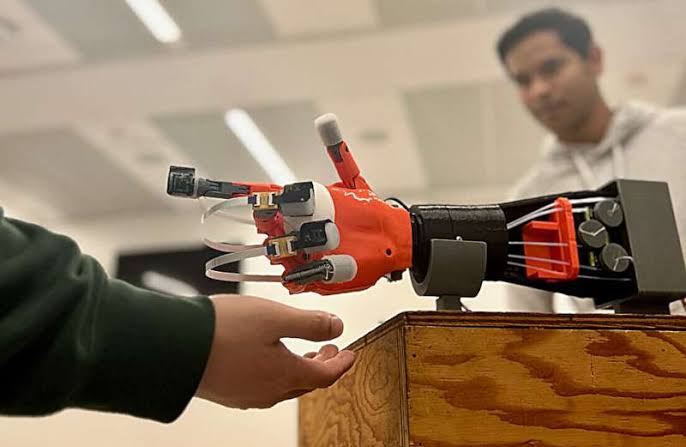
Though not yet as sensitive as natural skin, the robotic skin contains over 860,000 microscopic signal pathways, allowing it to interpret diverse tactile inputs such as a finger tap, extreme temperatures, damage from sharp objects, or multi-point contact — all within a single material.
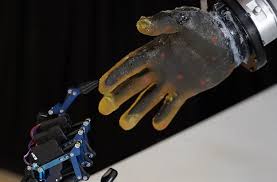
To enhance its sensory abilities, the research team used machine learning to help the skin ‘learn’ which pathways respond most effectively to specific types of physical interactions, boosting its efficiency and accuracy.
Lead researcher Dr. David Hardman from Cambridge’s Department of Engineering explained, “Having different sensors for different types of touch leads to materials that are complex to make. We wanted a simpler, more unified solution.”
Dr. Thomas George Thuruthel of UCL, co-author of the study, added, “At the same time, we need something that’s cheap and durable, so that it’s suitable for widespread use.”
The breakthrough, published in Science Robotics, paves the way for major advancements in humanoid robotics, prosthetics, and even industrial applications such as automotive manufacturing and disaster recovery, where tactile sensitivity can be crucial.
Future efforts will focus on improving the skin’s durability and testing its functionality in real-world robotic operations.