


Why Devotees Avoid Onion, Garlic & What Foods Should Be Eaten For Inner Purity
Chaitra Navratri marks the beginning of the Hindu New Year in many parts of India and is one of the most spiritually significant periods in the Hindu calendar. Falling during the bright half of the lunar month of Chaitra (March–April), this nine-day festival is dedicated to worshipping the nine divine forms of Goddess Durga (Navdurga).
One of the most important rituals observed by devotees during these nine days is fasting (vrat). Far beyond being a simple abstention from food, fasting during Navratri is a spiritual discipline that purifies the mind, body, and soul—helping devotees connect deeply with divine energies.
🙏 Why Fasting During Chaitra Navratri is Spiritually Significant
- Cleansing of Mind and Body:
Navratri comes at a seasonal juncture—the transition from winter to summer—a time when the body becomes more vulnerable to illness. Fasting aids in detoxification, promoting digestion and health. - Spiritual Discipline:
The act of renunciation and control over one’s physical cravings leads to greater self-discipline, aiding in the development of focus, inner peace, and devotion. - Invoking the Divine Shakti (Power):
Fasting is a form of Tapasya (austerity)—a way to invoke the energy of Goddess Durga and align oneself with her strength, courage, and compassion. - Mental Clarity and Awareness:
Fasting reduces tamasic (inertia-inducing) and rajasic (hyperactivity-inducing) foods, promoting sattva (purity, balance)—ideal for meditation, prayer, and self-inquiry.
❌ Why Onion and Garlic Are Avoided
Onion and garlic are considered tamasic and rajasic in Ayurveda and Yogic traditions.
- Tamasic foods increase lethargy, dullness, and indulgence.
- Rajasic foods stimulate aggression, restlessness, and desire.
During Navratri, the aim is to elevate oneself to a sattvic (pure and balanced) state. Since onion and garlic stimulate the lower chakras and increase emotional turbulence, they are avoided to maintain inner calm and spiritual focus.
🍽️ What to Eat During Chaitra Navratri—and Why
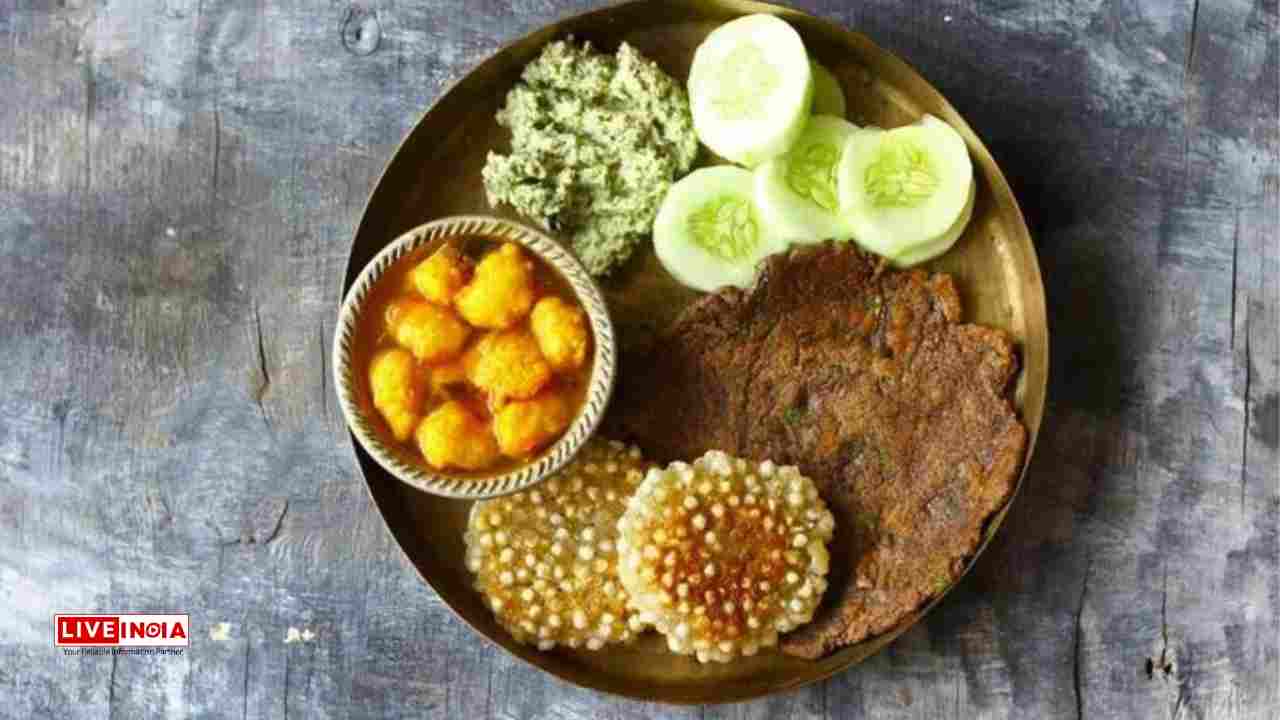
Navratri vrat food is rich in sattvic ingredients that nourish both body and spirit. Here’s a list of commonly consumed items and their significance:
✅ Allowed Foods:
- Fruits (Banana, Apple, Papaya, etc.):
- Easy to digest, hydrating, and rich in fiber.
- Keeps energy levels stable.
- Sabudana (Tapioca Pearls):
- High in carbohydrates; provides sustained energy.
- Often used in khichdi, kheer, or vadas.
- Kuttu (Buckwheat Flour):
- Gluten-free, rich in protein and fiber.
- Used for making rotis, pakoras, puris.
- Singhara Atta (Water Chestnut Flour):
- Cooling, alkaline, and light.
- Ideal for fasting as it balances pitta dosha.
- Sendha Namak (Rock Salt):
- Regular salt is not used; rock salt is considered pure and sattvic.
- Potatoes, Sweet Potatoes, Arbi (Colocasia):
- Provide carbohydrates for energy.
- Easily digestible and versatile.
- Milk, Curd, Paneer:
- Good source of calcium and protein.
- Maintains energy and satiety.
- Dry Fruits and Nuts (Almonds, Walnuts, Raisins):
- Energy-boosters rich in essential fats and minerals.
- Coconut and Coconut Water:
- Hydrating and cooling for the body.
🧘♀️ Fasting Beyond Food: Mindful Living
Navratri fasting also emphasizes mental and emotional fasting—avoiding negativity, harsh speech, overindulgence in social media, or excessive entertainment. Devotees are encouraged to:
- Wake up early and perform morning prayers
- Chant mantras and read scriptures like Durga Saptashati
- Practice silence (maun vrat), meditation, or charity
- Abstain from anger, ego, and arguments
🕉️ The Deeper Purpose of Fasting During Navratri
Navratri fasting is not about deprivation but about detoxification, discipline, and devotion. It is a sacred pause to cleanse your inner temple and reconnect with the divine feminine energy—Shakti, that resides within all of us.
By consuming sattvic foods and practicing inner restraint, we prepare ourselves to awaken higher consciousness, honor the Goddess in her many forms, and invoke transformation and renewal as the seasons change.