
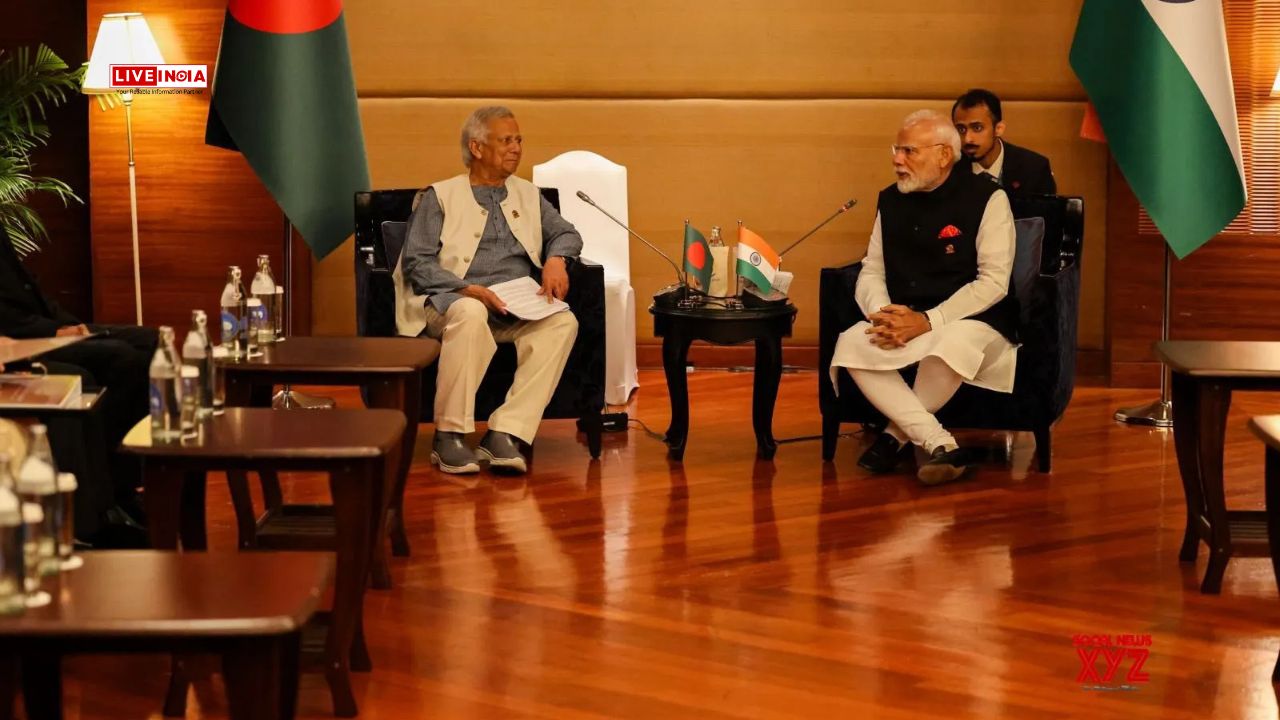


In a crucial meet at the BIMSTEC summit in Bangkok, Prime Minister Modi conveys India’s concerns over minority safety and border stability, urging Bangladesh’s Muhammad Yunus to maintain a constructive and pragmatic approach to bilateral ties.
April 4, 2025: Prime Minister Narendra Modi met with Muhammad Yunus, the chief advisor of Bangladesh’s interim government, on the sidelines of the BIMSTEC Summit in Bangkok on Friday. This marked the first direct meeting between the two leaders since Yunus assumed power following the ousting of the Sheikh Hasina-led Awami League government in August 2024.
Amid rising tensions in bilateral relations, the Indian Prime Minister delivered a firm but diplomatic message — asking Bangladesh to refrain from “any rhetoric that vitiates the environment” and urging stronger action to ensure the safety and security of minorities, particularly Hindus, in the neighboring country.
Also Read: PM Modi, Bangladesh’s Yunus Sit Together At Bangkok Summit Dinner Amid Bilateral Tensions
“India desires to forge a positive and constructive relationship with Bangladesh based on pragmatism,” said Foreign Secretary Vikram Misri, who briefed the media post-meeting. “The Prime Minister reiterated India’s support for a democratic, stable, peaceful, progressive, and inclusive Bangladesh.”
PM Modi also raised the issue of illegal border crossings, especially at night, and called for stricter enforcement of laws to maintain regional security.
🔥 Tensions Over Yunus’ Remarks on Northeast India
A key source of friction arose from Muhammad Yunus’s controversial statement during a China visit, where he referred to Northeast India as “landlocked” and portrayed Bangladesh as the region’s ocean access guardian. He suggested that this status could serve Chinese economic expansion — remarks that India viewed as provocative.
In response, Assam Chief Minister Himanta Biswa Sarma strongly condemned the statement, calling it “offensive and strategically sensitive.” Sarma emphasized the urgent need to develop alternative road and rail routes that would bypass the strategic Chicken’s Neck corridor in Siliguri, West Bengal — a narrow stretch connecting Northeast India to the mainland.
“Such provocative statements by Md Yunus must not be taken lightly,” Sarma said, warning of longstanding agendas that aim to undermine India’s territorial integrity and regional stability.
🔍 Background: Strained Ties and Regional Concerns
India and Bangladesh’s ties have grown frosty following the fall of the Awami League government. The Sheikh Hasina administration, which had close ties with India, was ousted in a mass uprising. India has since voiced concern over attacks on minorities, the rise of Islamist elements, and growing Dhaka-Beijing proximity under the interim government.
In March 2025, PM Modi sent a letter to Yunus on Bangladesh’s Independence Day, calling for mutual sensitivity and reiterating that the 1971 Liberation War was a “shared history”.
“We remain committed to advancing this partnership, driven by our common aspirations for peace, stability, and prosperity, and based on mutual sensitivity to each other’s interests and concerns,” PM Modi wrote.
As regional geopolitics grow increasingly complex, India’s messaging at BIMSTEC indicates its desire to maintain neighborhood stability while drawing clear diplomatic red lines — especially on matters concerning national security, sovereignty, and minority rights.
🏷️ Tags:
Narendra Modi, Muhammad Yunus, BIMSTEC Summit 2025, India-Bangladesh Relations, Northeast India, Bangladesh Minorities, Sheikh Hasina, China Bangladesh Ties, Dhaka Beijing Relations, Chicken’s Neck Corridor, Assam, Himanta Biswa Sarma, Indian Foreign Policy, Indian Diplomacy, Indo-Bangladesh Border, BIMSTEC 2025 Bangkok, S Jaishankar, Ajit Doval, Vikram Misri