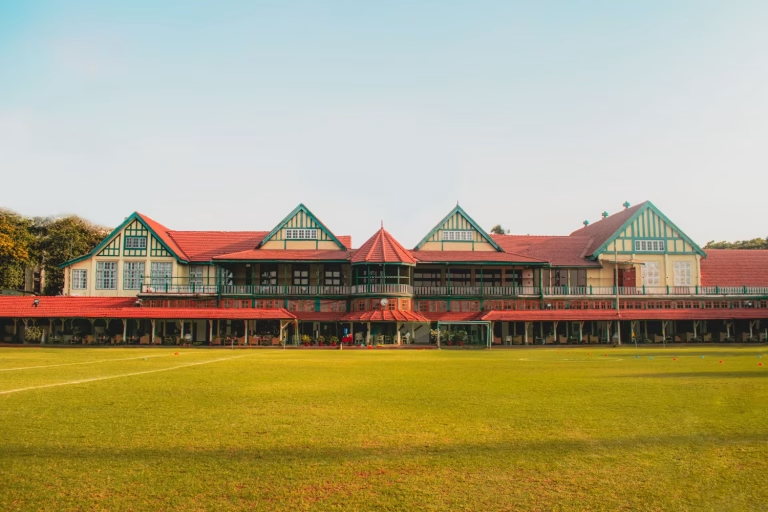
The legacy of India’s cricketing history is deeply tied to its colonial-era sporting grounds, and one of the most iconic among them is Bombay Gymkhana. Established in 1875, it stands as one of the oldest surviving gymkhanas in the country and remains a landmark of Indian sporting heritage.
A Colonial-Era Institution With Deep Sporting Roots
Founded during British rule in Bombay (now Mumbai), the gymkhana was originally created as an exclusive club for British officers and businessmen. Over time, it evolved into a major multi-sport institution, hosting activities ranging from cricket and football to rugby, tennis, and athletics.
Despite its colonial origins, it gradually became an integral part of India’s sporting ecosystem.
Venue of India’s First Home Test Match
The most significant chapter in its history came in 1933, when Bombay Gymkhana hosted India’s first-ever home Test match against England. This match marked a defining moment in Indian cricket history, placing the venue permanently on the global sporting map.
It was also here that legendary cricketer Lala Amarnath scored the first-ever Test century on Indian soil, further cementing the ground’s place in cricket folklore.
A Landmark in South Mumbai
Located near Azad Maidan and close to Chhatrapati Shivaji Maharaj Terminus, the gymkhana remains a striking example of colonial-era architecture blended with sporting tradition.
Its expansive grounds and historic pavilion continue to make it one of the most recognizable landmarks in South Mumbai.
Evolution Into A Multi-Sport Legacy Hub
While cricket brought it global fame, Bombay Gymkhana has long supported multiple sports, including tennis, squash, football, and athletics. Over the decades, it transformed from an exclusive colonial club into a prestigious sporting institution with wide participation.
150 Years of Sporting Heritage
In 2025, the gymkhana celebrated its 150th anniversary, marking a milestone that reflects its survival through colonial rule, independence, and modern urban development. The celebration included special commemorations and recognition of its long-standing contribution to Indian sport.
Today, it remains not just a club, but a living piece of India’s sporting history.