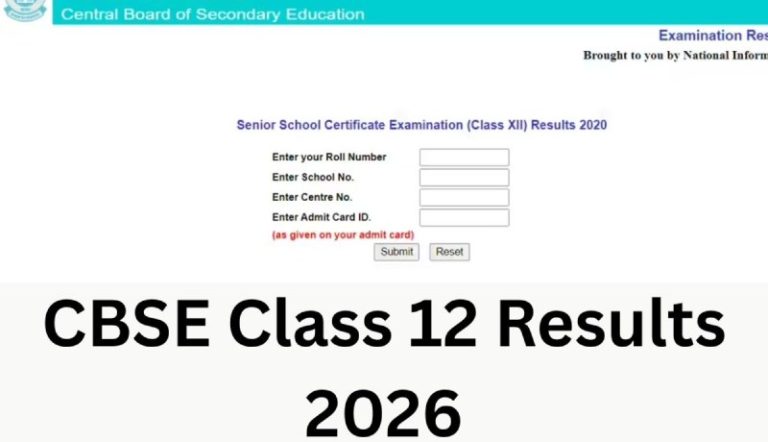
Millions of students are on high alert as the Central Board of Secondary Education (CBSE) is expected to release the Class 12 Board Results 2026 shortly. While the board has not officially confirmed a specific date or time, current trends suggest an imminent announcement.
The Class 12 examinations, which began on February 15 and concluded on April 10, 2026, were conducted in a single shift nationwide. Students are advised to keep their admit cards handy to access their scores as soon as the link goes live.
Where to Check Your CBSE Class 12 Results
Once declared, the results will be hosted across multiple official platforms to ensure smooth traffic flow. Candidates can check their marks on the following websites and mobile applications:
- Official Portals: cbse.gov.in, results.cbse.nic.in, and cbseresults.nic.in.
- Digital Platforms: The results will also be available via DigiLocker (digilocker.gov.in) and the UMANG app.
- Alternative Methods: Students can also access their results through the official results.gov.in portal or via SMS services provided by the board.
Passing Criteria and Result Requirements
To successfully qualify for the CBSE Class 12 exams, students must secure a minimum of 33% marks in each subject. This requirement applies to both theory and internal assessments/practicals individually. Specifically, for a 100-mark subject with a 70/30 split, students need at least 23 marks in theory and 10 in internals. To log in and view the scorecard, students will need to enter three specific details from their admit card: Roll Number, School Number, and Admit Card ID.
No Pre-Announcement and Digital-First Approach
Following the precedent set in recent years, CBSE is unlikely to hold a formal press conference or announce a specific “date and time” in advance. Instead, the board will publish the result link directly on its official website, accompanied by a public circular detailing the overall pass percentage, gender-wise performance, and region-specific statistics. This digital-first approach aims to reduce anxiety and prevent misinformation among the student community.