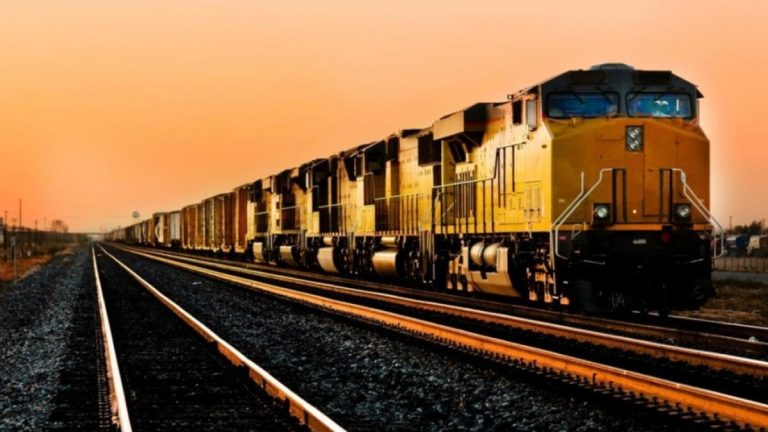
India is adopting advanced technologies and global best practices to strengthen freight railway operations while expanding its dedicated freight corridor network.
June 5, 2026: India has entered the league of nations operating heavy-haul freight railway systems and is now looking to adopt global best practices and advanced technologies to improve safety, efficiency, and reliability. Speaking at the International Heavy Haul Seminar 2026 in New Delhi, DFCCIL Managing Director Praveen Kumar said the event brings together global experts, railway professionals, and policymakers to exchange knowledge and explore innovations that can help reduce India’s logistics costs.
Kumar said discussions at the seminar are focused on emerging technologies such as AI-based predictive maintenance, autonomous inspection systems, and advanced monitoring tools. He noted that many railway operations are still manually managed and that technology can significantly improve safety and operational efficiency. According to him, only a handful of countries, including the United States, China, Australia, Brazil, South Africa, and Sweden, operate heavy-haul freight systems, and India has now joined this group through its dedicated freight corridors.
Highlighting the importance of freight infrastructure, Kumar said India’s logistics costs remain higher than global averages and that the Eastern and Western Dedicated Freight Corridors have already helped improve freight movement and lower costs. He also outlined plans for the upcoming East-West Dedicated Freight Corridor, a 2,100-kilometre double-line electrified route connecting Dankuni in West Bengal to the Surat region in Gujarat. The project, entrusted to DFCCIL, is expected to strengthen India’s freight transportation network and support future economic growth.