
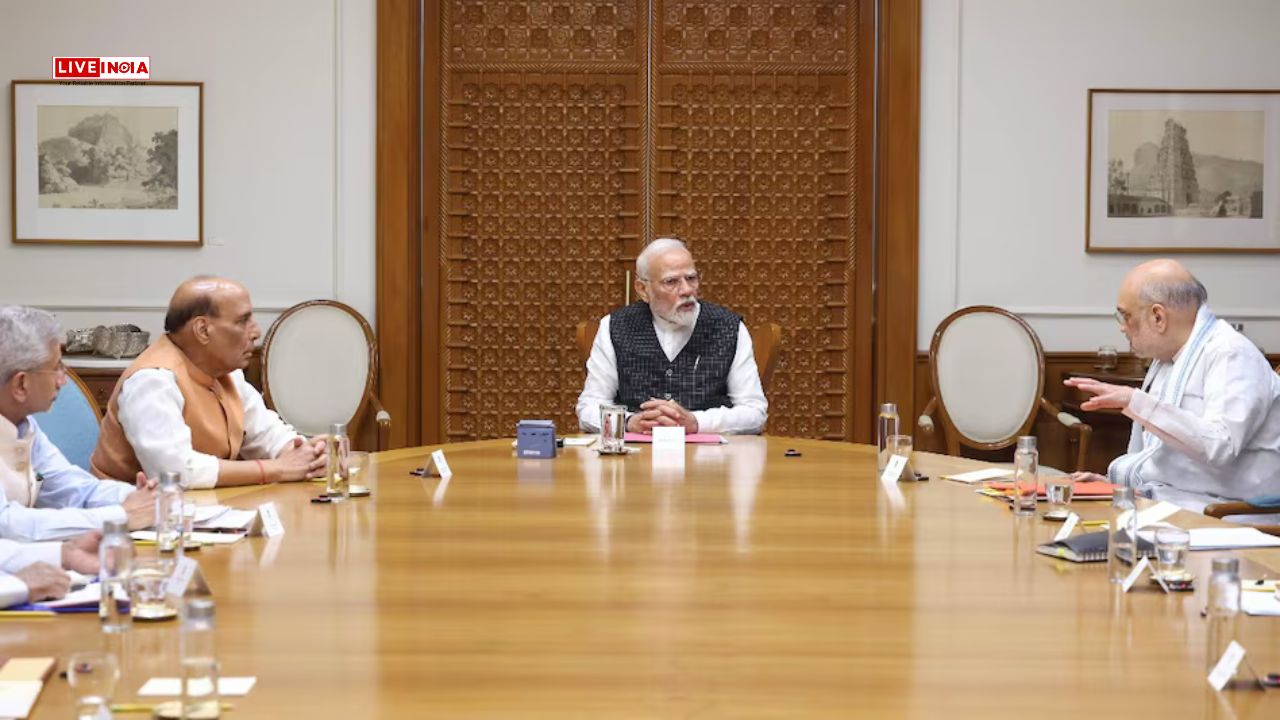


The Cabinet Committee on Security takes a landmark decision after intelligence points to cross-border links in the deadly Kashmir strike that killed 26, including a foreign national.
New Delhi | April 23, 2025
In a dramatic escalation of diplomatic tensions, India has officially suspended the Indus Waters Treaty with Pakistan, a decision taken just one day after the deadly terror attack in Jammu and Kashmir’s Pahalgam that left 26 civilians dead, including a foreign tourist.
The move was finalized by the Cabinet Committee on Security (CCS) — India’s apex decision-making body on national security matters — during an emergency meeting held on Wednesday evening. The CCS reviewed fresh intelligence inputs suggesting “cross-border linkages” to the terror attack, and determined that this was a moment for decisive and symbolic action.
“This is not just a retaliatory step — it’s a strategic recalibration,” a top official told NDTV under condition of anonymity.
Why the Indus Treaty Suspension Matters
Signed in 1960 and brokered by the World Bank, the Indus Waters Treaty governs the sharing of water from six rivers — the Beas, Ravi, Sutlej (allocated to India), and the Indus, Chenab, and Jhelum (allocated to Pakistan). It has withstood multiple wars and decades of hostilities.
Also Read: Fierce Gunbattle Erupts in Kulgam, a Day After Pahalgam Massacre Killed 26 Tourists
India’s suspension of the treaty marks the most significant breach since its inception, effectively halting the flow of technical data, project consultations, and potentially altering the flow of rivers into Pakistan.
Backdrop: The Pahalgam Massacre
The decision comes in the wake of one of the deadliest terror attacks in the Valley since Pulwama (2019). Armed militants, allegedly affiliated with the Lashkar-e-Taiba proxy group, The Resistance Front, opened fire on unarmed tourists at a popular meadow in Baisaran, near Pahalgam.
Reports suggest the attackers questioned the religion of the victims before shooting them — a chilling throwback to communal targeting. Among the dead was a newly-wed Indian Navy officer, and several families are still recovering from the injuries and trauma.
A Broader Security Shift
Defence Minister Rajnath Singh, in an earlier statement today, warned of a “strong and direct response” to the attackers and their handlers. Meanwhile, Prime Minister Narendra Modi cut short his visit to Saudi Arabia and returned to Delhi, skipping Pakistani airspace — a symbolic and security-driven move.
“Our resolve to fight terrorism is unshakable,” the Prime Minister said.
“Those behind this heinous act will be brought to justice.”
Next Steps and International Repercussions
India’s suspension of the treaty is expected to draw attention from the international community, including the World Bank, which serves as a third-party guarantor to the agreement.
Sources say the Foreign Ministry will issue formal notifications to Islamabad and global stakeholders within the next 48 hours.
Pakistan is expected to challenge the decision diplomatically and potentially escalate the issue to the International Court of Arbitration.
Tags:
India Pakistan relations, Indus Waters Treaty, Pahalgam terror attack, Kashmir security, cross-border terrorism, Lashkar-e-Taiba, CCS India decision, Narendra Modi, Rajnath Singh, Pakistan ISI