

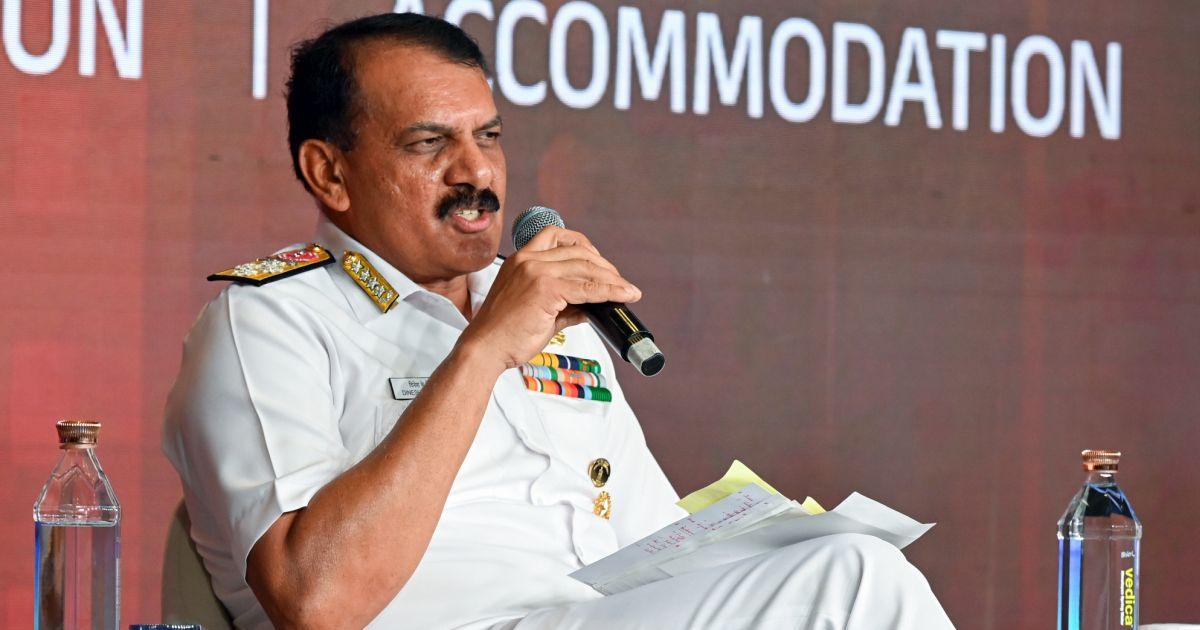


Mumbai: The Indian Navy was on the verge of launching a strike against Pakistan from the sea during Operation Sindoor, but halted its action after Islamabad requested a cessation of hostilities, Navy Chief Admiral Dinesh K Tripathi revealed on Wednesday.
Speaking at a naval investiture ceremony in Mumbai, Admiral Tripathi said the Navy had reached an advanced stage of operational readiness during the mission conducted last year in response to the Pahalgam terror attack. At the event, he also presented Yudh Seva Medals to two senior naval officers for their distinguished service during the operation.
“It’s no longer a hidden fact that we were just minutes away from striking Pakistan from the sea when they requested a stoppage of kinetic actions,” he said, underlining the Navy’s preparedness and strategic positioning at the time.
Describing Operation Sindoor as a demonstration of the Navy’s capability and resolve, Admiral Tripathi said naval units were deployed swiftly and maintained an aggressive posture throughout the operation. He added that the force’s decisive actions helped reinforce national confidence in its operational strength.
The Navy Chief also highlighted a key moment during the operation when the Indian Navy showcased its operational depth to the Prime Minister during a historic 17-hour overnight embarkation along the western seaboard.
Shifting focus to the evolving geopolitical situation, Admiral Tripathi expressed concern over escalating tensions in West Asia. He noted that since the outbreak of conflict involving the United States, Israel, and Iran, more than 20 merchant vessels have come under attack in the region.
The ongoing hostilities have severely disrupted maritime traffic, with nearly 1,900 vessels currently stranded. According to the Navy Chief, daily movement through the strategically crucial Strait of Hormuz has dropped drastically—from an average of around 130 transits per day to just six or seven.
“In today’s fragmented global order, the seas are no longer secondary theatres. They have become the primary arena where strategic intent is signalled and contested, often with far-reaching consequences,” he said.
He further pointed out that advancements in technology and evolving combat tactics have made modern conflicts more complex and unpredictable, especially in the maritime domain. This, he said, requires a balanced approach combining agility, foresight, and operational excellence at all levels.
Emphasising India’s role as a first responder in the region, Admiral Tripathi cited multiple humanitarian assistance and disaster relief (HADR) missions carried out by the Navy in challenging conditions. These included Operation Brahma in Myanmar and Operation Sagar Bandhu in Sri Lanka.
He also stressed the importance of self-reliance in defence, noting that the Navy’s focus on ‘aatmanirbharta’ has accelerated its transformation into a “builder’s Navy.” This push has led to significant capability enhancement, including the commissioning of 12 ships and submarines within a single year.