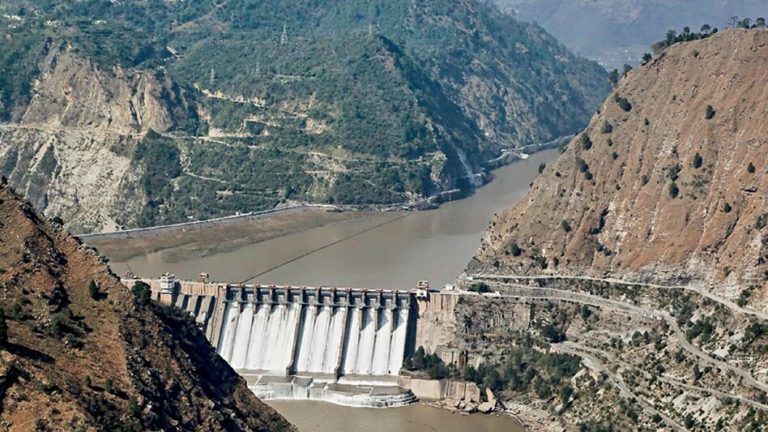
The Indus Waters Treaty (IWT) is unlikely to function again in its current form, with government sources stating that Pakistan has shown no credible signs of ending cross-border terrorism against India, a key condition for restoring cooperation under the more than 65-year-old agreement.
According to the sources, any future revival of the treaty would require renegotiation under a modified framework, and only after Pakistan permanently stops supporting terrorism directed against India.
Terrorism Must End Before Any Future Agreement
Officials made it clear that the existing treaty framework cannot simply be restored.
“It would be accurate to say that the IWT in its present form will not function again. If provisions related to river water sharing have to be reactivated, they have to be done in a different form, not in the present form. And only if Pakistan abjures terrorism,” a government source said.
Another official added that India has not witnessed any meaningful action by Pakistan to curb cross-border terrorism.
“We haven’t seen any evidence that they are making any effort in that direction (to end cross-border terrorism).”
The source further noted that individuals and organisations sanctioned under the UN Security Council’s 1267 sanctions regime continue to operate publicly in Pakistan, while intelligence reports suggest terrorist activity continues along the Line of Control.
India Rejects Pakistan’s Water Scarcity Claims
Government sources also dismissed Pakistan’s claims that India’s decision to keep the treaty in abeyance has led to water shortages.
According to officials, Pakistan loses a significant amount of water due to:
- Inadequate storage infrastructure
- Extensive leakages
- Internal disputes over water sharing between provinces
The sources argued that these domestic issues, rather than India’s actions, are responsible for Pakistan’s water management challenges.
India Retains Right To Exit Treaty
While India is not currently seeking to withdraw from the Indus Waters Treaty, officials stressed that, as a sovereign nation, it retains the right to terminate any international agreement that no longer serves its national interests.
“It (exiting the IWT) depends on the actions that Pakistan takes going forward,” a source said.
India placed the treaty in abeyance following the April 2025 Pahalgam terror attack, in which 26 civilians were killed. Indian authorities blamed The Resistance Front (TRF), described as a proxy of the Pakistan-based Lashkar-e-Taiba (LeT).
The suspension formed part of a broader package of diplomatic and economic measures, followed by Operation Sindoor, which targeted terrorist infrastructure in Pakistan in May 2025.
Longstanding Disputes Over Hydropower Projects
Officials accused Pakistan of consistently using the treaty to delay India’s legitimate hydropower projects on western rivers.
According to the sources, Pakistan has objected to nearly every major Indian project, including:
- Salal
- Tulbul
- Baglihar
- Kishanganga
- Ratle
- Pakal Dul
They also claimed that Pakistan even challenged a 200-kilowatt hydropower project designed to provide electricity to a remote tribal region.
Officials argued that Pakistan repeatedly escalated technical disagreements into prolonged legal disputes instead of following the treaty’s intended dispute resolution mechanism.
Background Of The Indus Waters Treaty
Signed on September 19, 1960, after nine years of negotiations and brokered by the World Bank, the treaty governs the sharing of six rivers between India and Pakistan.
Under the agreement:
- India controls the eastern rivers — Ravi, Beas and Sutlej.
- Pakistan controls the western rivers — Indus, Jhelum and Chenab.
The treaty also permits India to construct run-of-river hydroelectric projects on western rivers before they enter Pakistan, subject to specific technical conditions.
However, officials said Pakistan’s repeated objections and attempts to pursue parallel legal proceedings have undermined the treaty’s original cooperative spirit.