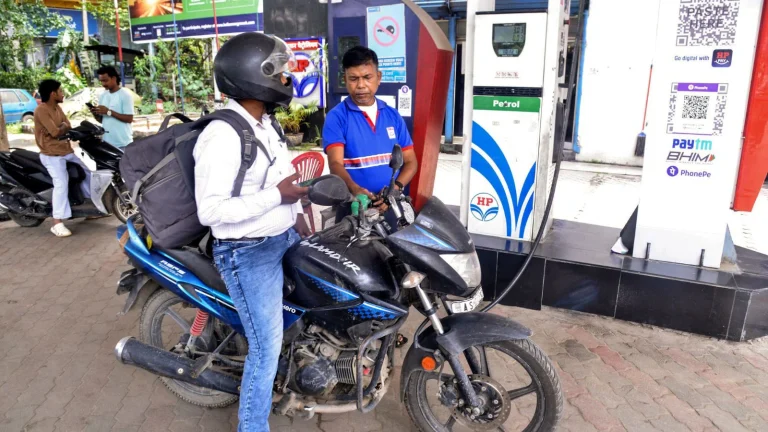
Retail Fuel Prices Surge Nationwide
State-owned fuel retailers implemented a sharp increase in the prices of petrol and diesel across India on Monday, May 25, 2026, marking the fourth upward revision in a span of just 10 days. The latest price adjustment added an average of ₹2.80 per litre to fuel costs nationwide.
The immediate result of this revision pushes the effective price of petrol in Delhi past the triple-digit threshold to ₹102.12 per litre, while diesel in the national capital has risen to ₹95.20 per litre.
City-by-City Breakdowns
The table below illustrates the updated retail pump prices for one litre of fuel across major metropolitan cities, reflecting the net increases implemented on May 25, 2026:
| City | Petrol Price (Per Litre) | Diesel Price (Per Litre) |
| Delhi | ₹102.12 (up by ₹2.61) | ₹95.20 (up by ₹2.71) |
| Mumbai | ₹111.21 (up by ₹2.72) | ₹97.83 (up by ₹2.81) |
| Kolkata | ₹113.51 (up by ₹2.87) | ₹99.82 (up by ₹2.80) |
| Chennai | ₹107.77 (up by ₹2.46) | ₹99.55 (up by ₹2.57) |
Breaking a Four-Year Freeze
This fourth price hike follows a series of rapid adjustments that quickly shattered a historic four-year artificial price freeze. The sudden upward trajectory began with a massive ₹3.00 uniform increase on May 15, 2026, which was quickly followed by consecutive 90 paise hikes on May 19 and May 23.
With this latest Monday revision, the cumulative burden on consumers has reached nearly ₹7.50 per litre in less than two weeks.
Geopolitical Friction Fules the Crisis
Market analysts and energy experts trace the relentless retail hikes to a cocktail of severe macroeconomic pressures:
- Skyrocketing Import Costs: The combination of elevated global crude benchmarks, shrinking refining margins, and a significantly weaker Indian Rupee (INR) has drastically bloated the cost of crude imports for domestic Oil Marketing Companies (OMCs).
- Strait of Hormuz Disruptions: Global crude prices have surged by more than 50% since late February 2026. This explosive rise was triggered by major geopolitical escalations, including targeted U.S.-Israeli military strikes on Iran and severe logistical disruptions through the critical Strait of Hormuz transit chokepoint.
While state-backed fuel retailers successfully insulated the domestic public from import volatility during the first two and a half months of the Middle Eastern conflict, the government maintained the freeze was purely an anti-inflationary shield. Conversely, opposition parties have strongly criticized the timing, accusing the administration of intentionally delaying necessary price corrections until the conclusion of critical state assembly elections.