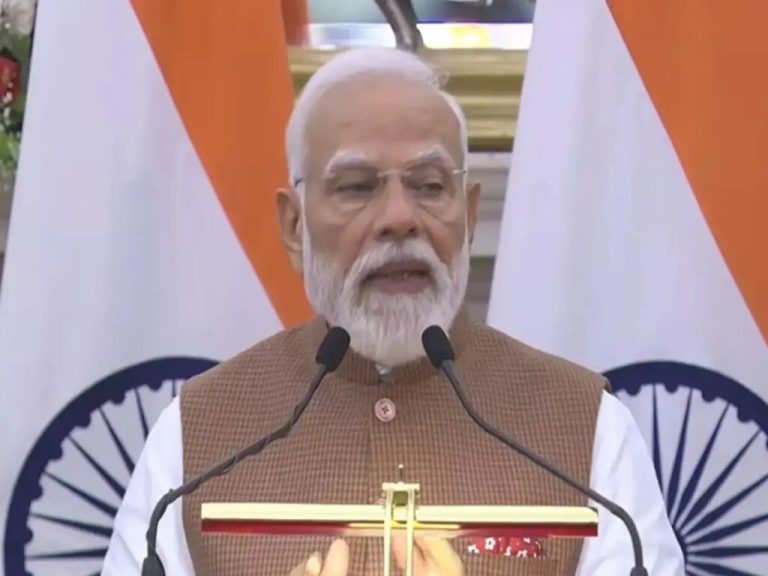
Prime Minister Narendra Modi’s appeal urging citizens to adopt work-from-home (WFH), reduce fuel usage, avoid foreign travel, and postpone gold purchases has sparked widespread discussion about whether India may be heading toward stronger economic conservation measures amid rising global tensions.
The appeal comes against the backdrop of the ongoing West Asia crisis and instability in global energy markets, which has raised concerns over inflation, import costs, and pressure on foreign exchange reserves.
“National interest first” message amid global uncertainty
Speaking at a public event in Telangana, PM Modi called for a “national interest first” approach, encouraging citizens to reduce discretionary spending and adopt more resource-efficient habits.
He suggested practical steps such as:
- Using public transport and carpooling
- Reducing petrol and diesel consumption
- Returning to remote work practices where possible
- Avoiding non-essential foreign travel and destination weddings abroad
- Postponing gold purchases for at least a year
The message is being seen as both a behavioural appeal and a broader economic signal.
Why work-from-home is back in focus
The idea of WFH is being revisited as a fuel-saving measure during global energy disruptions. Studies cited in global energy reports suggest that remote work can significantly reduce commuting fuel consumption and urban energy demand.
Several countries across Asia have already introduced similar measures to manage fuel stress during volatile global conditions.
Economic pressure driving concerns
India is currently spending heavily to stabilise fuel prices for consumers amid global crude volatility. Analysts estimate that even small reductions in fuel demand could ease fiscal pressure significantly.
At the same time, rising imports—especially crude oil and gold—are increasing pressure on foreign exchange reserves, which are already under strain due to global uncertainty.
Gold imports, in particular, are a major contributor to dollar outflow, making the Prime Minister’s appeal to delay purchases economically significant.
Is India preparing for bigger steps?
While no mandatory restrictions have been announced, the appeal has triggered speculation about whether it could be a precursor to more structured economic measures if the West Asia conflict escalates further.
Experts say such steps could include:
- Stronger fuel-saving policies
- Incentives for remote work adoption
- Measures to reduce non-essential imports
- Greater push for domestic consumption and tourism
However, for now, the government has framed it as a voluntary citizen-driven effort rather than a policy mandate.
PM Modi’s message reflects growing concern over global economic instability and its potential impact on India’s fuel bill, inflation, and foreign exchange reserves. Whether it remains a public appeal or evolves into formal policy will likely depend on how the global situation unfolds in the coming months.