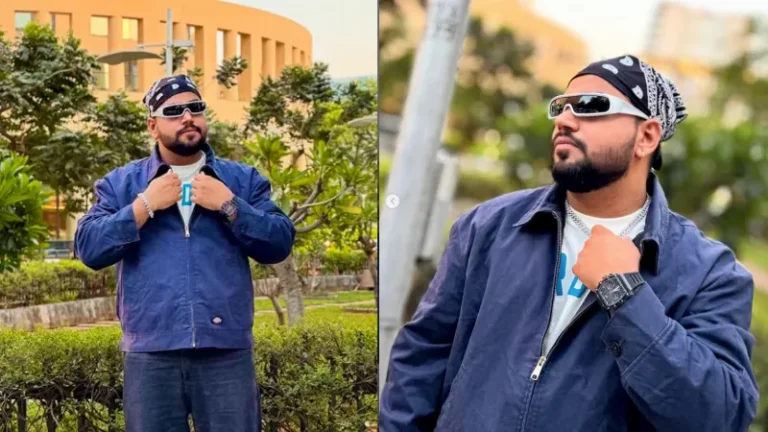
Indian rapper and singer Santy Sharma has entered the ongoing controversy surrounding the viral “Cockroach Janta Party” (CJP) trend, sparking intense reactions across social media platforms. His comments about online activism, political discourse, and digital influence have divided internet users, with supporters calling his views patriotic while critics accused him of dismissing the concerns of young Indians.
Santy Sharma Criticises ‘Blind Internet Activism’
Santy Sharma recently posted a statement on social media targeting what he described as “blind internet activism” and emotionally driven online political movements. According to the rapper, many young people are participating in viral political trends without properly understanding the facts or consequences behind them.
He argued that while criticism of governments is important in a democracy, creating outrage-based internet campaigns and protest-style digital movements could harm India’s stability and growth. His comments quickly gained traction on Instagram and X, where users began debating his stance.
Concerns Over Digital Propaganda And Foreign Influence
In his statement, Santy Sharma also claimed that some pages linked to the Cockroach Janta Party movement showed signs of suspicious foreign engagement. He urged Indian youth to remain cautious about digital propaganda and manipulation on social media platforms.
The rapper suggested that online narratives can sometimes be influenced by coordinated campaigns designed to create division or emotional reactions among users. His remarks added a nationalistic angle to the debate and intensified discussions around political content online.
What Is The ‘Cockroach Janta Party’ Trend?
The “Cockroach Janta Party” or CJP trend began as meme-based satirical political content but gradually evolved into a larger youth-driven online movement. Many users associated the trend with frustrations over unemployment, inflation, education pressure, rising competition, and governance-related concerns.
Over recent weeks, the trend has become one of the most talked-about internet discussions in India, attracting strong reactions from both supporters and critics. While some view it as a form of digital protest and expression, others see it as unnecessary outrage culture amplified by social media algorithms.
Social Media Reacts To Santy Sharma’s Comments
Santy Sharma’s statement triggered thousands of reactions online. Supporters praised him for speaking about nationalism, responsible internet usage, and the dangers of manipulated narratives. Others, however, accused him of ignoring genuine public concerns faced by India’s younger generation.
The debate continued across platforms, with hashtags, reaction videos, and reposts pushing the controversy further into mainstream online discussions.
Who Is Santy Sharma?
Santy Sharma is an Indian rapper, singer, and internet personality known for his independent music and outspoken social media presence. He has frequently commented on influencer culture, cancel culture, internet controversies, and online narratives in India.
Earlier, he also made headlines after publicly supporting Badshah during the controversy surrounding the song Tateeree.