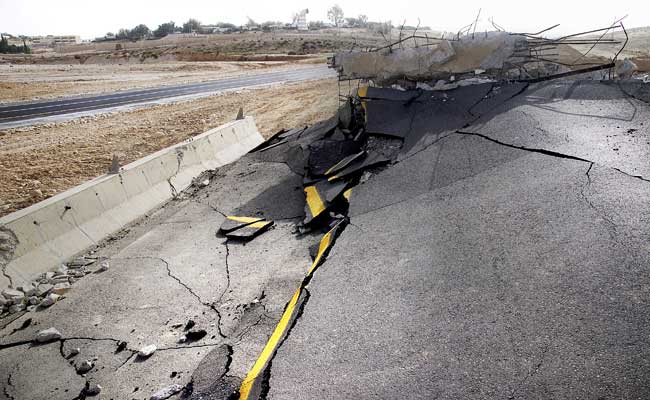
A powerful 6.2 magnitude earthquake struck northeastern Afghanistan on the evening of Saturday, June 27, 2026. The seismic activity triggered strong, noticeable tremors across multiple regions in northern India, including Jammu and Kashmir, Delhi-NCR, Himachal Pradesh, and Haryana.
According to the National Centre for Seismology (NCS), the earthquake occurred at 7:04 PM IST and was centered in Afghanistan’s Hindu Kush region. It was registered at a considerable depth of 215 kilometers, which typically allows shockwaves to travel great distances across international borders.
Seismic Activity Map of the Hindu Kush Region. Source: ResearchGate
Wide Geographical Impact
The epicenter was identified approximately 81 kilometers from Kalafgan in northeastern Afghanistan. Because of its intense magnitude and depth, distinct vibrations were reported across a massive geographic expanse encompassing multiple countries:
- Afghanistan
- Pakistan
- India
- China
- Tajikistan
- Uzbekistan
- Kyrgyzstan
- Turkmenistan
In India, residents in high-rise buildings across Delhi and the National Capital Region (NCR) reported feeling fans shaking and furniture rattling for several seconds. Ground tremors were felt even more acutely across the union territory of Jammu and Kashmir and neighboring hill states. Witnesses in Kabul, Afghanistan, and various northern territories of Pakistan also reported sharp jolts.
Fortunately, due to the extreme depth of the quake’s focus, the surface impact was cushioned. There have been no immediate reports of structural damage, injuries, or casualties from either Afghanistan or the affected Indian states.
Why the Hindu Kush Region is Prone to Quakes
According to the Red Cross and international geological surveys, Afghanistan remains exceptionally vulnerable to frequent, high-intensity earthquakes. The country is situated directly atop the complex tectonic collision boundary where the Indian plate continuously pushes northward into the Eurasian plate.
As these massive continental plates grind against one another, immense geological stress accumulates along deep fault lines beneath the mountain ranges. When this stress is suddenly released, it manifests as powerful earthquakes that regularly vibrate across South and Central Asia.