
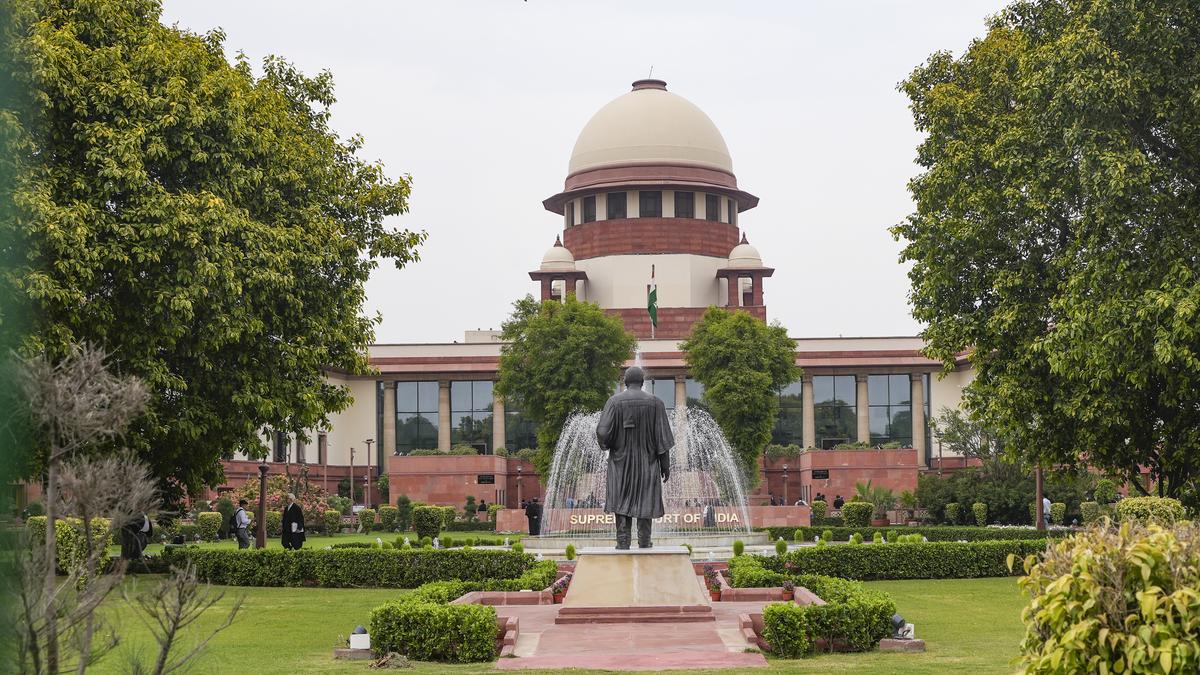


The Supreme Court on Monday expressed reluctance to interfere in the ongoing debate over the duration of the five-year integrated LLB course, emphasizing that such policy matters fall under the purview of academic and regulatory bodies. While acknowledging the importance of strengthening legal education, the court said decisions on the structure and length of law programmes require broader consultation among universities, regulators, and other stakeholders.
Hearing a public interest litigation filed by advocate Ashwini Upadhyay, which seeks the formation of a Legal Education Commission to review the framework of legal education, the bench—comprising Chief Justice of India Surya Kant and Justice Joymalya Bagchi—observed that quality education and legal literacy are both essential. The petition argued that most professional courses in India last four years, and the longer five-year law course may discourage top talent from pursuing a legal career.
The CJI stressed that the judiciary is only one stakeholder in legal education, alongside academics, jurists, the Bar, and policy researchers. “There should be deliberation with all stakeholders… We cannot thrust our views,” he noted. The bench also referred to the history of the five-year programme, highlighting that it began with Maharshi Dayanand University, Rohtak, in the early 1980s, predating the establishment of the National Law School system.
Ultimately, the Supreme Court indicated that it may not be appropriate for courts to dictate the duration of law courses, leaving the matter to regulatory and academic institutions such as the Bar Council of India and universities.