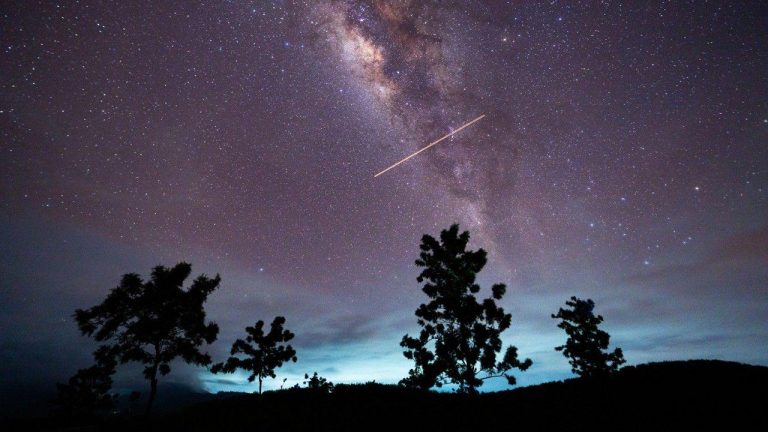
The Lyrid meteor shower has officially returned for 2026, offering stargazers a spectacular display of fast, bright shooting stars. Under ideal dark-sky conditions, the Lyrids can produce between 15 and 20 meteors per hour.
This year is particularly promising for observers, as the moon will set shortly after midnight, leaving behind perfectly dark, moonless skies during the peak viewing hours. While the shower favors “early birds,” the celestial show begins to climb higher in the sky toward the pre-dawn hours, making the late-night wait well worth the effort.
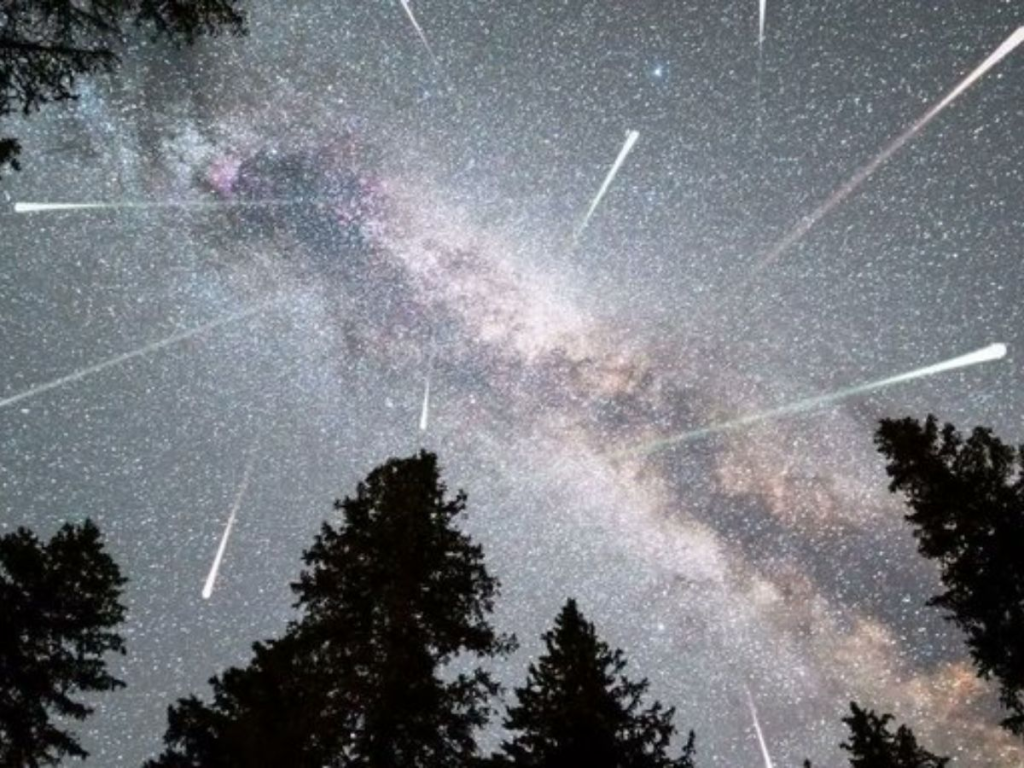
To spot the Lyrids, observers should look toward the northeast for the constellation Lyra. The easiest way to find it is by locating Vega, one of the brightest stars in the night sky, which sits near the northeastern horizon shortly after sunset.
However, veteran astronomers suggest a “wide-angle” approach: rather than staring directly at the radiant point near Vega, scan the surrounding sky. The most dramatic and longest meteor streaks often appear further away from the radiant, slicing across the darkness in unexpected directions.
Preparation is key for the best experience. Experts recommend finding an open landscape—such as a field, beach, or hilltop—away from city light pollution. It is crucial to give your eyes at least 20 to 30 minutes to adjust to the darkness. During this time, avoid looking at your smartphone, as even a brief glance at a screen can ruin your night vision and force your eyes to restart the adjustment process. Getting comfortable in a reclining chair or on a warm blanket will help you stay patient during the long watch.